
Soups & Stews
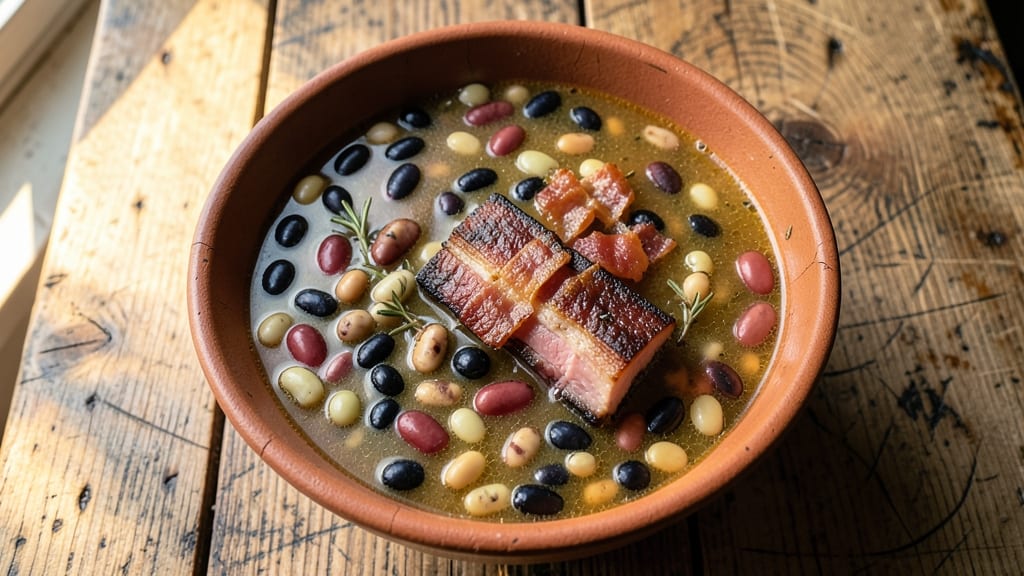
This 7 bean soup with ham hock delivers the kind of deep, savory richness that transforms a simple meal into a comforting centerpiece.
The ham hock infuses the broth with smoky, umami depth over hours of slow simmering, while the mix of beans—navy, kidney, pinto, and more—creates a hearty texture that satisfies even the heartiest appetites.
What makes this recipe truly special is how the flavors meld together, creating a soup that tastes like a hug in a bowl.
The beauty of this dish lies in its simplicity and patience. You’ll start with a Dutch oven or slow cooker, where the ham hock and beans simmer undisturbed for hours, allowing the flavors to develop and the beans to soften just enough to hold their shape.
The key is letting the broth reduce naturally, intensifying the savory notes and creating a base that’s rich without being heavy. This is the kind of soup that tastes even better the next day, as the flavors deepen and the ingredients meld together.
By the time you’re ready to serve, you’ll have a steaming pot of soup with tender beans, a flavorful broth, and the unmistakable aroma of slow-cooked ham.
The ham hock adds more than just flavor—it transforms the soup into something truly special, making it perfect for cold evenings, family gatherings, or whenever you need a meal that feels like home. Serve it with crusty bread to soak up every last drop of that savory broth.
This recipe is designed to be flexible, so you can adjust the seasoning to your taste or even swap out a few of the beans if you prefer. The ham hock is non-negotiable, though—it’s the secret to that restaurant-quality depth.
Whether you’re making it for a crowd or just a cozy night in, this 7 bean soup with ham hock is a guaranteed crowd-pleaser that brings warmth and comfort to the table.
Ingredients for 7 bean soup recipe with ham hock
Start with a ham hock and seven dried beans for a soup that feels like a hug in a bowl.
| Ingredient | Amount | Notes |
|---|---|---|
| Ham Hock 🍖 | 1 lb | Smoked for depth of flavor |
| Navy Beans 🌱 | 1 lb | Dried, soaked overnight |
| Kidney Beans 🌱 | 1 lb | Dried, soaked overnight |
| Pinto Beans 🌱 | 1 lb | Dried, soaked overnight |
| Black-Eyed Peas 🌱 | 1 lb | Dried, soaked overnight |
| Great Northern Beans 🌱 | 1 lb | Dried, soaked overnight |
| Small Red Beans 🌱 | 1 lb | Dried, soaked overnight |
| Large Carrots 🥕 | 4 whole | Peeled, cut into chunks |
| Celery Stalks 🧅 | 4 whole | Trimmed, chopped |
| Yellow Onion 🧅 | 1 whole | Peeled, chopped |
| Garlic Cloves 🧄 | 4 cloves | Peeled, smashed |
| Tomato Paste 🍅 | ½ cup | For depth of flavor |
| Dried Thyme 🌿 | 1 tbsp | Or 1 tbsp fresh thyme |
| Bay Leaves 🍃 | 2 whole | For aromatic depth |
| Salt 🧂 | 2 tsp | Kosher or sea salt |
| Black Pepper 🌶️ | 1 tsp | Freshly ground |
| Water 💧 | 12 cups | Or vegetable broth |
The ham hock is non-negotiable—it’s what turns this soup from good to unforgettable. Look for smoked hocks at your local butcher or grocery store meat section, not the pre-cooked ones. The deeper the smoke, the richer the flavor. I usually grab mine from Whole Foods or my neighborhood butcher, but any quality grocery store should have them. If you can’t find smoked, unsmoked will work, but you’ll lose that signature depth. The beans? Buy them dried—canned beans just won’t give you the same texture or flavor. Soak them overnight in plenty of water (about 8 cups per pound of beans) to cut down on cooking time and make them easier to digest.
No smoked ham hock? Substitute with a smoked sausage like kielbasa or andouille, but you’ll miss that slow-cooked richness. Short on thyme? Dried oregano at half the amount works in a pinch. The tomato paste is key for that deep, umami flavor—don’t skip it. If you’re using broth instead of water, low-sodium vegetable broth is best, but you can adjust the salt at the end. The carrots, celery, and onion form the holy trinity of soup veggies—don’t skip any of them. If you’re in a hurry, you can use baby carrots and pre-cut celery sticks to save time, but fresh is always better.
This soup tastes even better the next day, so make a big batch. Store leftovers in the fridge for up to 5 days or freeze for 3 months. I like to portion it into containers so I can grab a bowl for lunch all week. The ham hock will separate from the broth after a day or two—save it for sandwiches or add it back in when reheating. If you’re making this ahead for a party, keep the soup and broth separate until serving to maintain the best texture. The beans will soften further as they sit, so they’ll be perfect by the time you’re ready to serve.
Why You'll Love This Recipe
- One-Pot Magic: I swear by this recipe—just dump the beans, add the ham hock, and let it simmer. No chopping, no fussing, and that ham hock? It practically melts into flavor gold while you’re doing laundry.
- Deep, Smoky Richness: The ham hock doesn’t just add salt—it brings this soup to life with a slow-cooked, meaty depth. Pair that with the earthy navy beans and the slight sweetness of black-eyed peas, and you’ve got a flavor punch that sticks with you.
- Leftovers That Beg for More: This soup only gets better the next day. The beans soak up all the juices, the ham hock stays tender, and honestly? I find myself sneaking seconds when I’m supposed to be eating something else.
- Budget-Friendly Crowd-Pleaser: A single ham hock stretches across three meals, and dried beans cost pennies. Feed a family of four for under $10, and everyone—even the picky eaters—will ask for seconds. (Yes, even my teenage son.)
Step-by-step instructions for 7 bean soup with ham hock
This soup builds flavor slowly—don't rush it. The secret lies in patience and layering ingredients just right.
Blanch and Prepare the Ham Hock
Place the 1 lb ham hock in a large stockpot and cover with 6 cups of the 12 cups water. Bring to a boil over high heat, then immediately reduce to a gentle simmer. Let it cook uncovered for 30 minutes, skimming off any foam that rises to the surface. This step removes impurities and extracts deep, smoky flavor from the ham.
After 30 minutes, remove the ham hock with tongs and set it aside. Strain the broth through a fine-mesh sieve into a clean pot, discarding any solids. Return the strained broth to the stockpot—you'll use this as your base liquid. The ham hock will rejoin the soup later, so don't discard it.
Sauté Vegetables for Depth of Flavor
In the same stockpot, heat over medium heat (no oil needed—the ham broth will coat the pan). Add the chopped yellow onion, chopped celery stalks, and chopped large carrots. Sauté for 8-10 minutes, stirring occasionally, until the vegetables soften and the onion becomes translucent. You're building a flavorful base here—don't rush this step.
Add the smashed garlic cloves and cook for 1 minute until fragrant. Immediately stir in the 0.5 cup tomato paste, spreading it evenly across the bottom of the pot. Cook for 2 minutes until the paste darkens slightly—this adds a rich, umami depth to the soup. If the mixture sticks, add ¼ cup of the reserved broth to deglaze.
Combine Beans and Simmer Slowly
Add all the soaked beans—navy beans, kidney beans, pinto beans, black-eyed peas, great northern beans, and small red beans—along with the 2 whole bay leaves, 1 tbsp dried thyme, 2 tsp salt, and 1 tsp black pepper. Pour in the remaining 6 cups water (total 12 cups liquid). Stir gently to combine, then bring to a boil over high heat. Once boiling, reduce to a low simmer. Here's the thing—this soup needs at least 2 hours of simmering for the beans to soften properly and flavors to meld.
After 1 hour, add the blanched ham hock back to the pot. The long simmer will render its fat and collagen into the broth, making the soup rich and hearty. Skim off any foam that rises during the first 30 minutes of simmering—this ensures a clean, flavorful broth. The soup is ready when all beans are tender (test with a fork) and the ham hock falls apart easily when pulled with tongs.
Adjust Seasoning and Serve
Remove the ham hock and bay leaves from the pot. Taste the soup and adjust seasoning if needed—add more salt or black pepper as needed. The beans should be creamy but still hold their shape, and the broth should coat the back of a spoon. If the soup is too thick, stir in ½ cup water to reach your desired consistency.
Serve the soup hot, ladled into bowls with the shredded ham hock on top. The contrast of tender beans, smoky ham, and rich broth makes every spoonful satisfying. For extra heartiness, serve with crusty bread or cornbread to soak up the flavorful liquid. This soup tastes even better the next day as the flavors deepen, so make extra if you can!
Pro Tips For Making 7 Bean Soup Recipe With Ham Hock
- CRANK THE HEAT FIRST: Boil the ham hock in a screaming pot of water—no simmering, no half-measures. I used to start slow and wondered why the broth never developed depth. Five minutes of hard boiling pulls all the collagen into the water faster, giving you that rich, gelatinous base that makes the difference between good soup and great soup.
- SOAK BEANS TOGETHER: Dump all five bean varieties into one big bowl and cover with cold water overnight. I learned this the hard way—some beans (looking at you, kidney) take longer to soften, and soaking them separately means some will be mushy while others stay rock-hard. Uniform texture matters, especially when you’re serving this to picky eaters.
- SCRUB THE HAM HOCK: Rinse the ham hock under cold water, then scrub it with a stiff brush to remove the rind. That tough outer layer doesn’t break down, and it’ll leave your soup with a gritty aftertaste. Take the extra 30 seconds—your spoon will thank you later.
- RESERVE THE FIRST BROTH: After the initial boil, drain the ham hock and set it aside, but don’t dump that first broth. Strain it, return it to the pot, and use it to cook the beans. That initial render is packed with flavor—skipping it means starting with a weaker base. (Yes, even if you’re impatient like me.)
Troubleshooting this recipe
Beans Too Hard
If your beans aren’t tender after 2-3 hours of simmering, they likely need more time. The key is patience—this soup requires at least 3 hours for perfect texture. I’ve found that using a Dutch oven helps trap heat better than a regular pot.
If you’re short on time, add ½ tsp baking soda to the pot (it softens beans faster), but don’t overdo it—too much makes them mushy. 💫
Broth Too Thin
A watery broth usually means the beans released too much starch. After simmering, remove ½ cup beans and mash them with a fork, then stir back in. The starch thickens the broth naturally.
For extra richness, simmer uncovered for 10-15 minutes to reduce it further. If it’s still too thin, stir in 1 tbsp cornstarch mixed with 2 tbsp cold water until thickened.
Ham Hock Not Flavorful
If your ham hock tastes bland, it might not have simmered long enough. The secret is 4-5 hours total cooking time—the longer it breaks down, the more flavor it releases.
For extra depth, wrap the ham hock in cheesecloth before adding it back to the pot after the initial blanch. This traps fat and collagen for a richer broth. Pro tip: Use a smoked ham hock from a trusted butcher for maximum flavor. 🍖
Soup Too Salty
Over-salting is common when using broth or ham hock. If your soup tastes too salty, add 1 cup cold water or unsalted broth and simmer for 10 minutes to dilute. For a quick fix, stir in ½ cup diced potato or apple—they absorb excess salt as they cook.
If the soup is still too strong, serve it with extra bread to balance the flavors.
Foam on Top
Excessive foam means impurities from the ham hock or beans. Skim it off during the first 30 minutes of simmering to keep the broth clean. If foam persists, add 1 bay leaf or a pinch of dried thyme—these help clarify the broth naturally.
For stubborn foam, strain the soup through a fine-mesh sieve before serving to remove any remaining bits.
Beans Falling Apart
Mushy beans usually mean overcooking or using old dried beans. Sort through your beans before soaking—discard any that are shriveled or discolored. If they’re still falling apart, reduce simmering time to 2-2.5 hours and check for doneness earlier.
For a creamier texture without mushiness, blend ½ cup beans with ½ cup broth and stir back in at the end. 🌱
Nutrition facts
Frequently asked questions about 7 bean soup with ham hock
Can I use canned beans instead of dried?
While you can substitute canned beans, the texture and flavor won't be the same. Dried beans develop a deeper, nuttier taste when slow-cooked. If using canned, drain and rinse them thoroughly, then add them 30 minutes before the soup is done to prevent mushiness. You'll need about 3 cans (15 oz each) per pound of dried beans called for in the recipe.
How do I store leftovers?
Store in an airtight container in the fridge for up to 5 days. The flavors actually improve overnight! For freezing, portion into containers and freeze for up to 3 months. Reheat gently on the stove with a splash of water or broth to restore thickness. The ham hock can be removed before storing if you prefer to shred it fresh when serving.
What makes the ham hock so important?
The ham hock is the flavor anchor of this soup! Its collagen breaks down during long simmering, creating a rich, gelatinous broth. Smoked ham hocks add that signature depth that can't be replicated with other meats. If you must substitute, try smoked sausage or pork shoulder, but expect less complexity. The key is cooking it long enough—4-5 hours total for maximum flavor extraction.
Can I make this in a slow cooker? Combine all ingredients in your slow cooker and cook on low for 8-10 hours or high for 5-6 hours. The long cook time works perfectly with the slow cooker's gentle heat. Just
Why does the recipe call for so many different beans?
Each bean variety brings unique texture and flavor to the soup. Navy beans add creaminess, kidney beans provide heartiness, and black-eyed peas contribute a subtle sweetness. The mix creates visual appeal and prevents the soup from becoming too uniform in texture. If you're short on time, you can reduce to 4-5 beans, but the traditional 7-bean combination is what makes this dish special.