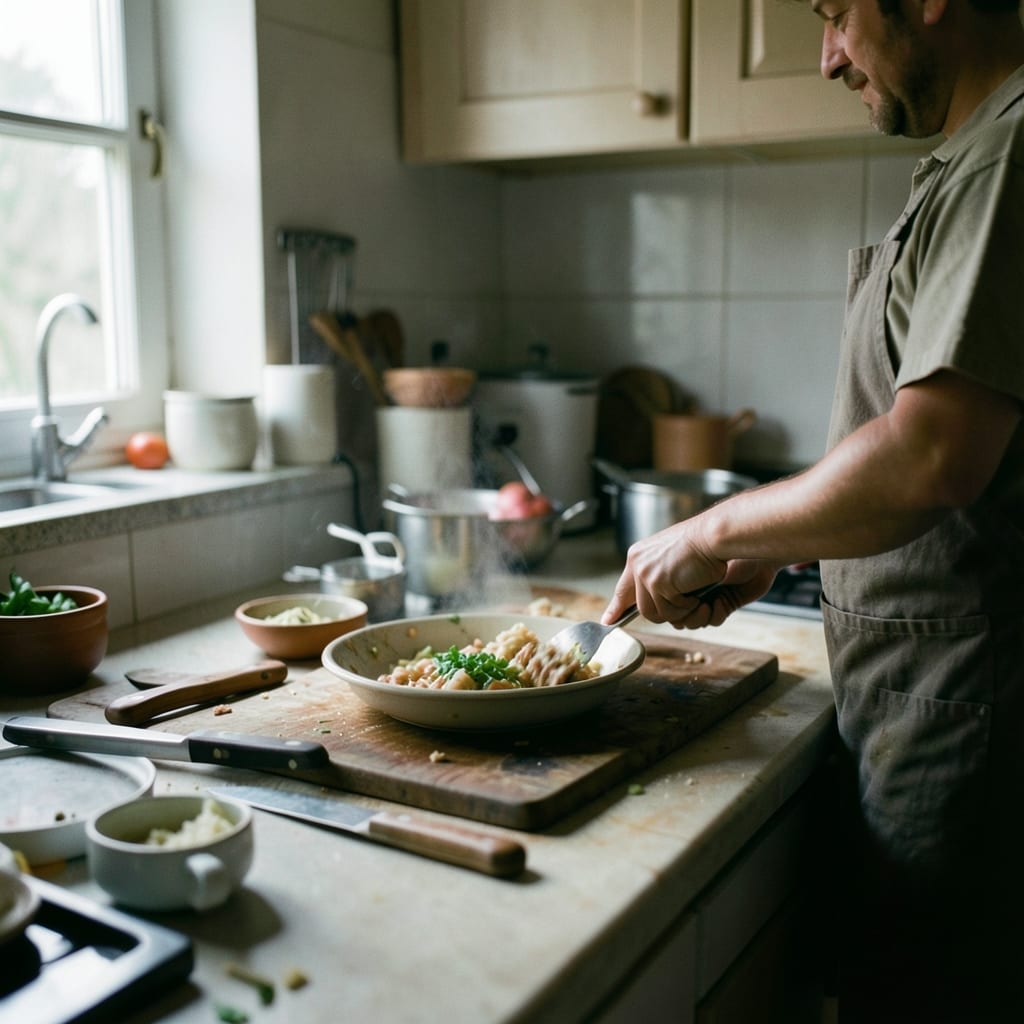
Why I started beanrecipesearth
I was twenty-three and living in a studio apartment with a gas stove that hissed like a haunted house.
My grandmother had sent me a jar of her homemade *miso-katsuobushi* (fermented bonito flakes) as a gift, and I tried to make her *nikujaga*—that deep, sweet-and-sour beef stew with potatoes—only to end up with a pot that smelled like a hardware store and a stew that looked like it had been simmered in motor oil.
My roommate, who had been watching, just sighed and said, *‘You’re doing it wrong, but not in a way that’s fixable.’* That was the day I realised most recipe sites either assumed you already knew what you were doing or lied about how long things took.
This site is for the people who burn the garlic before the onions get soft, who forget to salt the pasta water, or who stare at a recipe and wonder why the photo looks nothing like their kitchen.
Here, you’ll find dishes that work when you’re tired, when the ingredients are ‘close enough,’ and when the only tool you have is a knife and a pot. No shortcuts that don’t work, no steps that skip the *why*, and no photos that lie.
Just recipes that taste like home—even if your home is a rented apartment with a stove that hisses.
Meet the founder

My grandmother’s kitchen was where I learned that cooking isn’t about perfection—it’s about the moment something *almost* goes wrong and you fix it just in time.
She’d hand me a wooden spoon and say, *‘Stir like you mean it,’* while I burned the bottom of the *okonomiyaki* batter because I wasn’t paying attention. The first time I made her *shoyu ramen*, the broth was so salty I could’ve used it to pickle eggs.
She laughed, tasted it, and said, *‘Next time, add the salt *after* the noodles,’* like it was the most obvious thing in the world. That’s the lesson I still carry: recipes are just stories with instructions, and the best ones are the ones that let you in on the mistakes.
I still have the cast-iron skillet she gave me—chipped at the rim from dropping it too many times, the handle wrapped in frayed cloth that’s held together with duct tape.
It’s the only pan I use for *kare-raisu* (Japanese curry rice) because it’s the one that makes the roux dark enough without burning. My roommate calls it my ‘good luck charm,’ but really, it’s just proof that the best tools aren’t the shiniest ones.
They’re the ones that’ve been used enough to remember your hands.
The failure that changed everything was a batch of *mochi* I made for New Year’s. The rice was sticky, the sugar crystallised into a brick, and the whole thing looked like someone had run over it with a lawnmower.
I was ready to throw it out until my grandmother made me spread it thin on a tray and bake it at 160°F (70°C) for hours until it dried into something chewy and sweet. That’s when I realised: sometimes, a ‘mistake’ just needs a different ending.
Now, every recipe here has at least one ‘what if this goes wrong?’ note—because it always does.
I have a habit of tasting everything with a sliver of bread. Not because it’s ‘proper,’ but because my grandmother used to do it, and it’s the only way I know if a sauce is balanced.
The bread soaks up the acid, the fat, the salt—it tells me if I need more garlic or a splash of vinegar before I ruin the whole pot. My roommate thinks it’s weird. I think it’s efficient.
And if you’re reading this, you’re either about to try it yourself or already do it without realising.
‘A recipe is just a roadmap. The best ones let you take wrong turns.’
—Nolan Nakamura, after burning the second batch of *nikujaga* (still better than the first)
Meet the mascot

The first sketch of what would become the mascot started on a napkin at a 24-hour diner in Tokyo, where I was waiting for my *oyakodon* to arrive.
I drew a pot with a face—just a circle for the lid, two dots for eyes, and a wobbly line for a mouth—because I wanted something that looked like it had been simmering for hours.
The first version had three legs (too many) and a handle that curled like a question mark (too confusing). My friend, who was there with me, said it looked like a ‘tired pot,’ and that stuck.
The drawn version got rid of the legs and simplified the handle into something that looked like it could actually hold a lid. I added a steam cloud because every pot I cook seems to produce more than its fair share.
The face stayed the same—just two dots and a mouth that always looks like it’s about to sigh—but I gave it a bandana (because even pots need a little personality).
The bandana was supposed to be red, but the first scan came out muddy, so I left it as a blank space. It’s the only part of the drawing that’s still ‘under construction.’
To make it work as a browser tab icon, I had to strip it down to three colours and a shape that wouldn’t blur when shrunk to 16x16 pixels. The steam cloud became two dots. The bandana turned into a single line.
And the pot’s body got so simple it looked like it was made of sticks. I named it *Kama-san*—‘Mr. Pot’—because it’s the only character on this site who’s actually done the work. (The rest of us are just the ones who write about it.)
What I promise you
This site exists to save you from recipes that don’t work. No vague measurements, no ‘to taste’ without a clue what that means, and no photos that look like they were taken in a different country.
What you see is what you get—and if it doesn’t work the first time, you’ll know why before you burn another pot of rice.
What you can hold me to
- Every ingredient has a substitute listed—because your pantry won’t match mine, and that’s okay.
- Timings include ‘real time,’ not just active time (e.g., ‘10 minutes active + 30 minutes simmering’).
- If a step says ‘until it looks right,’ there’s a follow-up note on what ‘right’ actually means.
- The ‘notes’ section includes at least one ‘what went wrong’ story—so you know you’re not alone.
How I create a recipe
A recipe here starts in my grandmother’s kitchen—or at least, the way I remember it. I don’t just follow a list of ingredients; I think about the *sequence*: what needs to happen first so nothing burns, what can wait, and what absolutely cannot. The first draft is always messy.
I write it down while the pot is still warm, then let it sit overnight. The second read is where the real work begins: cutting the steps that don’t matter, adding the ones that do, and making sure even someone who’s never cooked before could follow it.
The first step: the mise en place
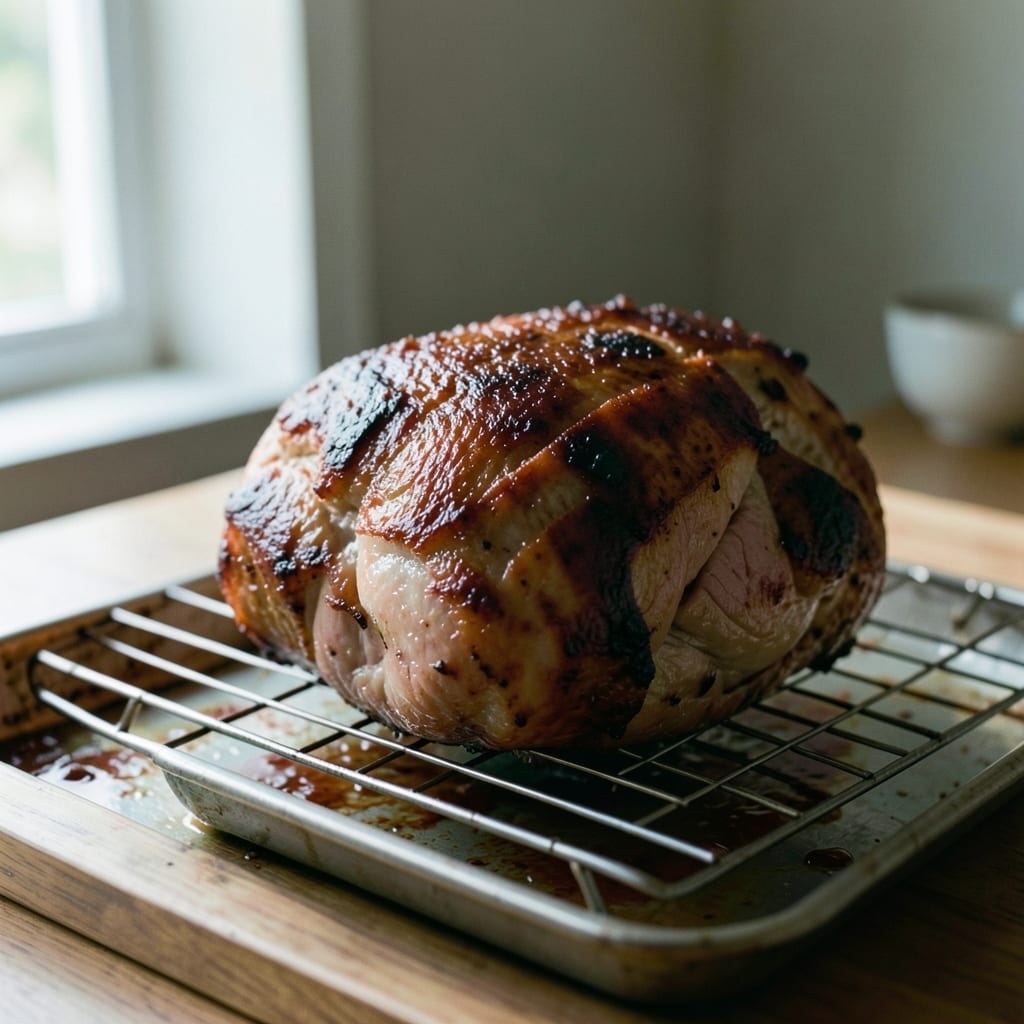
Before you turn on the stove, everything goes on the counter in the order you’ll use it. Chop the garlic *last* if it burns easily. Measure the spices in a small bowl so you don’t spill half into the pot.
And for the love of everything, *read the whole recipe* before you start—because the moment you realise you forgot the salt at step five is the moment your sauce turns into glue. I time myself: a good mise en place should take no longer than the first step of cooking.
If it’s taking longer, you’re overcomplicating it.
The first thing I watch for is the *aroma*. When the onions start to caramelise, the kitchen should smell like sweetness, not smoke. If it smells like a fire hazard, you’re cooking too hot. The second thing is the *colour*: a good sear on meat is deep brown, not black.
A good simmer is gentle bubbles, not a rolling boil. And if the pot starts to stick before it’s supposed to? That’s when you know you rushed. Patience isn’t just a virtue—it’s the difference between a dish that works and one that doesn’t.
The second step: the fix
If something goes wrong—sauce too thin, meat too dry, crust too pale—the fix is never ‘add more of what you already did.’ It’s about *balance*. Too much salt? A splash of vinegar or a spoon of sugar. Sauce too thick? A little water or broth, stirred in *slowly*.
The key is to taste as you go. I keep a small bowl of plain rice or bread nearby just for this—it’s the only neutral canvas I trust. If the fix doesn’t work the first time, I start over. No dish is worth saving if it’s not salvageable.
The one rule I never break: *never add salt to fix salt*. If you’ve oversalted, you have to dilute or acidify.
And if you’re not sure what to do, the ‘notes’ section will tell you—which is why every recipe here has at least one ‘what if this happens?’ scenario written in. Because in my kitchen, the only real failure is giving up before you’ve tried everything.
How a page gets onto this site
A recipe isn’t done until it’s been written down twice: once while it’s still warm, and again the next day when I can read it like a stranger. The first draft is always too long, with steps that assume I remember what I did last week.
The second draft cuts the fluff, adds the ‘why,’ and makes sure even the messiest part of the process has a workaround. If a recipe gets rewritten months later, it’s because someone sent me a photo of their attempt—and it didn’t work.
That’s when I go back to the stove, adjust, and try again.
Write to me
I love hearing about the recipes that worked, the ones that didn’t, and the dishes you wish you could find here. Did you make *nikujaga* and end up with a pot that smelled like a factory? Did you finally get the *mochi* right on the third try?
Did you invent a substitute that actually worked? Send me the story—the good, the bad, and the ‘I have no idea what I’m doing’ moments.
You can reach me through the contact page, and I promise I’ll read every single one. (And if you send a photo, I might just steal your trick.)
This site is for the cooks who are still learning, the ones who burn the garlic but keep trying anyway. So tell me what you’re making, what you’re struggling with, and what you’d add to the pot if you could. Let’s make some noise—and some food.
‘The best recipes are the ones that let you in on the secret: cooking is just problem-solving with spices.’
—Nolan Nakamura (probably)
The recipes are grouped by category: Appetizers, Beverages, Breakfast & Brunch, Desserts, Main Courses and Salads.