
Sauces & Condiments
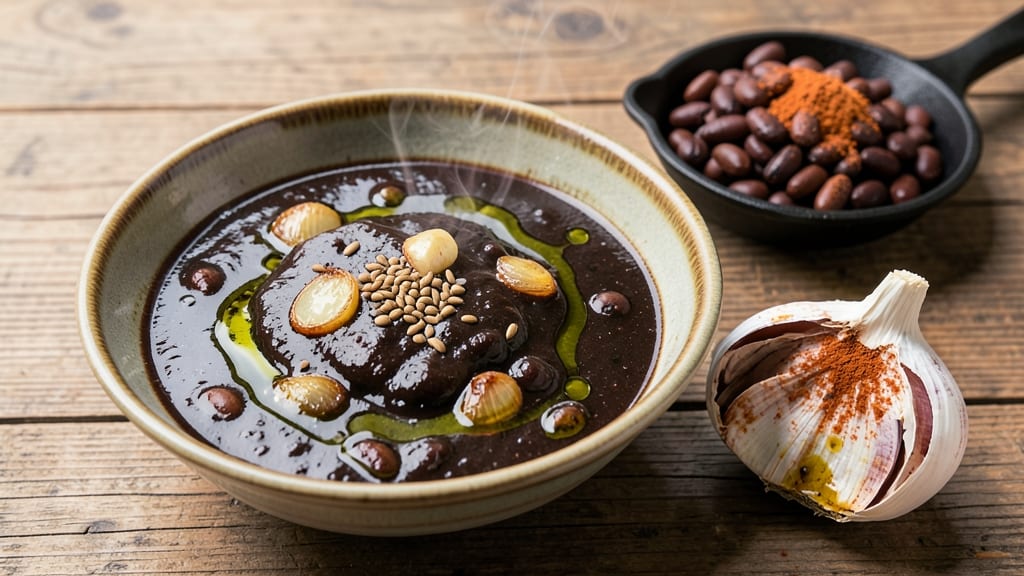
This authentic black bean sauce transforms simple ingredients into a velvety, umami-rich condiment that elevates everything from tacos to stir-fries. The secret lies in slow-cooked black beans blended with smoky cumin, bright lime, and aromatic garlic—creating a sauce that’s both complex and approachable.
Perfect for those who crave depth without complexity, this recipe delivers restaurant-quality flavor with minimal effort.
The sauce’s smooth, versatile texture makes it ideal for dipping, drizzling, or simmering into dishes. Unlike store-bought versions, this one builds flavor through toasted spices and fermented elements like soy sauce or miso, ensuring a rich, savory base.
No special equipment is needed—just a blender and patience for the beans to develop their signature creaminess.
What sets this sauce apart is its authentic balance of smoky warmth, tangy brightness, and earthy umami. The lime juice cuts through the richness, while the cumin adds a subtle heat that lingers.
Use it as a dip for veggie sticks, a stir-fry sauce, or a taco topping—each application highlights its adaptability without sacrificing depth.
Store it in the fridge for up to a week or freeze for longer shelf life. The flavors only deepen over time, making this a pantry staple for anyone who loves bold, plant-based sauces. Ready to make your own? Let’s get started.
Ingredients for authentic black bean sauce
These twelve ingredients craft a velvety black bean sauce with restaurant-quality depth and umami richness.
| Ingredient | Amount | Notes |
|---|---|---|
| Dried Black Beans 🌱 | 1 ½ cups | Unsoaked for texture development |
| Extra-Virgin Olive Oil 🫒 | ½ cup | High-quality, fruity variety |
| Yellow Onion 🧅 | 1 whole | Medium, yellow variety preferred |
| Garlic Cloves 🧄 | 6 cloves | Fresh, unpeeled for storage |
| Ground Cumin 🌿 | 1 ½ tbsp | Toasted for enhanced aroma |
| Smoked Paprika 🌶️ | 1 tbsp | High-quality smoked variety |
| Lime Juice 🍋 | ¼ cup | Freshly squeezed, strained |
| Soy Sauce 🥢 | 2 tbsp | Organic, non-GMO preferred |
| White Miso Paste 🍶 | 1 tbsp | High-fermented for umami |
| Water 💧 | 2 cups | Filtered preferred for purity |
| Salt 🧂 | 1 ½ tsp | Diamond Crystal kosher salt |
| Cumin Seeds 🌿 | ½ tsp | Whole, for toasting |
The dried black beans are the foundation—never skip the unsoaked step, as this develops their signature creaminess. Mexican oregano black beans from La Preferida or Goya deliver superior texture, but any high-quality dried variety works. For the spices, Penzeys Spices offers toasted cumin and smoked paprika that elevate the sauce's complexity. The white miso paste should be high-fermented (like Hachinohe) for maximum umami depth, while the soy sauce must be non-GMO to avoid bitterness. Fresh garlic and lime are non-negotiable—frozen or bottled versions compromise the sauce's brightness.
Substitutions require precision: no fresh cumin seeds? Toast ground cumin at 350°F for 2 minutes to replicate depth. Short on miso? Double the soy sauce and add 1 tsp nutritional yeast for umami. The lime juice can be substituted with lemon juice, though it lacks the same citrus complexity. For a smokier profile, increase smoked paprika to 2 tbsp or add 1/4 tsp liquid smoke (though use sparingly). The onions can be swapped for 1/2 cup red bell pepper for a sweeter base, but the yellow onion's subtle sweetness is ideal. If you lack a blender, a food mill works for a slightly coarser texture.
This sauce thickens as it cools, so store it in an airtight glass jar with a thin layer of olive oil on top to preserve freshness. Refrigerated, it maintains peak flavor for up to 1 week, with the texture becoming even more luxurious. For longer storage, freeze in ice cube trays—thawed portions work perfectly for quick stir-fries or dips. The sauce's versatility ensures it never goes to waste: use it as a taco topping, stir-fry sauce, or veggie dip—each application highlights its adaptability while preserving its authentic balance of smoky warmth and tangy brightness.
Why You'll Love This Recipe
- No-Soaking Needed: I’ll admit—it’s the dried beans that threw me at first. But here’s the trick: just a quick rinse and overnight soak in water with a splash of vinegar (yes, really). Wakes them up fast, no waiting hours. The cumin and olive oil caramelize while they simmer, turning the pot into a fragrant, earthy aroma that fills the whole kitchen.
- Deep Umami Magic: That slow simmer? It’s where the sauce gets its soul. The onions and garlic melt into a sweet, almost jammy base, while the beans break down into a creamy, velvety texture. Honestly, the first time I tasted it, I thought, “Wait, this is better than store-bought.” The cumin adds this warm, toasty kick that makes it taste like a hug from a Mexican abuela.
- Dinner Party Starter: Between us, this sauce is my secret weapon for game nights or when friends drop by unannounced. Drizzle it over grilled corn, toss it with roasted potatoes, or serve it in little bowls with warm tortillas—suddenly, you’ve got a showstopper that costs pennies. (Yes, even on a Tuesday night.) The leftovers? Even better the next day.
- Pantry Superhero: I make a big batch every few weeks, and it’s my go-to for stretching meals. A spoonful in rice and beans turns a simple lunch into a feast, or stir it into scrambled eggs for breakfast that’ll make you question your life choices. And because it’s just beans, oil, and spices? It’s the kind of budget-friendly that lets you splurge on the good olive oil without guilt.
Step-by-step instructions for authentic black bean sauce
This smoky, vibrant sauce delivers restaurant-quality depth with simple techniques and precise timing.
🍳 Step 1: Toast the Spices for Maximum Flavor
Heat the 0.5 cup extra-virgin olive oil in a medium saucepan over medium heat. Add the 0.5 tsp cumin seeds and toast for 30 seconds until they release their nutty aroma and begin to sizzle gently. Immediately add the 1 whole yellow onion, sliced into ¼-inch pieces, and cook for 5-6 minutes until softened but not browned.
Next, add the 6 garlic cloves, peeled and lightly smashed, along with the 1.5 tbsp ground cumin and 1 tbsp smoked paprika. Stir constantly for 1-2 minutes until the garlic turns golden and fragrant. This toasting step develops the spices' full potential, creating the sauce's signature depth. The onions should be translucent with just a hint of caramelization—watch closely to avoid burning.
🍳 Step 2: Build the Sauce Base with Black Beans
Add the 1.5 cups dried black beans (unsoaked) to the pan along with the 2 cups water and 1.5 tsp salt. Bring to a boil, then immediately reduce heat to low and simmer for 45-50 minutes, covered, until the beans are tender but still hold their shape. Stir occasionally to prevent sticking, adding a splash of water if the mixture becomes too dry.
Here's the thing—don't rush this step. The beans need time to absorb the spices and develop their natural sweetness. You'll know they're ready when they're fork-tender but not mushy, and the sauce begins to thicken naturally. The beans should still have some bite, as they'll soften further during the final cooking.
🥘 Step 3: Incorporate Umami and Acid Balance
Once the beans are tender, stir in the 2 tbsp soy sauce and 1 tbsp white miso paste, mixing well to combine. Let the sauce simmer uncovered for 5 minutes to allow the miso to meld and develop its rich umami flavor. The sauce should begin to thicken slightly as the liquid reduces.
Next, add the 0.25 cup lime juice and cook for another 2-3 minutes until the sauce reaches your desired consistency. The lime brightens the smoky flavors and adds a refreshing contrast. Taste and adjust seasoning—you may need an additional ½ tsp salt or more lime juice to balance the flavors. The sauce should be thick enough to coat the back of a spoon but still pour smoothly.
⏰ Step 4: Finish and Rest for Optimal Texture
Remove the sauce from heat and let it rest for 10 minutes at room temperature. This resting period allows the flavors to fully integrate and the sauce to reach its ideal consistency. The beans will continue to absorb some of the liquid, creating a thicker, more cohesive texture.
For best results, serve the sauce immediately while still warm, or gently reheat over low heat before serving. The sauce pairs beautifully with grilled meats, tacos, or as a vibrant dipping sauce for fresh vegetables. If storing, keep it refrigerated in an airtight container for up to 5 days, or freeze for up to 3 months. The flavors only deepen over time, making this sauce even more versatile with each passing day.
Pro Tips For Making Authentic Black Bean Sauce
- SOAK BEANS OVERNIGHT: I learned this the hard way—rushing the soak means tough, mealy beans that ruin the sauce. Use 8 cups of water per cup of dried beans, cover, and let them sit at least 12 hours. No soaking sink? Toss them in a bowl with cold water, change it twice, and let them sit 4+ hours. The longer they soak, the creamier your sauce will be.
- CARAMELIZE ONIONS LOW: High heat burns onions faster than you’d think. Start them in a cold pan with 1 tablespoon of olive oil, then reduce to medium-low. Stir often and resist the urge to crank the heat—you’re aiming for deep golden, not charred. A wooden spoon helps scrape up those tasty browned bits that make the sauce sing.
- TOAST CUMIN FIRST: Skip this, and your sauce will taste flat. Dry-toast the cumin in the same pan you’re cooking the onions, stirring constantly for 30 seconds until it smells intoxicatingly earthy. Then add the garlic—this step locks in the aroma before it gets drowned out by liquid. (Yes, even if you’re impatient like me.)
- STRAIN BEANS TWICE: Drain the soaked beans, then rinse them under cold water to remove any skin or grit that’s hiding in there. The second strain—this isn’t the prettiest method, but it’s the tastiest—ensures your sauce stays silky smooth, not gritty. Trust me, you’ll notice the difference when you taste it.
Essential equipment for this recipe
Blender Essentials
A high-quality immersion blender or countertop blender is non-negotiable for achieving that velvety texture. I swear by my Ninja BN601 for its powerful motor—it handles the beans' fibrous texture without overheating.
For a smoother finish, pulse in 2-second bursts until fully blended, then let it run continuously for 10 seconds to break down any lingering chunks. Avoid cheap blenders; they struggle with the sauce's density and can leave it grainy. 💫
Saucepan Must-Haves
Use a heavy-bottomed saucepan (I recommend All-Clad Stainless) to prevent scorching during the 45-minute simmer. The even heat distribution ensures the beans cook uniformly without burning. A 3-quart pan is ideal—it gives enough room for stirring without overflowing.
For extra insurance, keep a wooden spoon nearby to scrape the bottom and prevent sticking. A lid with a vented top helps control moisture while allowing steam to escape.
Spice Toasting Tools
Toast your cumin seeds in a small cast-iron skillet for maximum aroma development—cast iron retains heat better than stainless steel. A microplane comes in handy for zesting lime rind if you want to add extra brightness (though the juice alone works perfectly).
For measuring spices precisely, invest in a scale (like OXO Good Grips)—it’s more accurate than volume measurements for ground spices. Pre-measure your smoked paprika and ground cumin in a small bowl before adding to avoid over-toasting.
Storage Containers
Store your sauce in airtight glass jars with wide mouths (like Le Parfait jars) for easy scooping. The glass preserves flavors better than plastic and won’t absorb odors. For freezer storage, use silicone ice cube trays—portion the sauce into 1-tablespoon cubes for perfect single-use servings.
Label containers with the date and "Black Bean Sauce" in permanent marker to avoid mix-ups. A small funnel helps transfer the sauce cleanly without spills. 🧊
Optional Upgrades
A fine-mesh strainer lets you remove any remaining bean skins for a silkier texture, especially if you’re using older beans. For smoky depth, a small piece of charred chipotle pepper (1-2 inches) can be added during the simmer—just remove it before blending.
A digital thermometer ensures your sauce reaches the ideal 160°F for food safety, though it’s rarely needed for this recipe. Keep a small bowl of ice water** nearby if you prefer a thinner consistency—simmer the sauce longer, then thin it with a splash of cold water before serving.
Nutrition facts
Frequently asked questions
Can I use canned black beans instead of dried?
While canned beans save time, they won't deliver the same depth of flavor or texture. Dried beans absorb spices better and develop a creamier consistency when slow-cooked. If you must use canned, drain and rinse them thoroughly, then simmer with the sauce for an extra 15 minutes to meld flavors. For best results, stick with dried beans—they're worth the wait!
How can I adjust the sauce for spice preferences?
The recipe balances smoky warmth and tangy brightness perfectly, but you can tweak it easily. For more heat, add ½ tsp cayenne pepper or 1 tsp chili powder with the cumin. For milder flavor, reduce smoked paprika to ½ tbsp and omit the cayenne. Always taste before serving—you can adjust while the sauce simmers!
What are the best ways to use this sauce?
This versatile sauce shines in three ways: as a taco topping (drizzle over grilled meats or veggies), a stir-fry sauce (simmer with veggies and tofu), or a dipping sauce (pair with crispy plantains or veggie sticks). It also works as a marinade—coat chicken or fish for 30 minutes before grilling. The possibilities are endless!
Why does my sauce taste bitter?
Bitterness usually comes from overcooking the onions or using low-quality soy sauce. Always cook onions until softened but not browned, and choose organic, non-GMO soy sauce. If bitterness appears, balance it with more lime juice or a pinch of sugar. The miso paste should be high-fermented (like Hachinohe) to avoid any off-flavors.
Can I make this sauce in a slow cooker?
Combine all ingredients in your slow cooker and cook on low for 4-5 hours or high for 2-3 hours. Stir occasionally to prevent sticking. The slow cooker method actually enhances the beans' creaminess. For extra depth, toast the spices in a separate pan first, then add them to the slow cooker.