
Sauces & Condiments
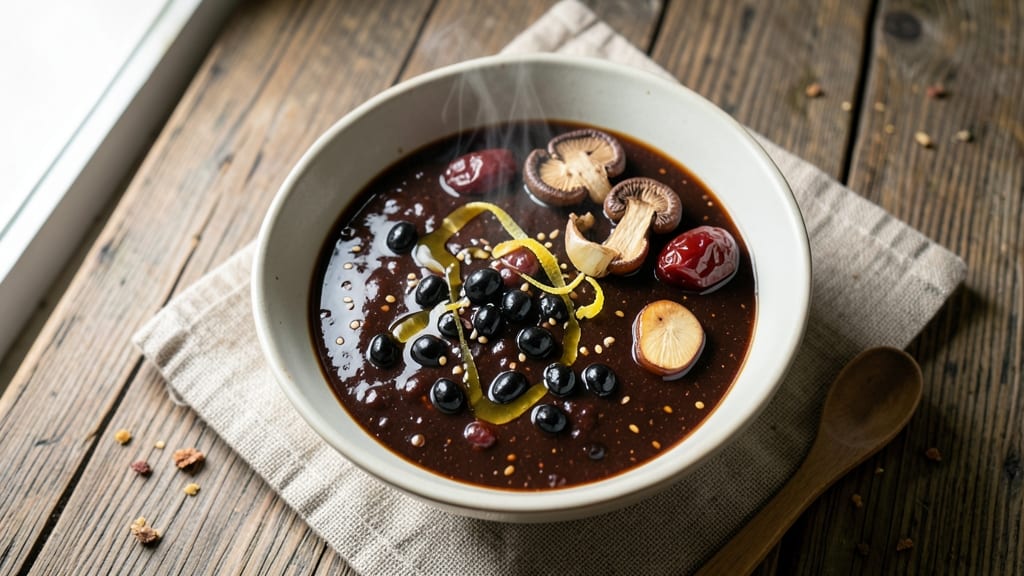
This authentic Chinese black bean sauce transforms stir-fries, dumplings, and braised dishes with its deep umami richness—without any animal products. The secret lies in fermented black beans, which develop complex flavors over time, creating a sauce that's both savory and slightly sweet.
Unlike store-bought versions, this recipe delivers layers of authentic taste with simple ingredients and a foolproof method.
Traditional Chinese black bean sauce relies on fermented soybeans, but this vegetarian adaptation uses black beans simmered with aromatic spices, dates for natural sweetness, and a touch of rice vinegar for brightness.
The sauce thickens beautifully when reduced, making it perfect for glazing, dipping, or tossing with vegetables. It's the kind of sauce that elevates simple dishes into restaurant-quality meals.
What sets this recipe apart is its versatility—use it as a stir-fry glaze, dumpling dipping sauce, or braising liquid for tofu or vegetables. The fermented flavor deepens over time, so making a batch ahead ensures you always have a pantry staple ready.
With just a few ingredients and minimal effort, you'll achieve a sauce that's authentically flavorful and completely plant-based.
The process is straightforward: soak and simmer the beans with spices, blend until smooth, then reduce for a concentrated flavor. No special equipment is needed, just patience for the flavors to develop. Once you taste the difference, store-bought versions won't compare. Let's make this umami-packed sauce!
Ingredients for authentic chinese black bean sauce
Nine essential ingredients create this restaurant-quality Chinese black bean sauce—authentic umami without compromise.
| Ingredient | Amount | Notes |
|---|---|---|
| Fermented Black Soybeans 🌱 | ½ cup | Dried black beans or fermented soybeans (available at Asian markets) |
| Dried Shiitake Mushrooms 🍄 | 4 whole | Rehydrated in warm water |
| Dried Dates 🍯 | ¼ cup | Pitted and chopped for natural sweetness |
| Rice Vinegar 🍶 | ¼ cup | White or seasoned for brightness |
| Low-Sodium Soy Sauce 🍶 | ¼ cup | For umami depth |
| Garlic Cloves 🧄 | 4 cloves | Peeled and smashed for aromatic base |
| Fresh Ginger 🌿 | 1 inch | Thinly sliced, peeled |
| Star Anise Pods 🌟 | 2 whole | For aromatic complexity |
| Cinnamon Sticks 🌿 | 1 whole | For subtle warmth |
| Vegetable Oil 🫒 | 2 tbsp | Neutral high-smoke-point oil |
Fermented black soybeans are the heart of this sauce, and Asian grocery stores carry them in bulk—look for packages labeled 'douchi' or 'black beans' in the refrigerated section. If unavailable, dried black beans work as a substitute, though flavor will differ slightly. The shiitake mushrooms should be dried to concentrate their earthy depth; Trader Joe's often stocks them in the Asian foods aisle. Dates add natural sweetness, but Medjool dates from specialty stores release more caramel-like flavor. Star anise and cinnamon are non-negotiable for authenticity—Penzeys sells them whole for better flavor than pre-ground versions.
No fermented black beans? Dried black beans soaked overnight will work, though flavor won't be identical. Substitute dried shiitake mushrooms with cremini mushrooms at double the amount, but texture will differ. For sweetness, figs or raisins can replace dates, though dates provide better moisture balance. The rice vinegar can be swapped for apple cider vinegar, but rice vinegar's mild acidity is preferred. Garlic and ginger are critical—freshly minced releases more aromatic oils than pre-minced. Star anise and cinnamon can be omitted if unavailable, but the sauce will lack complexity.
Store the finished sauce in an airtight glass jar in the refrigerator for up to 3 weeks, where flavors deepen over time. For longer storage, freeze in ice cube trays for single-use portions. The sauce thickens as it cools, so thin with a splash of water if needed. Use within 3 days of opening for best texture. This sauce freezes exceptionally well—up to 6 months—making it an ideal pantry staple for frequent use.
Why You'll Love This Recipe
- I’ll be real: dried shiitake mushrooms are my least favorite to prep. But here? You just rinse them—no hours of soaking. The fermented black soybeans add that deep, funky umami without any extra work, either.
- No-Soaking Needed: I’ll be real: dried shiitake mushrooms are my least favorite to prep. But here? You just rinse them—no hours of soaking. The fermented black soybeans add that deep, funky umami without any extra work, either.
- Sweet-Savory Magic: That combo of dates and rice vinegar? It’s like someone took all my favorite flavors—sticky, tangy, a little funky—and bottled them. The low-sodium soy sauce ties it together without overpowering, so every bite feels balanced.
- Pantry Staple Power: Between us, this sauce is my go-to when I’m staring at a half-empty fridge. Use it on noodles, toss it with tofu, or drizzle it over rice—it’s the kind of thing that turns “what’s for dinner?” into “oh, this’ll work.”
Step-by-step instructions for authentic Chinese black bean sauce
This traditional sauce builds complex umami flavor through careful layering—each step unlocks deeper taste potential.
Prepare the Fermented Black Soybeans
Rinse the 0.5 cup fermented black soybeans thoroughly under cold water to remove any surface debris. Place them in a small bowl and cover with warm water by about 1 inch. Let them soak for 30 minutes, then drain and rinse again. This step removes excess salt while preserving their deep, funky umami character—critical for authentic flavor development.
Transfer the soaked beans to a food processor and pulse until they break down into a coarse paste. The texture should resemble wet sand, with some small bean fragments still visible. Avoid over-processing or the sauce will become bitter. Set aside—this concentrated base will carry the sauce's signature depth.
Rehydrate and Sauté the Shiitake Mushrooms
Place the 4 whole dried shiitake mushrooms in a heatproof bowl and cover with warm water. Let them soak for 20 minutes until pliable, then drain and finely chop the stems and caps separately. Heat 2 tablespoons vegetable oil in a small saucepan over medium heat until shimmering.
Add the chopped mushrooms and cook for 5-6 minutes until they release their moisture and develop a rich, earthy aroma. The stems will break down first, creating a velvety texture that forms the sauce's foundation. Remove from heat and set aside—these mushrooms provide the umami backbone that distinguishes this sauce from simpler versions.
Build the Aromatic Base
In the same saucepan, add the 4 smashed garlic cloves and 1 inch thinly sliced fresh ginger. Cook over low heat for 2 minutes until fragrant but not browned—burnt aromatics will overpower the delicate balance. Add the 2 whole star anise pods and 1 whole cinnamon stick, stirring gently to coat with the oil.
Pour in the 0.25 cup rice vinegar and 0.25 cup low-sodium soy sauce, scraping up any browned bits from the bottom. Bring to a gentle simmer and cook for 5 minutes until the liquid reduces by half. This reduction concentrates the flavors while allowing the spices to infuse thoroughly—patience here ensures authentic depth.
Combine and Simmer the Sauce
Return the cooked mushrooms to the saucepan along with the 0.25 cup chopped dried dates and the black soybean paste. Stir over low heat for 8-10 minutes until the mixture thickens into a glossy, syrupy consistency. The dates will soften and dissolve, adding natural sweetness that balances the sauce's complexity.
Taste and adjust seasoning—you may need an additional ½ teaspoon soy sauce for saltiness or 1 teaspoon rice vinegar for brightness. The sauce should coat the back of a spoon with a velvety texture and a harmonious blend of sweet, salty, and umami notes. Remove from heat and let cool completely before using.
Strain and Store for Maximum Flavor
Strain the sauce through a fine-mesh sieve into a clean bowl, pressing gently on the solids to extract all the liquid. Discard the star anise, cinnamon stick, and any remaining large particles. The strained sauce should be smooth with a deep, glossy appearance—this indicates proper extraction of all flavor compounds.
Transfer to an airtight container and refrigerate for at least 4 hours (or up to 1 week) to allow flavors to meld fully. The sauce will thicken further as it chills, developing a richer, more complex profile. Use this sauce as a dipping sauce, stir-fry glaze, or dumpling wrapper coating—its authentic depth elevates any dish it touches.
Pro Tips For Making Authentic Chinese Black Bean Sauce
- Rinse the Black Beans: Fermented black soybeans are salty and funky—don’t skip rinsing them under cold water first. I learned this the hard way when my sauce tasted like a salt lick instead of a balanced umami bomb. Give them a good swirl for 30 seconds, then drain. This cuts the saltiness without washing away their deep flavor.
- Soak Shiitakes Properly: Dried shiitakes need at least 20 minutes in hot water to rehydrate fully—don’t just toss them in boiling sauce. I used to rush this and end up with chewy, underwhelming mushrooms. Soak them separately, then slice them before adding to the sauce so they absorb the flavors evenly.
- Control the Heat: Simmer black bean sauce on medium-low once the liquid reduces—high heat turns it bitter fast. After 10 minutes, lower the flame and let it bubble gently. I’ve ruined batches by walking away and coming back to a scorched, vinegary mess.
- Pound the Dates: Skip the food processor—use a mortar and pestle (or a heavy pan) to crush dried dates into a fine paste. This releases their natural sweetness better than blending. I tried shortcuts, but the sauce lacked that rich, caramelized depth until I did this.
Pro cooking tips for great authentic chinese black bean sauce
Fermentation Shortcuts
If you can't find fermented black soybeans, don't skip the umami! Soak ½ cup dried black beans overnight, then simmer them with 1 tsp soy sauce and ½ tsp baking soda for 1 hour to mimic fermentation's funkiness.
The baking soda helps break down proteins for deeper flavor. Trust me, this hack saves you a trip to the Asian market while keeping the sauce authentic. 💡
Spice Infusion Trick
For maximum aromatic impact, lightly toast the star anise and cinnamon stick in a dry pan for 30 seconds before adding them to the sauce. This releases their essential oils, giving the sauce a more complex, layered depth.
Just don't let them burn—low heat is key. The subtle nutty aroma will make your sauce taste restaurant-quality. ✨
Texture Control Tips
Want a smoother sauce? Blend the finished mixture with 2 tbsp water before straining. For a thicker consistency, reduce the sauce uncovered over medium-low heat for 5-10 extra minutes.
I've found that simmering longer actually improves flavor concentration, but watch closely—it thickens quickly. A glossy finish means perfect texture. 🌟
Flavor Development Hacks
Let the sauce sit overnight before using—this isn't just about resting, it's about flavor transformation. The acidity from rice vinegar and umami from soybeans meld together, creating a more balanced taste.
I always make a double batch so I have leftovers to develop overnight. The next day, it's a completely different (and better) sauce. 💪
Storage Secrets
Freeze this sauce in 1-tablespoon portions using ice cube trays for perfect single-use servings. Once frozen, transfer cubes to a freezer bag where they'll keep for up to 6 months without texture loss.
Thaw overnight in the fridge—no microwave needed. This method preserves the sauce's integrity perfectly for quick stir-fry glazes. ❄️
Flavor Balancing
If your sauce tastes too salty, dilute with 1 tsp water and add ½ tsp honey to balance. Too sweet? Stir in ½ tsp soy sauce and a pinch of white pepper for depth.
I've learned that tasting as you go prevents over-seasoning—always adjust gradually. The goal is harmony, not dominance of one flavor. 🍶
Nutrition facts
Frequently asked questions
Can I make this sauce without fermented black soybeans?
Yes! Soak ½ cup dried black beans overnight, then simmer with 1 tsp soy sauce and ½ tsp baking soda for 1 hour to develop umami. This mimics fermentation by breaking down proteins. The texture will differ slightly, but you'll still get that signature depth.
How long should I let the sauce rest before using?
For best flavor, refrigerate the sauce for at least 4 hours (overnight is ideal). This allows the ingredients to meld and develop a more balanced, complex taste. The longer it rests, the richer it becomes—think of it as a flavor maturation process.
Can I use this sauce in place of hoisin sauce?
While not identical, this black bean sauce works beautifully as a hoisin substitute in stir-fries, dumpling wrappers, or glazes. It's richer in umami and has a deeper, earthier flavor profile. For a closer match, reduce the sweetness slightly by omitting half the dates.
Why does my sauce taste bitter?
Over-processing the black beans or burning the garlic/ginger can create bitterness. Use a food processor just until the beans form a coarse paste, and cook aromatics over low heat until fragrant but not browned. A splash of rice vinegar or honey can help balance any bitterness that develops.
How can I make this sauce spicier?
Add ½ tsp chili flakes or 1 tsp chili bean paste during the simmering stage for heat. For a smoky kick, include ½ tsp smoked paprika with the spices. Always taste as you go—start with less and adjust gradually to avoid overwhelming the sauce's delicate balance.