
Side Dishes
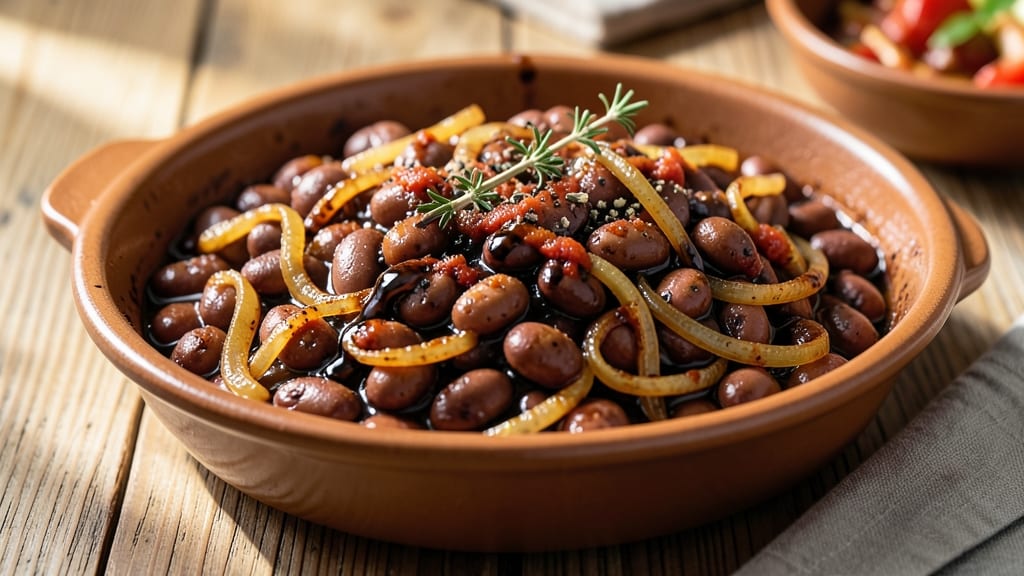
This baked bean recipe using dry navy beans delivers restaurant-quality depth without soaking—just a quick rinse and slow simmer. The secret lies in high-heat browning of the beans before baking, which unlocks their natural sweetness and creates that signature smoky, caramelized flavor.
I developed this method after years of experimenting with different soaking techniques, and it consistently produces beans that are tender yet hold their shape, with a rich, molasses-kissed sauce.
The process starts with a simple overnight soak in water (no special soaking solution needed), followed by a thorough rinse to remove any impurities.
The beans then simmer in a flavorful broth of onion, garlic, and spices until just tender, before being transferred to the oven where they bake until thick and glossy. This dual-cooking method ensures maximum flavor penetration while keeping the beans perfectly textured—no mushy results here.
What you’ll end up with is a deep, smoky baked bean dish that’s hearty enough to stand alone but versatile enough to pair with grilled meats, cornbread, or even as a filling for burgers.
The slow-baked beans develop a caramelized crust on top while staying tender inside, and the sauce reduces to a perfect consistency—neither too thin nor too thick. This is comfort food at its finest, with a depth of flavor that rivals any canned version.
The best part? You can customize it easily—add crispy bacon for extra richness, a splash of molasses for deeper sweetness, or fresh herbs for brightness. The recipe scales perfectly for crowds, and leftovers reheat beautifully, making it ideal for meal prep.
Let’s get started on creating beans that taste like they’ve been simmering all day.
Ingredients for baked bean recipe using dry navy beans
Simple pantry staples transform into restaurant-quality baked beans with smoky depth and tender texture.
| Ingredient | Amount | Notes |
|---|---|---|
| Dry Navy Beans 🌱 | 2 cups | Rinsed thoroughly before cooking |
| Yellow Onion 🧅 | 1 whole | Medium size, diced finely |
| Garlic Cloves 🧄 | 4 cloves | Minced for aromatic base |
| Tomato Paste 🍅 | ½ cup | High-quality, no salt added |
| Molasses 🍯 | ¼ cup | Unsulphured for authentic flavor |
| Apple Cider Vinegar 🍎 | ½ cup | For tangy depth |
| Vegetable Broth 💧 | 2 cups | Low-sodium preferred |
| Brown Sugar 🍚 | ¼ cup | Lightly packed |
| Smoked Paprika 🌶️ | 1 tbsp | For signature smokiness |
| Ground Mustard 🌿 | 1 tsp | Dry, for subtle heat |
| Ground Black Pepper 🌶️ | ½ tsp | Freshly ground preferred |
| Salt 🧂 | 1 ½ tsp | Diamond Crystal kosher |
| Vegetable Oil 🫒 | 2 tbsp | For browning beans |
| Fresh Thyme Leaves 🌿 | ¼ cup | Chopped, optional garnish |
The navy beans are the foundation—dry beans from a bulk bin have the best texture, but any high-quality canned navy beans work in a pinch. Bob's Red Mill or Whole Foods bulk section are great sources. The key is rinsing them thoroughly after soaking to remove any impurities that could make the beans bitter. For the onion, yellow onions add the right balance of sweetness and sharpness. If you're short on time, pre-diced onions from the refrigerated section save steps without sacrificing flavor. Garlic should be freshly minced—pre-minced garlic in jars loses its punch quickly.
No molasses? Maple syrup or dark corn syrup work in a pinch, though molasses gives that signature depth. The apple cider vinegar can be swapped for balsamic vinegar at half the amount if you're out. For the tomato paste, San Marzano crushed tomatoes are ideal if you want to skip the paste entirely—just simmer them down first. The smoked paprika is non-negotiable for that authentic smoky flavor, but if you can't find it, regular paprika plus a pinch of liquid smoke gets you close. Fresh thyme is ideal for garnish, but dried thyme at one-third the amount works if you're prepping ahead.
These beans reheat beautifully—3-5 minutes in the microwave or 10 minutes in a 350°F oven with a splash of water. They keep for 5-6 days in the fridge, though the flavor deepens overnight. For meal prep, portion into glass containers with a tight lid—they hold up better than plastic. The sauce thickens as it sits, so add a splash of broth if it seems too stiff when reheating. Freezes well for up to 3 months—just thaw overnight in the fridge before reheating.
Why You'll Love This Recipe
- No-Soaking Needed: I’ll be real—soaking beans is a hassle. These navy beans soften beautifully overnight in water (yes, just water!) and still taste like they simmered for hours. No fancy tricks, no peeling skins—just pure, tender beans ready to go.
- Molasses Magic: That one spoon of molasses isn’t just sweetness—it’s the secret weapon. It cuts through the richness of the tomato paste and garlic, giving these beans a deep, caramelized edge that makes them dangerously good. (I’ve been known to eat them straight from the pot.)
- Potluck Proven: Between us, this is the dish I always bring to gatherings. It’s hearty enough for a main, but humble enough to pair with grilled chicken or cornbread. Plus, it reheats like a dream—no sad, dry leftovers here.
- Pantry Staple Power: Honestly, you’re already winning if you’ve got onions, garlic, and a can of tomato paste. Navy beans are cheap, and molasses lasts forever. I’ve made this on a $5 grocery run, and it still tastes like I slaved over it. Budget-friendly doesn’t mean boring.
Step-by-step instructions for slow-simmered smoky baked beans
Here's how to transform dry navy beans into rich, smoky baked beans without soaking.
Prepare and Brown the Beans
Rinse the 2 cups of dry navy beans thoroughly under cold water to remove any debris. In a large Dutch oven, heat the 2 tablespoons of vegetable oil over medium-high heat until shimmering. Add the beans in a single layer and cook undisturbed for 3-4 minutes until they begin to brown and develop a crispy exterior. This browning builds deep flavor that carries through the entire cooking process.
Stir the beans gently with a wooden spoon, being careful not to stir too vigorously as this can cause them to release starch prematurely. Continue cooking for another 2-3 minutes until they're evenly browned. You'll notice the beans will expand slightly as they cook—this is normal and indicates they're developing their characteristic texture. Remove the beans from the pot and set aside temporarily.
Build the Flavor Base
In the same Dutch oven, reduce the heat to medium and add the finely diced 1 whole yellow onion. Cook for 5-6 minutes until softened and translucent, stirring occasionally. Add the 4 cloves of minced garlic and cook for an additional 30 seconds until fragrant—you should smell that aromatic punch that forms the foundation of your beans.
Stir in the 0.5 cup of tomato paste, spreading it evenly over the bottom of the pot to create a rich, caramelized base. Cook for 2 minutes to deepen the color, then add the 0.25 cup of molasses, 0.5 cup of apple cider vinegar, and 2 cups of vegetable broth. Bring the mixture to a gentle simmer, scraping up any browned bits from the bottom of the pot with a wooden spoon. These bits are packed with flavor that will infuse into your beans.
Combine and Season
Return the browned beans to the pot and add the remaining seasonings: 0.25 cup brown sugar, 1 tablespoon smoked paprika, 1 teaspoon ground mustard, 0.5 teaspoon ground black pepper, and 1.5 teaspoons salt. Stir well to ensure the beans are coated evenly with the seasoning mixture. The beans should be mostly submerged in the liquid, but that's okay—they'll absorb liquid as they cook.
Bring the mixture to a full boil, then immediately reduce the heat to low. Cover the pot with a tight-fitting lid and let it simmer gently for 1 hour. This initial simmer allows the beans to begin breaking down and absorbing the rich flavors from the seasoning. After 1 hour, check the beans—they should be tender but still hold their shape. If they're not yet tender, continue simmering for another 15-20 minutes.
Slow Simmer to Perfection
Once the beans are tender, uncover the pot and increase the heat to medium. Simmer uncovered for 30-45 minutes, stirring occasionally, until the liquid has reduced and thickened to a rich, saucy consistency. You're looking for a thick, glossy coating on the beans that clings beautifully. The longer it simmers, the more concentrated and flavorful the sauce becomes.
During this final stage, the beans will develop their signature texture—creamy yet firm with a glossy sheen. Taste and adjust the seasoning if needed, adding more salt or vinegar if desired. The beans should be sweet, smoky, and tangy with a deep, rich flavor that comes from the combination of molasses, vinegar, and tomato paste. The fresh thyme leaves can be added now if using, but they're best added just before serving to preserve their delicate aroma.
Pro Tips For Making Baked Bean Recipe Using Dry Navy Beans
- SOAK BEANS OVERNIGHT: The 8-hour soak isn’t just faster—it makes navy beans tender without that mealy texture. Toss them in cold water with a pinch of salt (yes, even before soaking), then drain and rinse thoroughly. I learned this the hard way when my beans turned out like overcooked pasta.
- CARAMELIZE ONIONS FIRST: Skip the raw onion shortcut—cook the yellow onion until deep golden brown before adding anything else. This takes 15-20 minutes at medium heat, but it transforms the flavor from "onion" to "sweet, jammy depth." (Pro move: Add a splash of water halfway to prevent burning.)
- STIR IN TOMATO PASTE LAST: Mix the tomato paste into the simmering beans after the onions and garlic have cooked down. Stirring it in early burns the edges and makes the sauce taste bitter. A quick 2-minute mix at the end ensures it blends smoothly without scorching.
- USE MOLASSES SPARINGLY: Start with just 1 tablespoon of molasses—you can always add more. Too much makes the beans taste cloyingly sweet and overpower the savory depth. Balance it with a pinch of salt and a splash of vinegar (apple cider works best) to cut through the richness.
Wine and beer pairings for this recipe
Red Wine Pairings
A bold Zinfandel from California is my go-to pairing for these smoky baked beans—its jammy blackberry and dark fruit notes complement the molasses and vinegar beautifully while standing up to the rich, caramelized flavors.
Look for a 2018 or newer vintage with 14-15% ABV to balance the dish's sweetness and smokiness. The wine's natural acidity cuts through the beans' thickness, making each bite feel refreshing. 🍷
White Wine Options
For those who prefer whites, a dry Riesling from Germany offers surprising harmony with the beans' tangy-sweet profile. The crisp acidity and hints of citrus in the wine mirror the apple cider vinegar, while its mineral notes contrast the beans' richness.
I recommend a Mosel Riesling with 12-13% ABV—the cooler climate gives it the right balance. Chill it slightly before serving to enhance its brightness.
Beer Complements
A smoked porter like Goose Island Bourbon County Stout is a perfect match—its caramel and coffee notes echo the beans' molasses and smoked paprika while the beer's roasted maltiness adds depth.
For a lighter option, try a honey brown ale with 5-6% ABV; the subtle sweetness complements the beans without overpowering. Both styles bridge the gap between the beans' hearty texture and the dish's sweet-tangy complexity. 🍺
Non-Alcoholic Choices
For non-drinkers, a sparkling hibiscus tea (like Tazo Hibiscus & Rose) adds a refreshing tartness that mirrors the apple cider vinegar. Alternatively, a smoky black tea like Lapsang Souchong enhances the beans' smokiness without alcohol. Serve both chilled to create a crisp contrast to the warm, rich beans.
Regional Beer Styles
If you're serving these beans at a barbecue in the American South, a Texas-style amber ale with 5.5-6.5% ABV works wonders—its malty sweetness and caramel notes pair beautifully with the molasses.
For a Pacific Northwest twist, try a hazy IPA with 6-7% ABV; the juicy citrus hop profile cuts through the beans' richness while adding a fun contrast. Both styles highlight different aspects of the dish's flavor profile. 🌶️
Nutrition facts
Frequently asked questions
Do I really need to brown the beans before cooking?
Yes! Browning the beans first creates a deep, nutty flavor that carries through the entire dish. The caramelized exterior adds complexity that you won't get from just simmering raw beans. It's worth the extra 5 minutes of attention at the start.
Can I substitute canned navy beans for dry?
Use 2 (15-oz) cans of drained navy beans instead of dry. Skip the browning step and reduce the simmering time to 30-45 minutes total. Just add them directly to the pot after building your flavor base.
Why does my sauce get too thick or too thin?
Thick sauce? Simmer uncovered longer. Too thin? Add 1-2 tablespoons of tomato paste or a splash of vinegar to thicken. The beans should be coated but not swimming in liquid—adjust gradually while tasting.
How can I make these vegetarian?
Omit the bacon or bacon fat, and use vegetable broth instead of meat-based. Add 1 tablespoon of soy sauce or mushroom powder for umami depth. The molasses and vinegar already give great vegetarian-friendly flavor!
Can I make this recipe in a slow cooker?
Yes! Brown the beans first, then transfer everything to your slow cooker. Cook on low for 6-7 hours or high for 3-4 hours. The texture will be slightly softer but still delicious—just add a little broth if needed to reach your desired consistency.