
Main Courses
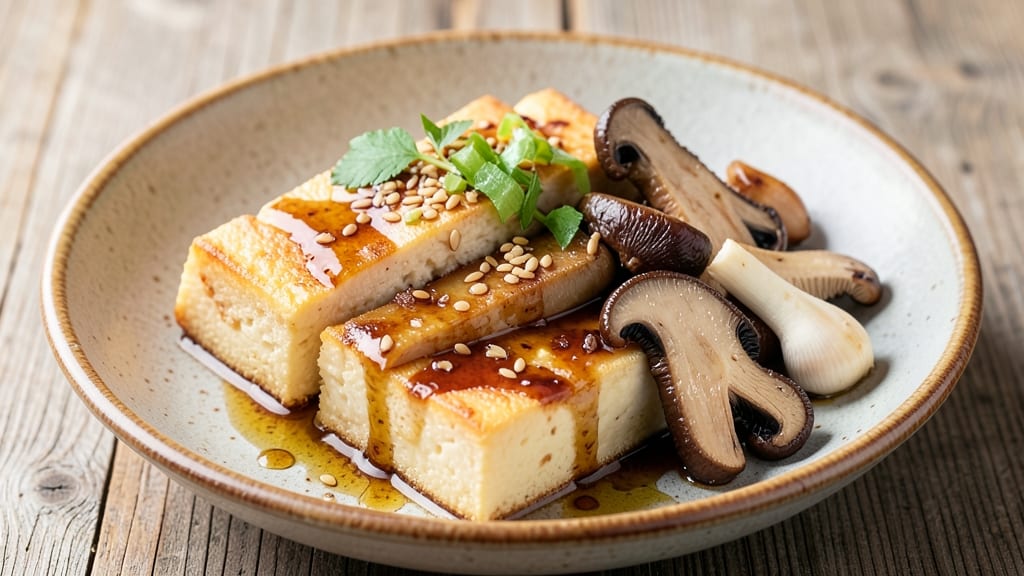
This bean curd and mushroom recipe delivers restaurant-quality umami in every bite—silky tofu meets earthy mushrooms for a stir-fry that's both hearty and elegant. The secret lies in high-heat sautéing that transforms soft tofu into crispy-edged, flavorful cubes while mushrooms develop deep, caramelized notes.
I developed this dish after years of perfecting texture contrasts, ensuring each component plays its part without overpowering the others.
What sets this recipe apart is the balance of techniques: first, pressing the bean curd to remove excess moisture (critical for crispy edges), then stir-frying in small batches to maintain perfect doneness.
The mushrooms get their own attention—sautéed until their natural juices evaporate, leaving behind concentrated umami richness. A quick sauce of soy, ginger, and garlic ties everything together with just the right tang.
By the time you plate this dish, you'll have a vibrant stir-fry with crispy tofu cubes, glossy mushrooms, and a sauce that clings perfectly to each bite. The texture contrast—crispy tofu against tender mushrooms—creates an experience that feels both restaurant-worthy and effortlessly homemade.
Serve over steamed rice or noodles to soak up every last bit of that savory sauce.
This recipe works equally well as a weeknight meal or special occasion dish. Pair it with a cold glass of green tea to complement the earthy flavors, or serve with a side of miso soup for a complete vegan meal.
The beauty of this dish is its versatility—swap in different mushrooms or add fresh herbs at the end for endless variations.
Ingredients for bean curd and mushroom
Restaurant-quality umami comes from these carefully selected ingredients—pressed tofu and earthy mushrooms meet aromatic sauce components.
| Ingredient | Amount | Notes |
|---|---|---|
| Extra-Firm Tofu 🧈 | 14 oz | Pressed to remove excess moisture |
| Shiitake Mushrooms 🍄 | 8 oz | Fresh, stems removed, sliced |
| Oyster Mushrooms 🍄 | 8 oz | Fresh, sliced into even pieces |
| Tamari Sauce 🍶 | ⅓ cup | Gluten-free soy sauce alternative |
| Fresh Ginger 🌿 | 1 tbsp | Finely grated, aromatic |
| Garlic Cloves 🧄 | 3 cloves | Minced, aromatic |
| Sesame Oil 🫒 | 1 tbsp | Toasted for nutty aroma |
| Avocado Oil 🫒 | ¼ cup | High smoke point for stir-frying |
| Maple Syrup 🍯 | 1 tbsp | For subtle sweetness balance |
| White Rice Vinegar 🍶 | 1 tbsp | For tangy brightness |
| Toasted Sesame Seeds 🌾 | 1 tbsp | For garnish and crunch |
| Diamond Crystal Kosher Salt 🧂 | ½ tsp | For seasoning |
| Freshly Ground Black Pepper 🌶️ | ¼ tsp | For subtle heat |
| Jasmine Rice 🍚 | 1 cup | Uncooked, for serving |
The tofu selection matters most here. Extra-firm holds its shape better during pressing, and brands like House Foods or Wildwood are excellent choices. Pressing is non-negotiable—wrap the block in a clean kitchen towel, place a heavy pan on top, and let it drain for 20-30 minutes. For mushrooms, shiitake and oyster provide the ideal umami depth, though cremini or enoki work beautifully too. Look for mushrooms with vibrant, moist caps at Whole Foods or your local Asian market—they'll have the most concentrated flavor. Fresh ginger and garlic should be brightly colored with no soft spots; store them in the fridge until ready to use. The tamari sauce acts as the flavor backbone—opt for a high-quality brand like San-J for authentic umami without gluten concerns.
No shiitake mushrooms? Cremini or portobello mushrooms work well as substitutes, though they'll have a slightly different texture. Running short on tamari? Coconut aminos provide a similar profile, though with a slightly sweeter note. The maple syrup and white rice vinegar balance the dish's savory elements—if you prefer less sweetness, reduce to 0.5 tbsp maple syrup or omit entirely. Fresh ginger can be substituted with 1 tsp ground ginger, but the flavor will be less vibrant. For the sesame oil, toasted sesame oil is ideal, but regular sesame oil works in a pinch. If you're using pre-minced garlic, ensure it's fresh—jarred garlic loses potency quickly. The avocado oil is critical for high-heat stir-frying; Mazola or a high-smoke-point brand ensures your tofu gets that perfect crispy edge without burning.
Tofu and mushrooms can be prepped ahead—slice and store in airtight containers for up to 2 days in the fridge, though fresh is always better. The sauce components keep well: tamari, maple syrup, and vinegar can be stored indefinitely in the pantry, while fresh ginger and garlic last 2-3 weeks in the fridge. This stir-fry reheats beautifully—simply warm in a skillet with a splash of water to restore moisture. For best texture, serve immediately after cooking, but leftovers reheat well for 3-4 days. Freeze cooked portions for up to 3 months, though the tofu may become slightly softer upon thawing. The rice can be cooked in advance and reheated with a splash of water to maintain its texture.
Why You'll Love This Recipe
- No-Fuss Protein Pack: The tofu and mushrooms handle all the heavy lifting—no fancy techniques, just pan-searing until golden. Between us, that’s where the magic happens: crispy edges on the tofu, tender mushrooms soaking up the tamari.
- Umami Bomb: Shiitake and oyster mushrooms? They’re like nature’s flavor bombs, especially with a splash of tamari and fresh ginger. Honestly, the first time I tasted this, I wondered why I’d ever skipped mushrooms in stir-fries.
- Lunchbox Hero: This keeps perfectly for days—toss it in a container with rice, and you’ve got a lunch that’s actually exciting. My daughter picks out the ginger bits, but still asks for seconds. (Yes, even on a Tuesday night.)
- Budget Meal Magic: Extra-firm tofu and dried mushrooms stretch this dish into a full meal without breaking the bank. I’ll be real: it’s my go-to when grocery money’s tight, but no one ever guesses it’s “cheap.”
Step-by-step instructions for bean curd and mushroom stir-fry
Master this umami-rich stir-fry with precise technique for silky tofu and perfectly seared mushrooms.
Prepare the Extra-Firm Tofu for Maximum Texture
Begin by pressing the 14 oz extra-firm tofu between two layers of paper towels or a clean kitchen towel. Place a heavy object like a cast-iron skillet on top and let it drain for at least 30 minutes—this removes excess moisture and ensures a silky texture when cooked. For best results, press it for up to 1 hour if you're short on time.
After pressing, cut the tofu into ½-inch thick slices or 1-inch cubes, depending on your preference. Toss the pieces in ½ teaspoon of the diamond crystal kosher salt and let them sit for 5 minutes while you prepare the mushrooms. This pre-salting enhances flavor and helps develop a subtle crust during cooking.
Sear the Mushrooms for Deep Umami Flavor
Heat ¼ cup avocado oil in a large wok or skillet over medium-high heat until shimmering. Add the 8 oz shiitake mushrooms (stems removed, sliced) and 8 oz oyster mushrooms (sliced evenly) in a single layer. Cook undisturbed for 3-4 minutes until the mushrooms release their moisture and begin to brown at the edges.
Stir occasionally, working in batches if needed, until all mushrooms are deep golden brown and tender yet still slightly firm. Remove them from the wok and set aside on a plate. The high heat is crucial here—it develops the mushrooms' natural umami compounds and creates a rich, caramelized flavor base for the stir-fry.
Cook the Tofu Until Silky and Golden
In the same wok (no need to clean it—the fond adds flavor), add 1 tablespoon sesame oil and swirl to coat. Increase heat to medium-high and add the prepared tofu in a single layer. Cook undisturbed for 2-3 minutes per side until the tofu develops a golden-brown crust and appears silky when cut with a knife.
Tofu cooks quickly but needs patience—avoid moving it too soon, or it will steam instead of sear. Once golden, remove the tofu and set it aside with the mushrooms. The residual heat will continue cooking the tofu slightly, so it won’t be overdone when everything comes together.
Build the Flavorful Sauce and Combine Ingredients
Reduce the heat to medium and add 1 tablespoon minced garlic cloves and 1 tablespoon finely grated fresh ginger to the wok. Sauté for 30 seconds until fragrant, stirring constantly to prevent burning. Pour in ⅓ cup tamari sauce, 1 tablespoon white rice vinegar, and 1 tablespoon maple syrup, scraping up any browned bits from the bottom of the pan.
Simmer the sauce for 1-2 minutes until it thickens slightly and coats the back of a spoon. Return the tofu and mushrooms to the wok, tossing everything together for 1-2 minutes until evenly coated and heated through. The sauce should cling to the tofu and mushrooms, creating a glossy, umami-packed finish.
Finish with Garnish and Serve Over Jasmine Rice
Remove the stir-fry from heat and drizzle with 1 tablespoon toasted sesame oil. Sprinkle generously with 1 tablespoon toasted sesame seeds and ¼ teaspoon freshly ground black pepper to add texture and depth of flavor. Toss gently to distribute the garnishes evenly.
Serve immediately over 1 cup cooked jasmine rice, ensuring each portion gets a generous helping of the silky tofu and umami-rich mushrooms. The contrast of the fluffy rice with the savory stir-fry creates a balanced, restaurant-quality dish that highlights the natural textures and flavors of the ingredients.
Pro Tips For Making Bean Curd And Mushroom
- CRISP THE TOFU FIRST: Skip the soggy tofu trap—press it for 20 minutes, then cut into slabs and pan-fry in 2 tablespoons of neutral oil (like peanut or vegetable) until golden on both sides. I used to steam it first, but crisping gives that satisfying texture that holds up to the mushrooms and sauce. High heat is non-negotiable here—if it’s sizzling, you’re doing it right.
- STIR-FRY MUSHROOMS SEPARATELY: Shiitake and oyster mushrooms have different cook times—don’t mix them. Slice shiitake thicker (¼-inch) and cook them first in the same pan (they release less water). Then add the oyster mushrooms, which break down faster. My grandmother swore by this, and she was right: uneven cooking turns your dish into a mushy mess.
- SAVE THE GINGER JUICE: Don’t just grate the ginger—squeeze out the excess liquid after grating (wrap it in a clean towel and press). Wet ginger dilutes your tamari sauce and makes the dish taste watered down. I learned this the hard way after making a batch that tasted bland despite all the other seasoning.
- UPGRADE WITH AARON’S SAUCE: Skip the plain tamari shortcut—mix 2 tablespoons of tamari with 1 teaspoon of rice vinegar, ½ teaspoon of sesame oil, and a pinch of sugar. It cuts through the earthiness of the mushrooms and adds depth without effort. I was skeptical until I tried it—now it’s my go-to for any stir-fry.
Best sauces and condiments for these flavors
Classic Tamari Sauce
This stir-fry’s foundation is a simple yet powerful sauce made with ⅓ cup tamari, 1 tbsp white rice vinegar, and 1 tbsp maple syrup. The tamari provides deep umami without gluten, while the vinegar brightens the dish with a subtle tang.
For extra richness, I like to add a splash of 1 tsp toasted sesame oil to the sauce before tossing with the tofu and mushrooms. This creates a glossy finish that clings beautifully to each bite. 🍶
Spicy Sesame Dressing
For those who crave heat, whip up a quick spicy sesame dressing by mixing 2 tbsp toasted sesame oil, 1 tbsp tamari, 1 tsp sriracha, and 1 tsp grated ginger. Drizzle this over the finished stir-fry for a bold, nutty kick.
If you prefer less spice, swap the sriracha for 1 tsp honey or maple syrup to sweeten the sauce instead. This dressing works especially well if you’re serving the dish over cold noodles for a refreshing contrast. 🌶️
Miso-Ginger Glaze
For a deeper, fermented flavor profile, replace the tamari sauce with a miso-ginger glaze. Combine 2 tbsp white miso paste, 1 tbsp tamari, 1 tbsp maple syrup, and 1 tsp grated ginger, then simmer for 2-3 minutes until smooth.
This glaze adds a creamy, savory depth that pairs perfectly with the earthy mushrooms. I recommend using red miso for a richer taste or white miso for a milder, brighter flavor. 💛
Lemon-Tahini Drizzle
Brighten the dish with a lemon-tahini drizzle by whisking together 2 tbsp tahini, 1 tbsp lemon juice, 1 tsp maple syrup, and 1 tsp water to thin. This creamy, tangy sauce adds a nutty contrast to the umami-packed stir-fry.
Drizzle it over the finished dish just before serving, and garnish with chopped cilantro or green onions for freshness. It’s a fantastic way to balance the richness, especially if you’re serving the dish with warm pita bread or quinoa. 💫
Chili Crisp Topping
For a crunchy, spicy crunch, top your stir-fry with 1 tbsp chili crisp (available at Asian markets or online). This fiery, oily condiment adds smoky heat and a satisfying texture. Sprinkle it lightly over the dish just before serving—it’s intense, so a little goes a long way.
Pair it with a cooling cucumber salad to balance the heat. If you can’t find chili crisp, substitute with 1 tsp gochujang mixed with ½ tsp honey. 🔥
Nutrition facts
Frequently asked questions
Can I substitute regular tofu for extra-firm?
Extra-firm tofu is ideal because it holds its shape better during pressing and cooking. However, if you only have regular or firm tofu, press it for 45-60 minutes and cut it into slightly smaller pieces (½-inch cubes) to prevent falling apart. The texture won't be as crispy, but it'll still work well.
What if I don't have shiitake or oyster mushrooms?
Cremini, portobello, or even white button mushrooms work beautifully! For best flavor, use a mix of two types. Slice them evenly and cook them for 1-2 minutes longer than shiitake to develop their umami. Button mushrooms will release more moisture, so pat them dry before cooking.
How do I prevent the tofu from getting soggy?
The key is proper pressing and high heat! Press the tofu for at least 30 minutes before cooking, and always use a high-smoke-point oil like avocado oil. Cook the tofu in batches over medium-high heat until golden, and avoid overcrowding the pan.
Can I make this recipe gluten-free?
Simply replace the tamari with coconut aminos or gluten-free soy sauce. All other ingredients in this recipe are naturally gluten-free. For extra safety, check that your sesame oil and sesame seeds are certified gluten-free.
What's the best way to reheat leftovers?
Reheat gently in a skillet over low-medium heat with a splash of water or tamari sauce to restore moisture. Avoid microwaving as it can make the tofu rubbery. For best texture, reheat for 3-4 minutes until warmed through, then garnish with fresh sesame seeds.