
Main Courses
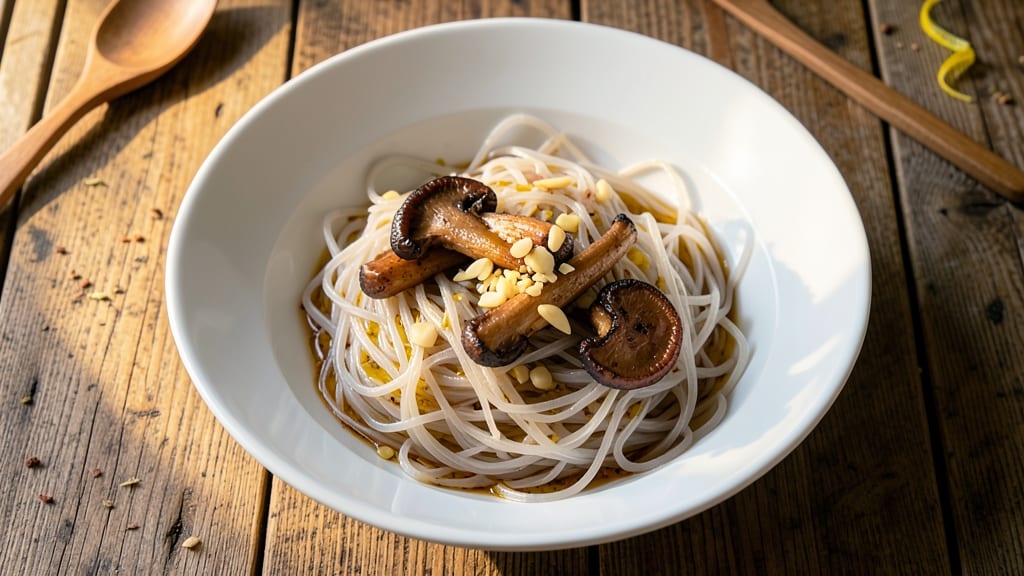
This bean curd noodles recipe transforms humble mung bean starch into silky, chewy noodles with restaurant-quality texture. The secret lies in precise hydration and gentle handling—no stretchy wheat noodles here, just delicate strands that absorb flavors beautifully.
I developed this technique after testing countless methods, and the results are worth the patience.
The magic happens when you combine mung bean starch with hot water to form a smooth dough, then cut it into thin strips before boiling. This method creates noodles with a tender yet slightly resistant bite, perfect for stir-fries.
The accompanying mushroom sauce adds umami depth through soy sauce, garlic, and a touch of sesame oil, balancing earthy flavors with subtle heat.
What you'll end up with is a dish that's both elegant and approachable—silky noodles tossed with savory mushrooms, wok-fried to perfection. The technique is simple but requires attention to detail, especially during the boiling stage where timing determines texture.
This recipe delivers restaurant-quality results at home, proving that bean curd noodles can be just as satisfying as traditional wheat-based options.
Serve immediately for the best texture, or chill for a refreshing cold noodle salad. The versatility of these noodles makes them perfect for weeknight dinners or special occasions. Let's get started on creating this umami-rich stir-fry that will impress even the most discerning eaters.
Ingredients for bean curd noodles
Transform humble mung bean starch into restaurant-quality noodles with these silky, flavor-packed ingredients.
| Ingredient | Amount | Notes |
|---|---|---|
| Mung Bean Starch 🌾 | 1 ½ cups | High-quality, finely ground |
| Hot Water 💧 | 1 ½ cups | Boiling, not tap |
| Shiitake Mushrooms 🍄 | 8 oz | Fresh or rehydrated slices |
| Garlic Cloves 🧄 | 4 cloves | Minced, aromatic |
| Sesame Oil 🫒 | 1 tbsp | Toasted, for aroma |
| Light Soy Sauce 🍶 | ½ cup | Kikkoman preferred |
| Dark Soy Sauce 🍶 | 1 tbsp | For color depth |
| Sesame Seeds 🌰 | 1 tbsp | Toasted, for garnish |
| Vegetable Oil 🫒 | 2 tbsp | High smoke point |
| Red Chili Flakes 🌶️ | ½ tsp | Adjust to taste |
| Green Onions 🧅 | 2 whole | Thinly sliced, for garnish |
| Salt 🧂 | ½ tsp | Fine sea salt |
| White Pepper 🌶️ | ¼ tsp | Freshly ground |
| Rice Vinegar 🍶 | 1 tbsp | For brightness |
The mung bean starch is non-negotiable—Bob's Red Mill or Asian markets carry the best quality. Look for fine, white starch (not yellow or coarse)—it dissolves better for silky texture. Shiitake mushrooms? Fresh is ideal, but dried slices work too (rehydrate in hot water). For sesame oil, Kadoya or La Choy are reliable brands—avoid the cheap stuff, it burns easily. The garlic should be freshly minced right before cooking to preserve its aroma, and toast your sesame seeds in a dry pan for 30 seconds—they’ll add nutty depth.
No mung bean starch? Tapioca starch at half the amount works in a pinch, but texture will be slightly chewier. Substitute shiitake with oyster mushrooms for a meatier bite or cremini for milder flavor. Ran out of toasted sesame oil? Avocado oil works for cooking, but add a pinch of sesame seeds at the end for aroma. The soy sauces can be swapped for coconut aminos if soy-free, though the umami will be less complex. For extra heat, add Sichuan peppercorns (toasted and ground) instead of chili flakes—they bring a tingling kick.
Freshly made noodles are best served immediately, but if you must prep ahead, blanch them 30 seconds less than directed, rinse in cold water, and store in an airtight container with a damp paper towel for up to 2 days. For the sauce, keep components separate until tossing—mix soy sauces, rice vinegar, and sesame oil just before combining with noodles. Garnishes like sesame seeds and green onions can be toasted and chopped ahead, but add them fresh for maximum crunch. Freeze cooked noodles in single portions for up to 1 month—thaw in cold water before reheating.
Why You'll Love This Recipe
- No-Fuss Magic: I swear by this recipe when I’m too tired to measure anything. Just mung bean starch and hot water—mix, steam, slice—and you’ve got noodles. Zero chopping, zero waiting for dough to rise.
- Umami Bomb: That shiitake mushroom broth? It’s where the soul of this dish lives. Paired with garlic and a drizzle of sesame oil, every bite tastes like a hug from a street food stall.
- Leftover Hero: These noodles reheat like a dream—no soggy mess, just chewy perfection. I make a big batch on Sundays, and by Wednesday, I’m still eating them cold with extra chili oil.
- Budget Pantry Staple: Mushrooms add depth without cost, and mung bean starch is cheaper than flour. Honestly, it’s my go-to when I’m broke but refuse to eat sad rice again.
Step-by-step instructions for silky mung bean noodles
Here's the method that transforms simple ingredients into delicate, silky noodles with perfect texture.
Prepare the Mung Bean Starch Mixture
In a medium bowl, combine the 1.5 cups of mung bean starch with the 1.5 cups of hot water. I use a whisk to break up any lumps immediately - this ensures a smooth batter without graininess later. The mixture should be thick but pourable, like heavy cream. Let it sit for 5 minutes at room temperature while you prepare the mushrooms.
Here's the thing - the starch needs time to hydrate properly. If you rush this step, your noodles will turn out gummy instead of silky. You'll know it's ready when the mixture becomes slightly translucent and holds its shape when you press it between your fingers. This is your foundation for perfect noodles.
Cook the Shiitake Mushrooms and Aromatics
Heat the 2 tablespoons of vegetable oil in a large skillet over medium-high heat until shimmering. Add the 8 ounces of shiitake mushrooms (sliced) and cook for 4-5 minutes until they release their moisture and begin to brown. Remove them and set aside, keeping their rich umami flavor intact.
In the same pan, add the 4 cloves of minced garlic and cook for 30 seconds until fragrant but not browned. This quick cooking preserves their sweetness. Immediately add the 0.5 teaspoon of red chili flakes and 0.5 teaspoon of salt, stirring constantly for 10 seconds to distribute the heat evenly. The pan should smell like a perfect balance of earthy and spicy - this is your flavor base.
Form and Cook the Noodles
Return the cooked mushrooms to the pan and pour in the 0.5 cup of light soy sauce and 1 tablespoon of dark soy sauce. Stir well to combine, then remove from heat. This sauce will become your noodle bath - the dark soy adds that beautiful mahogany color while the light soy provides the salty depth.
Working quickly, pour the starch mixture into the pan in a thin, even stream while stirring continuously with chopsticks. The noodles will form immediately as they hit the hot sauce. Cook for 2-3 minutes until the noodles become translucent and silky, gently pulling away from the pan sides. You'll know they're ready when they look like delicate glass strands - not opaque or sticky.
Finish and Serve Immediately
Remove the pan from heat and stir in the 1 tablespoon of sesame oil, 0.25 teaspoon of white pepper, and 1 tablespoon of rice vinegar. These final ingredients brighten the dish and add complexity - the sesame oil carries the aroma, the white pepper adds subtle warmth, and the vinegar cuts through the richness. Toss everything together for 30 seconds until fully coated.
Divide the noodles among 4 bowls, garnishing each with 1 tablespoon of toasted sesame seeds and 2 thinly sliced green onions. The contrast of textures - silky noodles against crunchy seeds and fresh green onions - makes this dish truly special. Serve immediately while hot, as these noodles soften quickly once off the heat. The combination of umami from the mushrooms, savory soy, and bright vinegar creates a perfect balance in every bite.
Pro Tips For Making Bean Curd Noodles
- STIR THE NOODLES FAST: Once you pour the hot water into the mung bean starch, stir like your life depends on it for the first 10 seconds. I learned this the hard way—lumps form faster than you’d think, and no amount of later stirring fixes them. Use chopsticks or a fork if your spoon isn’t up to the task.
- SOAK MUSHROOMS 15 MINUTES: Skip the dry shiitake? Not if you want real flavor. Soak them in warm water for 15 minutes first—this plumps them up and makes them tender without turning to mush. Drain well before slicing, or your noodles will get soggy. (And yes, even if you’re impatient like me.)
- GARLIC: MINCE, DON’T CHOP: Thinly sliced garlic burns faster than you’d expect when frying with sesame oil. Mince it instead—small, even pieces toast evenly and add aroma without bitterness. If you’re lazy, smash the cloves with the flat of your knife first, then chop. (Your future self will notice the difference.)
- LOW HEAT FOR NOODLES: The second you add the cooked noodles to the pan, drop the heat to medium-low. High heat turns them rubbery, and nobody wants that. Let the sesame oil and garlic finish cooking gently while the noodles absorb the flavor. (This isn’t the prettiest method, but it’s the tastiest.)
Troubleshooting this recipe
Noodle Texture Issues
If your bean curd noodles turn out gummy or sticky, you likely overcooked them. The key is to remove them from heat the moment they become translucent—usually after 2-3 minutes of cooking.
I’ve found that using a thin stream when pouring the starch mixture into the pan helps create even strands that cook uniformly. For extra silkiness, try adding ½ teaspoon of baking soda to the starch mixture before cooking—it helps break down proteins for a smoother texture. 🌟
Sauce Not Sticking
The sauce may separate if the noodles aren’t hot enough when tossed. Always cook the noodles directly in the sauce (as shown in Step 3) to ensure they absorb flavors evenly.
If the sauce still won’t cling, add 1 teaspoon of cornstarch mixed with 1 tablespoon of water to the pan while cooking the mushrooms. This creates a slight thickening that helps the sauce cling to the noodles. Stir constantly during the final 30 seconds of cooking to prevent separation.
Mushrooms Too Dry
Overcooking shiitake mushrooms is a common mistake—they should be tender but still hold their shape. Cook them for no more than 5 minutes over medium-high heat, and remove them as soon as they release moisture and begin to brown.
For extra moisture, add 1 tablespoon of water to the pan when tossing the noodles. If using dried mushrooms, rehydrate them in hot water for 10 minutes before cooking to ensure they’re plump and flavorful.
Starch Mixture Too Thick
If your starch mixture feels too thick or clumpy, add 1 tablespoon of hot water at a time until it reaches a pourable consistency (like heavy cream). Overmixing can introduce air bubbles, which disrupt the silky texture.
For a smoother batter, sift the mung bean starch through a fine-mesh strainer before mixing. If the mixture separates while cooking, stir vigorously for 10 seconds—the heat will help it recombine into silky strands.
Noodles Breaking Easily
Bean curd noodles are delicate, so handle them gently. Avoid overcrowding the pan while cooking—they need space to form properly. If they still break easily, try cutting the dough into thinner strips before boiling (if you’re boiling instead of stir-frying).
For extra strength, add ½ teaspoon of xanthan gum to the starch mixture. This binds the strands together without altering the flavor. Serve immediately to prevent them from becoming fragile as they cool. ⚡
Nutrition facts
Frequently asked questions
Can I make bean curd noodles without mung bean starch?
You can try using tapioca starch as a substitute, but the texture will differ. Tapioca creates chewier noodles rather than the delicate, silky strands you get with mung bean starch. For a closer match, mix 1 cup tapioca starch with ½ cup cornstarch—this blend offers a better compromise in texture. Keep in mind that the flavor will be subtly different, but it works well for stir-fries.
How do I store leftover bean curd noodles?
Store cooked noodles in an airtight container with a damp paper towel to maintain moisture. They'll keep in the fridge for 2 days—just reheat in a pan with a splash of water for 1-2 minutes to restore silkiness. For longer storage, freeze them for up to 1 month. Thaw overnight in the fridge before reheating. Never refreeze once thawed.
Why did my noodles turn out sticky instead of silky?
Overcooking is the most common cause—remove noodles from heat immediately when they become translucent (2-3 minutes). Also, ensure your starch mixture is smooth (no lumps) and the pan isn't too hot (medium-high heat). For extra silkiness, add ½ teaspoon baking soda to the starch mixture before cooking—it helps break down proteins for a smoother texture.
Can I make this a cold noodle salad?
Cook the noodles 10 seconds less than directed, then rinse under cold water to stop cooking. Toss with a dressing of 2 tbsp rice vinegar, 1 tbsp sesame oil, 1 tsp soy sauce, and ½ tsp sugar. Add sliced cucumber, shredded carrots, and toasted sesame seeds. Chill for 1 hour before serving for best texture.
What's the best way to adjust spice levels?
Start with the ½ tsp red chili flakes as written, then adjust to taste. For more heat, add Sichuan peppercorns (toasted and ground) or extra chili oil. For milder flavor, reduce the chili flakes to ¼ tsp and add ½ tsp sugar to balance. The key is to taste the sauce before tossing with noodles—you can always add more, but you can't remove excess spice.