
Soups & Stews
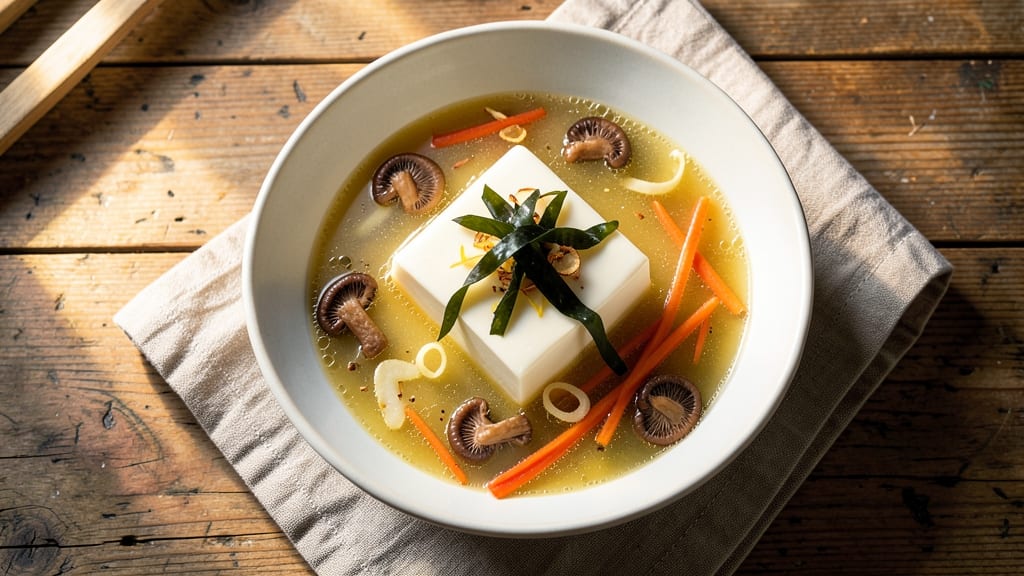
This bean curd soup recipe delivers a velvety miso-ginger harmony that transforms simple ingredients into a restaurant-worthy bowl. 💛 The secret lies in silky tofu cubes simmered in a fragrant broth, where fermented miso and fresh ginger create layers of umami and warmth.
I developed this version after years of refining the balance—creamy yet light, savory without being heavy, and packed with texture from both soft tofu and crisp vegetables.
The foundation begins with a rich, low-sodium broth (using kombu and shiitake mushrooms for depth), which infuses the tofu with subtle earthiness. A touch of sesame oil at the end adds nutty warmth, while scallions and cilantro bring freshness to every spoonful.
What makes this recipe truly adaptable is its flexibility—swap miso for chili crisp for heat, or add lemongrass for a Thai-inspired twist. The tofu preparation is critical: pressing and slicing it just before cooking ensures it absorbs the broth beautifully without turning mushy.
By the time you serve this soup, you'll have a dish that's both comforting and sophisticated—silky tofu floating in a golden broth, garnished with delicate herbs and a drizzle of sesame oil.
It's the kind of meal that feels indulgent yet light enough for any day, whether you're meal prepping for the week or hosting a dinner party. The aroma alone will have everyone gathering around the table, and the first sip delivers that perfect balance of flavors.
For those with dietary restrictions, this recipe shines: naturally gluten-free, easily adjusted for lower sodium, and packed with plant-based protein. The techniques here—proper tofu handling, controlled simmering, and flavor layering—ensure professional results every time. Let's bring this silky miso-ginger harmony to your kitchen.
Ingredients for bean curd soup
Silky tofu, fermented miso, and aromatic ginger transform simple pantry staples into a restaurant-worthy vegan bowl.
| Ingredient | Amount | Notes |
|---|---|---|
| Extra-Firm Tofu 🍲 | 14 oz | Pressed and cubed |
| White Miso Paste 🧈 | 2 tbsp | High-quality, fermented |
| Fresh Ginger 🌿 | 2 tbsp | Finely grated, organic preferred |
| Kombu Seaweed 🌊 | 1 sheet | Dried, for broth depth |
| Dried Shiitake Mushrooms 🍄 | 4 whole | Rehydrated, stems removed |
| Carrots 🥕 | 1 medium | Julienned, organic preferred |
| Scallions 🧅 | 3 whole | Thinly sliced, white and green parts |
| Fresh Cilantro 🌿 | ¼ cup | Chopped, stems included |
| Sesame Oil 🫒 | 1 tbsp | Toasted, for finishing |
| Low-Sodium Soy Sauce 🍶 | 1 tbsp | For umami balance |
| Rice Vinegar 🍶 | 1 tsp | For brightness |
| Sesame Seeds 🌾 | 1 tsp | Toasted, for garnish |
| Water 💧 | 4 cups | Filtered preferred |
| Diamond Crystal Kosher Salt 🧂 | ½ tsp | Adjust to taste |
The tofu is the heart of this dish—extra-firm, pressed for 30 minutes to remove excess water. Asian markets carry the best quality, but any organic brand works. For the miso, white miso from Marukome delivers that delicate umami without overpowering. Ginger should be fresh, vibrant, and free of blemishes—organic ginger from Whole Foods or your local farmers' market is ideal. The kombu and shiitake mushrooms are non-negotiable for that deep, savory broth. Dried shiitake from a Japanese specialty store has the most intense flavor, but store-bought works too if you rehydrate them properly.
No white miso? Red miso at half the amount adds warmth, though it's stronger. Fresh ginger too strong? Substitute with 1 tsp ground ginger, but fresh is always better. The carrots can be baby carrots if that's what's on hand—just adjust the julienne size. For extra umami without soy sauce, 1 tbsp nutritional yeast works well. The sesame oil is for finishing—toasted sesame oil from Trader Joe's has the best nutty flavor. If you're avoiding gluten, ensure your soy sauce is certified gluten-free, as some brands use wheat.
This soup tastes even better the next day as flavors meld—store in airtight containers for up to 5 days. For meal prep, double the batch and freeze portions in ice cube trays for single servings. The tofu can be prepped ahead and refrigerated, but add it to the broth just before serving to maintain texture. Garnish with fresh cilantro and sesame seeds right before serving to preserve their brightness. The broth keeps for 4 days refrigerated or 3 months frozen if separated from the tofu.
Why You'll Love This Recipe
- No-Chop Needed: I swear by this—just cube the tofu, slice the ginger thick, and let the kombu steep. No knife skills required, and honestly? The soup still tastes like I spent hours simmering.
- Umami Bomb: That miso paste and shiitake combo? It’s a flavor explosion in a bowl. The ginger brightens it up, but the deep, savory richness stays with you long after the last spoonful.
- Lunchbox Hero: Between us, this soup reheats like a dream. Pack it cold for work or warm it up in minutes—either way, it’s my go-to when I need something hearty but hands-off.
- Pantry Magic: Dried shiitake and kombu last forever, and a block of tofu stretches further than you’d think. I make a big batch on Sundays, and by Wednesday, I’m still eating it—no waste, just satisfaction.
Step-by-step instructions for silky miso and ginger bean curd soup
Transform simple ingredients into a velvety, umami-rich soup with this precise technique.
🍳 Step 1: Prepare the Kombu Broth Foundation
Rinse the 1 sheet kombu seaweed under cold water and pat dry with paper towels. Place it in a clean stockpot with the 4 cups water and bring to a gentle simmer over medium-low heat. The kombu releases its deep, oceanic flavor gradually—don't boil vigorously or it'll become bitter.
Simmer uncovered for 10 minutes until you see fine bubbles forming around the edges. Remove the kombu immediately after simmering—it's done when it releases its flavor but before it turns rubbery. Strain the broth through a fine-mesh sieve into a clean pot and discard the kombu. This clear, mineral-rich broth forms the backbone of your soup.
👨🍳 Step 2: Rehydrate Shiitake Mushrooms and Build Umami Layers
Place the 4 whole dried shiitake mushrooms in a small bowl and cover with hot (not boiling) water. Let them soak for 20 minutes until pliable. Drain, reserving the soaking liquid, and remove stems. Thinly slice the caps and set aside. Add the reserved mushroom soaking liquid to your kombu broth—this concentrated umami will deepen your soup's flavor profile.
In a separate small bowl, combine the 2 tbsp white miso paste with 1 tbsp low-sodium soy sauce and 1 tsp rice vinegar. Whisk until smooth—this miso mixture will add both savory depth and subtle tang. Gradually whisk this paste into the warm kombu broth while stirring constantly to prevent clumping. The broth should turn a rich, golden hue.
🍳 Step 3: Cook Aromatics and Vegetables to Perfection
Heat a separate clean pot over medium heat and add 1 tbsp sesame oil. Add the 2 tbsp finely grated fresh ginger and sauté for 30 seconds until fragrant but not browned. Add the 1 medium julienned carrot and 3 whole thinly sliced scallions, cooking for 2-3 minutes until the carrots soften slightly but retain their color.
Pour the vegetable mixture into your kombu-miso broth and bring to a gentle simmer. Add the rehydrated shiitake slices and return to a simmer. Cook for 8-10 minutes until the carrots are tender but still hold their shape—this ensures they contribute texture rather than mushiness. Season with the 0.5 tsp diamond crystal kosher salt, adjusting to taste.
🔪 Step 4: Incorporate Tofu and Final Touches
Gently add the 14 oz pressed and cubed extra-firm tofu to the simmering broth. The tofu should be fully submerged—if not, add a splash of hot water. Simmer for 5 minutes to allow the tofu to absorb the broth's flavors without breaking apart. The soup should maintain a silky consistency—if it thickens too much, thin with a little hot water.
Remove from heat and stir in the 0.25 cup chopped fresh cilantro. Ladle the soup into bowls, reserving some broth for garnish. Drizzle each serving with a touch of reserved broth and sprinkle with 1 tsp toasted sesame seeds. The contrast between the silky broth and toasted seeds adds both texture and visual appeal.
⏰ Step 5: Rest and Serve for Optimal Texture
Let the soup rest for 5 minutes before serving. This brief resting period allows the flavors to meld and the tofu to fully absorb the broth's essence. Taste and adjust seasoning one final time—you may need a touch more salt or vinegar to balance the umami.
Serve immediately with steamed rice or crusty bread. The soup should be velvety with distinct layers of ginger's sharpness, miso's savory depth, and shiitake's earthy richness. Each spoonful should deliver a harmonious balance of textures—silky broth, tender tofu, and crisp sesame seeds.
Pro Tips For Making Bean Curd Soup
- Bloom the Kombu First: Toss that kombu in cold water for 10 minutes before simmering—it’ll release its umami punch without overpowering the broth. I used to skip this, and the soup always tasted flat until I tried it.
- Press the Tofu Hard: Wrap the extra-firm tofu in a towel, place a heavy pan on top, and let it sit for 15 minutes. This keeps it from turning to mush when it hits the hot broth—trust me, your soup will thank you.
- Toast the Shiitake: Dry the dried shiitake mushrooms with a paper towel first, then toast them in a dry pan for 2 minutes. This deepens their flavor and cuts the slimy texture—no one wants chewy mushrooms in their soup.
- Stir the Miso Last: Whisk the white miso into the hot broth off the heat—just before serving—to keep its delicate flavor from cooking out. I learned this the hard way when my soup tasted bitter instead of rich.
Storing and reheating your leftovers
Refrigerator Storage
Store your bean curd soup in an airtight glass container for up to 4 days in the refrigerator. The flavors actually deepen overnight, making it taste even better the next day.
I recommend using Pyrex storage containers—they maintain temperature consistency and prevent flavor transfer. Let the soup cool completely before sealing to avoid condensation buildup. 💫
Freezer Storage
For longer storage, freeze the soup in single-serving portions using silicone ice cube trays or small glass jars. This makes reheating easy and prevents freezer burn. Label with the date—it keeps for 3 months at 0°F or below.
When ready to eat, thaw overnight in the fridge or use the microwave defrost setting for 2 minutes.
Reheating Methods
For the best texture, reheat on the stovetop over low heat—add 2 tbsp water to prevent sticking and stir frequently. Aim for 85-90°F internal temperature to preserve the silky tofu.
Microwave reheating works too: cover with a damp paper towel and heat in 30-second intervals, stirring between each, until hot. Never reheat above 165°F to avoid rubberizing the tofu. ✨
Reviving Texture
If reheated soup seems too thick, thin with 1-2 tbsp hot water or reserved broth. For extra silkiness, stir in ½ tsp toasted sesame oil while reheating.
The tofu will absorb the oil and regain its velvety texture. Garnish with fresh cilantro and sesame seeds after reheating to restore brightness and crunch.
Meal Prep Tips
Prepare tofu and broth separately for make-ahead convenience. Store the tofu in the fridge for up to 2 days and add it fresh when reheating. Double the broth recipe and freeze in 1-cup portions—perfect for quick lunches.
Just add fresh tofu and garnishes when serving. This strategy saves time while keeping the soup restaurant-quality. 💡
Garnish Refresh
Always add fresh garnishes after reheating to maintain vibrant flavors. A sprinkle of toasted sesame seeds and thinly sliced scallions brighten every bowl. For extra umami, drizzle with 1 tsp chili oil or white miso paste. These finishing touches elevate the dish from homemade to gourmet in seconds.
Nutrition facts
Frequently asked questions
Can I use regular tofu instead of extra-firm?
The recipe calls for extra-firm tofu because it holds its shape better during simmering. Regular or firm tofu will absorb more broth and may turn mushy. If that's all you have, press it for 45 minutes instead of 30 and cube it slightly smaller to ensure even cooking. The texture will be softer but still delicious!
How do I make this soup spicier?
Add ½ to 1 teaspoon of chili crisp or ½ teaspoon of red pepper flakes when simmering the broth. For a smoky kick, stir in ½ teaspoon of gochujang (Korean chili paste) with the miso mixture. Finish each bowl with a drizzle of sriracha or a sprinkle of crushed red pepper for extra heat.
What if I don't have kombu seaweed?
You can substitute with 1 teaspoon of dashi powder or ½ teaspoon of kelp granules for depth. If neither is available, use an extra ½ cup of shiitake mushroom soaking liquid or add 1 teaspoon of fish sauce (for non-vegan versions). The broth will still be flavorful, though less mineral-rich.
Can I make this soup gluten-free?
Yes! Use tamari or certified gluten-free soy sauce instead of regular soy sauce. Also ensure your miso paste is gluten-free (most white miso is naturally gluten-free, but check labels). The rest of the ingredients are already gluten-free, so this version will be completely safe for gluten-sensitive diets.
Why did my tofu turn rubbery?
Rubbery tofu usually happens from overcooking or reheating too aggressively. Simmer tofu for only 5 minutes (not longer) and never let the soup boil after adding it. When reheating, use low heat and add 2 tbsp water to prevent sticking. For extra silkiness, stir in ½ tsp sesame oil while reheating.