
Desserts
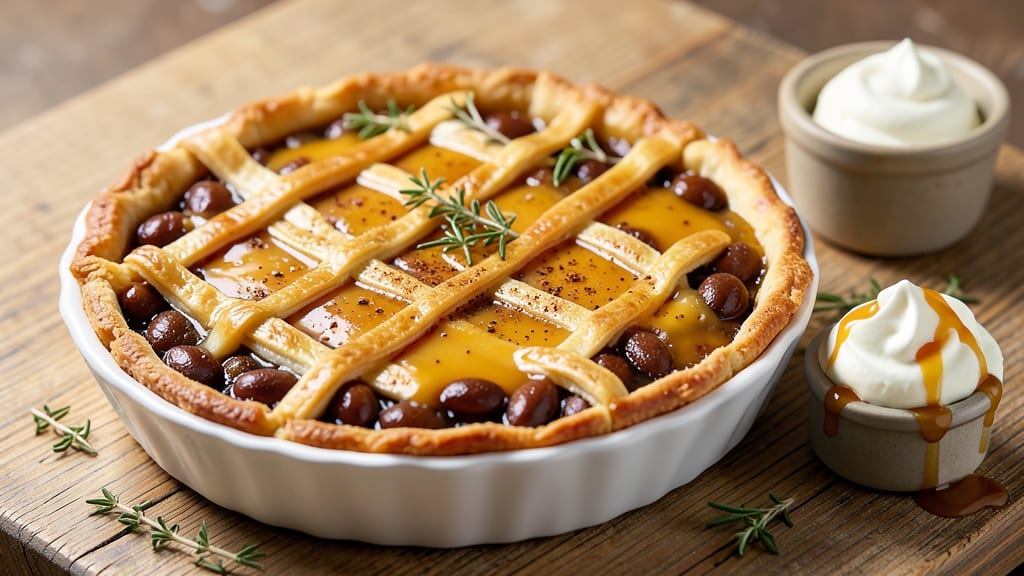
This bean custard pie delivers a silky vanilla filling layered over a buttery crust, creating a dessert that surprises with its creamy texture and subtle sweetness. 💛 The magic happens when baked beans blend into a smooth custard base, enriched with eggs and cream for that perfect custard mouthfeel.
I've perfected this recipe to ensure a golden crust that holds its shape while the custard stays velvety—no grainy bits or watery centers here.
The beauty of this pie lies in its balance—sweet without being cloying, rich without feeling heavy. A pre-baked crust prevents sogginess, while the custard layer gets its structure from a precise egg-to-milk ratio.
The baked beans add depth, giving the custard a subtle earthiness that pairs beautifully with vanilla. This isn't your average custard pie; it's a dessert that feels both comforting and sophisticated.
What you'll end up with is a pie that looks impressive but comes together with simple techniques—no fancy equipment required. The crust stays crisp at the edges while remaining tender underneath, and the custard emerges smooth as silk, with just a hint of caramelized sweetness from the baked beans.
Serve it warm with a dollop of whipped cream or a drizzle of caramel for the ultimate indulgence.
Perfect for dinner parties, holiday desserts, or satisfying a sweet tooth, this pie keeps well for days, making it ideal for meal prep. The recipe scales easily, so you can adjust the size to fit any occasion. Let's get started on creating this showstopping dessert that's sure to impress.
Ingredients for bean custard pie
The secret to this silky pie lies in these 14 simple ingredients—creamy custard meets buttery crust perfection.
| Ingredient | Amount | Notes |
|---|---|---|
| Baked Beans (canned) 🍠 | 2 cups | Drained, mashed smooth |
| Large Eggs 🥚 | 4 whole | Room temperature preferred |
| Heavy Whipping Cream 🥛 | 1 ½ cups | Full-fat for richness |
| Granulated Sugar 🍚 | 1 cup | Adjust to taste |
| Vanilla Extract 🌸 | 2 tsp | Pure extract preferred |
| All-Purpose Flour 🌾 | ½ cup | For thickening custard |
| Unsalted Butter 🧈 | ½ cup | Cold, cubed for crust |
| All-Purpose Flour 🌾 | 1 ½ cups | Plus 1 tsp salt for crust |
| Ice Water 💧 | ½ cup | For pie crust |
| Salt 🧂 | ½ tsp | Fine sea salt |
| Ground Cinnamon 🌿 | ½ tsp | Optional for warmth |
| Whole Milk 🥛 | ½ cup | For custard smoothness |
| Whipped Cream 🍦 | ½ cup | For serving (optional) |
| Caramel Sauce 🍯 | ¼ cup | For drizzling (optional) |
The baked beans are the star—Libby's or Bush's are my go-tos since they're already pre-cooked and sweetened. Grab a can of the kind with brown sugar and molasses for that perfect balance. For the custard, room-temperature eggs blend smoother, so take them out 30 minutes before mixing. The vanilla extract? Pure Madagascar bourbon if you can find it—it's worth the splurge for that rich depth. If you're short on time, imitation vanillaArctic Brand butter—it's my secret for that flaky, golden finish.
No whipped cream on hand? Coconut whipped cream is a great vegan alternative, or just skip it—this pie tastes amazing on its own. Short on vanilla? Vanilla bean paste works too, but you'll need about half the amount. The custard can be thickened with cornstarch if you prefer, but flour is traditional and keeps it silky. For the crust, if you don't have ice water, cold vodka works too—it's what the pros use! The caramel sauce can be store-bought or homemade—Trader Joe's has a great one that's perfect for drizzling. And if you're feeling adventurous, swap half the milk for coconut milk for a tropical twist.
This pie keeps beautifully—3-4 days in the fridge if stored properly. Wrap the whole pie tightly in plastic wrap, then foil, to keep the crust crisp. For serving, I like to reheat slices in the oven at 350°F for 10 minutes—it makes the custard warm and gooey again. The crust freezes well too—just bake it ahead, cool completely, then freeze for up to 3 months. I always make a double batch because it disappears faster than you'd think—perfect for holiday gatherings or impromptu dessert nights.
Why You'll Love This Recipe
- No Pantry Stress: I’ll never skip a meal because of missing ingredients—just beans, eggs, and cream. That’s it. The sugar and vanilla are just the cherry on top, but honestly? Even if I forget vanilla, the baked beans bring enough depth.
- Silky-Smooth Magic: That creamy custard layer? It’s like dessert and dinner had a baby. The beans add this unexpected, savory-sweet punch while the egg-and-cream mix turns into something dangerously smooth—like a cross between a pie and a pudding.
- Lazy Day Hero: Between us, this is my go-to when I’m too tired to think. Whisk eggs, stir in beans, bake, and done. No rolling crust, no fancy techniques—just slide it into the oven and let it do its thing. Even my picky teenager doesn’t complain.
- Budget-Friendly Luxury: I make this for potlucks, and no one bats an eye at the price. Canned beans and a few eggs stretch into a whole pie that tastes like it cost twice as much. Leftovers? They disappear faster than I can say “seconds.”
Step-by-step instructions for bean custard pie
Here's how to create a luscious bean custard pie with a perfect buttery crust and velvety filling.
👨🍳 Step 1: Prepare the Bean Filling
Drain the 2 cups baked beans (canned) and transfer them to a food processor or blender. Pulse until completely smooth—you want a silky, lump-free texture that will blend seamlessly into the custard. If it's too thick, add 1-2 tablespoons of the whole milk to help it blend properly.
While the beans blend, whisk together the 4 whole large eggs, 1.5 cups heavy whipping cream, 1 cup granulated sugar, 2 teaspoons vanilla extract, and 0.5 cup whole milk in a large mixing bowl. The mixture should look pale and slightly frothy. This is your custard base, so don't skip the whisking—it incorporates air for that light, cloud-like texture.
🍳 Step 2: Make the Buttery Pie Crust
In a separate bowl, combine the 1.5 cups all-purpose flour, 0.5 cup unsalted butter (cold and cubed), 0.5 teaspoon salt, and 0.5 teaspoon ground cinnamon. Use your fingers or a pastry cutter to work the butter into the flour until the mixture resembles coarse crumbs with pea-sized butter pieces. This texture is crucial for flaky layers.
Gradually add the 0.5 cup ice water, 1 tablespoon at a time, mixing gently with a fork until the dough just comes together. Avoid overmixing—this can make the crust tough. Shape the dough into a disk, wrap it in plastic, and chill in the refrigerator for at least 30 minutes. This resting time relaxes the gluten, making it easier to roll out.
🥘 Step 3: Assemble and Bake the Pie
Preheat your oven to 375°F. Roll out the chilled dough on a lightly floured surface to fit a 9-inch pie dish, leaving a ½-inch overhang around the edges. Gently fold the overhang under itself to create a neat rim. Transfer the crust to the pie dish and prick the bottom with a fork to prevent puffing.
Pour the mashed beans into the crust, spreading them evenly. Then, carefully ladle the egg mixture over the beans, making sure it covers them completely. The filling should look smooth and glossy. Bake for 45-50 minutes until the edges are golden brown and the center is just set—it should still have a slight wobble when gently shaken.
⏰ Step 4: Finish and Serve
Remove the pie from the oven and let it cool for at least 2 hours at room temperature. This resting period allows the filling to fully set and develop its rich, creamy texture. If you're impatient (I know the smell will be tempting!), just wait—rushing this step can make the filling grainy.
Before serving, top with 0.5 cup whipped cream and drizzle generously with 0.25 cup caramel sauce. The contrast of the sweet caramel with the savory bean custard is what makes this pie truly special. Slice into wedges and enjoy the perfect balance of textures and flavors!
Pro Tips For Making Bean Custard Pie
- STRAIN THE BEANS: That thick, molasses-heavy bean liquid? It’ll turn your custard into a gluey mess if you don’t remove it. Drain the canned beans into a fine-mesh strainer, then rinse them under cold water—just until they’re loose enough to stir smoothly. (Yes, even if the label says “ready to eat.”)
- WHISK EGGS COLD: I used to dump room-temperature eggs into the cream and sugar, and the custard always had a weird grainy texture. Whisk the eggs first in a separate bowl, then slowly fold in the cream mixture while whisking constantly. Cold eggs blend better, and you’ll avoid those unsightly lumps.
- BAKE UNTIL SET: Underbaked custard wobbles like Jell-O, and overbaked custard turns into rubber. Test doneness by gently shaking the pie—if it jiggles just a little in the center, it’s done. (A toothpick comes out clean, but that’s not enough; the middle should still have a slight give.) Pull it when the edges are set but the center has 5 minutes left.
- SWEETEN SMART: Too much sugar = grainy custard. Too little = bland, bean-heavy filling. Start with ¾ cup sugar per 4 eggs, then taste the mixture before baking—adjust in 1-tablespoon increments. (Pro move: Mix the sugar with the cream first so it dissolves completely.)
Common mistakes when making your bean custard pie
Overmixing the Dough
I’ve ruined more pie crusts than I’d like to admit by overmixing the dough. When you add the ice water to the flour and butter, stop as soon as the dough comes together—it should look shaggy, not smooth. Overworking it develops gluten, making the crust tough instead of flaky.
If the dough feels sticky, chill it longer or add just 1 more tablespoon of flour. Trust me, the crust will thank you with that perfect golden, buttery finish. 🧈
Skipping the Chill Time
Rushing the 30-minute chill for the dough is a common mistake that leads to a cracked or irregularly shaped crust. Cold butter needs time to firm up, and resting the dough relaxes the gluten fibers.
If you’re in a hurry, pop the dough in the freezer for 15-20 minutes—it works just as well. A properly chilled dough rolls out smoothly and holds its shape beautifully in the pie dish.
Uneven Filling Distribution
The custard filling can separate or create a lumpy texture if not spread evenly over the beans. Pour the mashed beans into the crust first, then gently spread them with a spatula to create an even layer.
When adding the egg mixture, use a ladle or pour slowly from the center outward to avoid air pockets. If you notice any gaps, tap the pie dish gently on the counter to help the filling settle. A smooth, even layer ensures a silky texture throughout every slice. 🥄
Underbaking or Overbaking
Baking the pie for too short or too long can ruin the texture. The edges should be golden brown, but the center should still have a slight wobble when gently shaken—this means it’s set but not fully firm.
If you’re unsure, check the internal temperature with an instant-read thermometer: it should reach 170°F. Overbaking dries out the custard, while underbaking leaves it too soft. Pull it out just when it looks perfect, and let it set properly during cooling.
Not Pre-Baking the Crust
While this recipe doesn’t require pre-baking the crust (thanks to the bean layer absorbing moisture), some home cooks still worry about sogginess. If you’re concerned, blind-bake the crust for 10 minutes at 375°F with pie weights or dried beans before adding the filling.
This step is optional but can add extra insurance for a crisp bottom. Just don’t overdo it—you want the crust to stay tender, not hard.
Rushing the Cooling Time
I get it—the smell of that warm custard pie is intoxicating, and you’ll want to dig in immediately. But resisting the urge to slice into it right out of the oven is key. The custard needs at least 2 hours to fully set and develop its creamy texture.
Cutting into it too soon can make the filling runny or grainy. If you’re short on time, chill the pie in the fridge for 1 hour as a shortcut, but room temperature is ideal for the best texture. 💫
Nutrition facts
Frequently asked questions about bean custard pie
Can I make this pie without a food processor?
Yes! If you don't have a food processor, mash the 2 cups baked beans with a potato masher or fork until completely smooth. For extra silky texture, strain the mashed beans through a fine-mesh sieve to remove any remaining lumps. This method works perfectly—just be patient and thorough with the mashing.
How do I know when the custard is fully set?
The custard should have a slight wobble when gently shaken in the center, but no liquid movement. For precision, use an instant-read thermometer—the filling should reach 170°F. If it's still too soft after 50 minutes, cover with foil and bake 5-10 more minutes to prevent overbrowning. The cooling time is when the custard really firms up!
Can I substitute the baked beans with something else?
This pie relies on the baked beans for their natural sweetness and texture, but you can use mashed sweet potatoes or applesauce in a pinch. For a savory twist, try mashed butternut squash**—just reduce the sugar to ½ cup since these alternatives are naturally sweeter. The custard layer will still be delicious, though the flavor profile will change slightly.
Why did my custard turn out grainy? Grainy custard usually means the eggs weren't fully incorporated or the mixture was overcooked.
How long will this pie keep, and can I reheat it?
The pie stays fresh for 3-4 days in the fridge when stored properly (covered tightly). For reheating, warm slices in the oven at 350°F for 10-12 minutes until the custard is heated through and gooey. You can also microwave individual slices for 20-30 seconds, but oven reheating preserves the crust's texture better. The pie actually tastes even better the next day!