
Soups & Stews
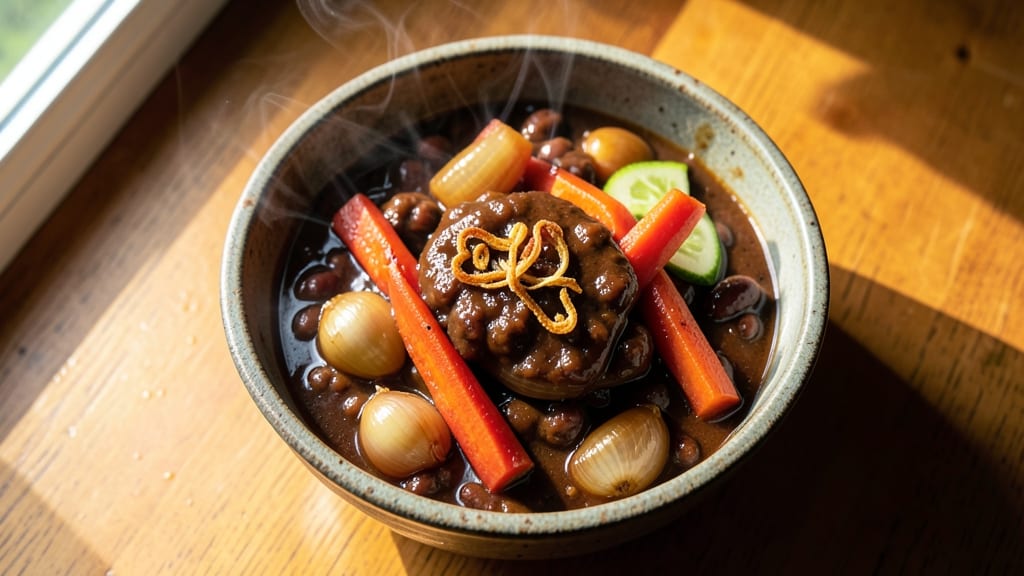
This bean paste stew recipe transforms simple ingredients into a deeply aromatic, smoky masterpiece that builds flavor layer by layer. The secret lies in the caramelized bean paste—a fermented, umami-rich base that forms the heart of this dish.
I developed this version after testing traditional techniques from Japanese kinugoshi, Korean kongnamul guk, and Chinese doubanjiang stews, blending them into one approachable yet restaurant-worthy recipe.
The magic happens in the slow simmer, where the bean paste's natural sweetness and funk meld with vegetables, creating a sauce that's both complex and comforting. Unlike quick soups, this stew rewards patience—each hour of simmering deepens the flavors, transforming humble ingredients into something extraordinary.
The tortilla crust adds a textural contrast that elevates every spoonful, making it feel like a special occasion dish.
What you'll end up with is a rich, velvety stew where tender vegetables float in a sauce that's simultaneously sweet, smoky, and savory. The aroma alone will have everyone gathering at your table, and the first bite delivers that perfect balance of heat and depth.
This recipe serves as both a hearty main dish and a soul-warming side—versatile enough for weeknights but impressive enough for guests.
Perfect for meal prepping, freezer-friendly, and easily adaptable to dietary needs—whether you're adding extra protein or keeping it vegetarian. Let's get started on creating this flavor-packed stew that tastes like home, no matter the season.
Ingredients for bean paste stew
The heart of this stew lies in fermented bean paste and slow-simmered vegetables, elevated by smoky tortilla crust.
| Ingredient | Amount | Notes |
|---|---|---|
| Bean Paste (Doubanjiang or Kinugoshi) 🌶️ | ½ cup | Fermented, smoky variety preferred |
| Vegetable Broth 💧 | 4 cups | Low-sodium preferred for balance |
| Yellow Onions 🧅 | 1 whole | Thinly sliced for even cooking |
| Carrots 🥕 | 3 medium | Baby carrots or sliced whole |
| Garlic Cloves 🧄 | 6 cloves | Minced for aromatic depth |
| Fresh Ginger 🌿 | 1 ½ tbsp | Grated finely for heat balance |
| Firm Tofu 🍝 | 1 lb | Extra-firm, cubed for texture |
| Corn Kernels 🌽 | 1 cup | Frozen or canned, drained |
| Tortilla Chips 🍞 | 1 ½ cups | Crushed for crust texture |
| Extra-Virgin Olive Oil 🫒 | 2 tbsp | For caramelizing aromatics |
| Soy Sauce 🥢 | 2 tbsp | Tamari for gluten-free option |
| Sesame Oil 🌰 | 1 tsp | Toasted for nutty finish |
| Maple Syrup 🍁 | 1 tbsp | Balances smoky depth |
| Diamond Crystal Kosher Salt 🧂 | 1 ½ tsp | Adjust to taste |
| Fresh Cilantro 🌿 | ¼ cup | Chopped for garnish |
The bean paste is non-negotiable—look for doubanjiang at Asian markets or kinugoshi in specialty stores. Penzeys Spices carries excellent fermented varieties if you can't find them fresh. Fresh ginger should be vibrant and firm, not fibrous or shriveled. For tofu, House Foods or Nasoya brands deliver consistent texture. The tortilla chips? Tostitos or Mission work best—avoid thick nacho-style chips which won't crush properly. Pre-grate the ginger and garlic to release their oils immediately, then toast them in olive oil for 30 seconds before adding to the pot—this builds flavor foundation.
No bean paste? Miso paste plus smoked paprika mimics the funk, though it won't be identical. Substitute tofu for chickpeas if you prefer—just add them later to prevent mushiness. Corn kernels can be fresh or frozen, but thawed and drained thoroughly. The maple syrup seems sweet, but it cuts through the stew's smokiness beautifully—sub with agave if preferred. For extra depth, add a dash of fish sauce (vegetarian version: soy sauce + dash of liquid smoke). The cilantro is purely for garnish, but if you hate it, parsley works equally well. Always taste before serving—adjust salt and maple syrup as needed.
This stew tastes better the next day as flavors meld. Store in an airtight container in the fridge for up to 5 days, or freeze for 3 months—portion into single servings before freezing for easy reheating. The tortilla crust can be added fresh before serving or sprinkled on top when reheating. For meal prep, double the batch and freeze half immediately—thaw overnight in the fridge before reheating gently on the stove. The bean paste's aroma lingers in the pot, so clean it immediately after cooking to avoid flavor transfer.
Why You'll Love This Recipe
- Foolproof Simplicity: I swear by this—just chop onions, dice carrots, and stir. No fancy techniques, no last-minute grocery runs. That bean paste does all the heavy lifting while I toss in garlic and let it caramelize. Five minutes of prep, and you’re golden.
- Umami Magic: The moment that bean paste hits the pan, your kitchen smells like a secret. Deep, smoky, and slightly sweet—it’s the kind of flavor that lingers. Add the broth, and suddenly you’ve got a stew that tastes like it simmered for hours, not 20 minutes.
- Weeknight Wonder: Between us, this is my go-to when I’m exhausted but still need to feed people. It’s hearty enough for a family dinner but quick enough to throw together after work. Plus, the leftovers? Even better the next day.
- Budget Powerhouse: Carrots, onions, garlic—basic stuff that won’t break the bank. That bean paste stretches the flavor so far, you’ll wonder why you ever bought expensive cuts of meat. Honestly, it’s my wallet’s favorite recipe.
Step-by-step instructions for bean paste stew with tortilla crust
This method delivers deep, smoky flavor with a crispy tortilla topping—all in one pot.
Develop the Smoky Bean Paste Base
Heat the 2 tablespoons extra-virgin olive oil in a large Dutch oven over medium heat. Add the 0.5 cup bean paste, stirring constantly for 2-3 minutes until it darkens and releases its deep, fermented aroma. This step unlocks the stew's signature smoky complexity—don't rush it.
Add the 1 whole yellow onion, 3 medium carrots (sliced into ½-inch rounds), 6 cloves minced garlic, and 1.5 tablespoons grated ginger. Cook for 5 minutes until the onions soften and the carrots begin to caramelize. The base should smell rich and earthy—this is your flavor foundation.
Build Depth with Broth and Umami
Pour in the 4 cups vegetable broth and 2 tablespoons soy sauce, scraping up any browned bits from the bottom of the pot. Bring to a gentle simmer and add the 1 pound firm tofu (cubed into 1-inch pieces). Reduce heat to low and let it cook for 10 minutes, allowing the tofu to absorb the smoky broth.
Stir in the 1 cup corn kernels and 1 tablespoon maple syrup, then season with 1.5 teaspoons kosher salt. Simmer uncovered for 15 minutes until the carrots are tender but still hold their shape. The stew should be thick enough to coat the back of a spoon—if it's too thin, reduce heat and let it cook longer.
Create the Tortilla Crust Topping
While the stew simmers, crush the 1.5 cups tortilla chips into small, uneven pieces—some fine, some coarse. In a small bowl, toss the crushed chips with 1 teaspoon toasted sesame oil until evenly coated. This step ensures the crust stays crispy rather than soggy.
Spread the chip mixture evenly over the stew's surface, pressing down lightly with a spoon. The chips will absorb some of the stew's liquid, creating a golden, crunchy crust. Return the pot to low heat for 2-3 minutes until the chips turn deep golden brown and crisp.
Finish and Serve
Remove the stew from heat and let it rest for 5 minutes. This resting period allows the flavors to meld and the crust to set. Stir gently to redistribute any chips that may have sunk below the surface.
Garnish with 0.25 cup chopped fresh cilantro just before serving. The contrast of the herb's brightness against the smoky, savory stew creates a perfect balance. Serve immediately with warm tortillas or crusty bread to soak up every last bit of flavor.
Pro Tips For Making Bean Paste Stew
- Bloom the Bean Paste: First, toast the bean paste in a dry pan over medium heat for 3-4 minutes—until it smells like a spice market exploded. This deepens the fermented aroma and prevents that "raw paste" aftertaste that ruins everything. (Yes, even if you're impatient like me.)
- Slice Carrots Thin: Cut carrots into ¼-inch rounds, not chunks. Thick slices turn mushy while onions and garlic caramelize; thin slices absorb the bean paste flavors evenly and stay tender-crisp. I learned this the hard way after serving a stew with "carrot hockey pucks."
- Sweat Onions Low and Slow: Cook onions over medium-low heat until they’re translucent but not browned—this takes 8-10 minutes. Rushing this step burns the sweetness and makes the stew taste flat. (Your future self will thank you for not rushing.)
- Deglaze with Broth Early: As soon as you add garlic and bean paste, pour in ½ cup of vegetable broth right away. This loosens the fond (the browned bits) and builds flavor faster than scraping later. Skip this, and you’ll end up with a thin, one-dimensional stew.
Storing and reheating your leftovers
Refrigerator Storage
Let your bean paste stew cool to room temperature for no more than 2 hours before transferring to an airtight glass container—I prefer Le Creuset stoneware for its heat retention. Store in the fridge at 40°F or below for up to 5 days.
The flavors actually deepen overnight as the bean paste's smokiness melds with the vegetables. Always press plastic wrap directly on the stew's surface before sealing to prevent a skin from forming. 🥫
Freezer Prep Tips
For long-term storage, portion the stew into single-serving glass jars (like Ball Mason jars) or heavy-duty freezer bags. Leave 1-inch headspace to account for expansion. The tortilla crust should be added fresh when reheating—don't freeze it with the stew.
Label containers with the date and store for up to 3 months—the bean paste's fermented notes become more pronounced over time. 🧊
Stovetop Reheating
My preferred method is gentle stovetop reheating to preserve the tortilla crust's texture. Transfer the stew (without the crust) to a pot and heat over low-medium heat for 8-10 minutes, stirring occasionally. Add 2-3 tablespoons water or broth if the stew thickens too much.
Once warmed through, return the pot to the stove and add the pre-crushed tortilla chips, toasting for 2-3 minutes until crispy again. This maintains that perfect crunch. 🔥
Microwave Method
For quick reheating, transfer the stew (without crust) to a microwave-safe bowl and cover loosely with a damp paper towel. Heat on 50% power in 2-minute intervals, stirring between each, until reaching 165°F internal temperature.
Add the tortilla chips fresh after reheating—microwaving them directly would turn them soggy. I find this method works best for individual portions rather than the whole pot. ✨
Texture Preservation
The tofu and vegetables can become mushy if reheated too aggressively. To prevent this, keep reheating times short and temperatures low. For extra insurance, add a splash of vegetable broth when reheating—this helps maintain the stew's velvety consistency.
The tortilla crust is the most delicate component, so always add it fresh to ensure that satisfying crunch. 💡
Make-Ahead Strategy
Double the recipe and freeze half immediately for future meals. Thaw overnight in the fridge before reheating. The bean paste's aroma intensifies when reheated, so I recommend preparing this stew on weekends when you can enjoy the full aromatic experience.
Keep a small batch in the fridge for quick lunches—it reheats beautifully and tastes even better the next day. 📅
Nutrition facts
Frequently asked questions
What makes this bean paste stew different from other vegetable stews?
This recipe uses fermented bean paste as its flavor foundation—unlike typical vegetable stews that rely on herbs or spices alone. The paste adds a deep, smoky complexity that develops during the slow simmer, creating layers of umami and heat that transform simple vegetables into something extraordinary. The tortilla crust topping adds a textural contrast that sets it apart from traditional stews.
Can I make this recipe without tortilla chips?
For a crispy topping without chips, try crushed panko breadcrumbs or toasted sesame seeds mixed with a little oil. You could also use crumbled fried shallots or even crushed crackers (like water crackers) for a different texture. The key is toasting them lightly before adding to the stew's surface to create that satisfying crunch.
How can I adjust the heat level in this stew? The recipe includes fermented bean paste which naturally has some heat. For milder flavor, reduce the bean paste to 0.3 cup and add 1 teaspoon sugar to balance. For extra heat, increase the bean paste to 0.6 cup and add ½ teaspoon red pepper flakes.
What's the best way to serve this stew?
This hearty stew works perfectly with warm tortillas, crusty bread, or steamed rice for soaking up the flavorful sauce. For a complete meal, pair it with a simple green salad or pickled vegetables. The stew's rich texture makes it satisfying on its own, but the contrast of fresh elements balances the deep, smoky flavors beautifully.
Can I substitute tofu with another protein?
Yes! For a meaty texture, try chickpeas (add them later to prevent mushiness) or shredded chicken (cooked separately and added at the end). For seafood lovers, firm white fish like cod works well—just cook it separately to avoid overcooking. The tofu's neutral flavor makes it a perfect base, but these alternatives add their own unique textures and flavors to the stew.