
Beverages
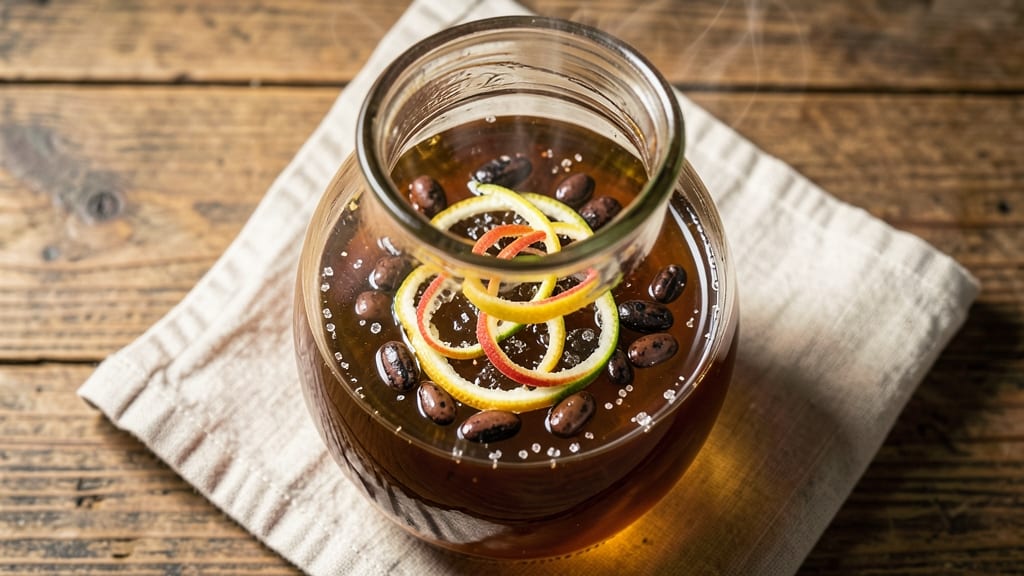
This bean wine recipe transforms humble black beans into a fermented elixir with unexpected depth—think effervescent umami meets subtle sweetness. The process is methodical but rewarding: soak, boil, ferment, and wait as simple ingredients develop complex flavors.
Unlike store-bought versions, this homemade version lets you control sweetness, fermentation time, and even add-ins like ginger or citrus for brightness.
What sets this recipe apart is its bold umami profile, achieved through proper fermentation techniques that develop naturally over time. The beans break down into a smooth, slightly fizzy liquid with a depth that pairs beautifully with spicy dishes or as a refreshing chilled beverage.
Safety is critical—proper fermentation time and storage ensure a balanced alcohol content without overpowering bitterness.
By the final week of fermentation, you’ll have a golden-amber liquid with a delicate effervescence and layers of flavor—nutty, slightly sweet, and complex.
The process requires patience, but the result is a versatile drink that can be enjoyed chilled on its own, mixed into cocktails, or even used as a marinade for bold flavors. This isn’t just a beverage; it’s a flavor experience.
The beauty of bean wine lies in its adaptability—adjust fermentation time for stronger or milder alcohol content, or experiment with additives like vanilla or cinnamon for warmth. Store properly, and it’ll keep improving for months. Let’s get started on your first batch.
Ingredients for bean wine
Transform simple ingredients into a complex fermented elixir with this bean wine recipe.
| Ingredient | Amount | Notes |
|---|---|---|
| Dried Black Beans 🌱 | 2 cups | High-quality, organic preferred |
| Granulated White Sugar 🍯 | 2 cups | Raw cane sugar for depth |
| Filtered Water 💧 | 4 cups | Non-chlorinated preferred |
| Active Dry Yeast 🍞 | ¼ tsp | Fresh yeast for fermentation |
| Fresh Ginger Root 🌿 | 1 inch | Thinly sliced, organic preferred |
| Lemon Peel 🍋 | 1 whole | Organic, unblemished peel |
| Pure Vanilla Extract 🌸 | 1 tsp | High-quality, alcohol-free |
| Cinnamon Sticks 🌿 | 2 whole | Ceylon preferred for warmth |
| Diamond Crystal Kosher Salt 🧂 | ½ tsp | For fermentation balance |
| Apple Cider Vinegar 🍎 | 1 tbsp | Raw, unfiltered preferred |
| Unsweetened Coconut Milk 🥥 | ¼ cup | Full-fat for richness |
| Blackstrap Molasses 🍯 | 1 tbsp | For mineral depth |
The black beans are the foundation—organic, high-quality dried beans yield the best results, as they ferment more predictably. Trader Joe's and Whole Foods carry excellent options, or check bulk bins for heirloom varieties. Avoid pre-soaked or canned beans, as their texture and flavor won't develop properly during fermentation. The yeast is critical: fresh active dry yeast ensures consistent fermentation, while the ginger and lemon peel add brightness that balances the umami. For the sugar, raw cane or turbinado provides subtle caramel notes that refined white sugar lacks.
No organic beans? Conventional dried black beans work fine, but rinse thoroughly to remove debris. Substitute the ginger with equal parts fresh galangal or 1/4 tsp ground ginger if needed, though fresh is ideal. The lemon peel can be swapped for orange or lime peel, but adjust to taste—citrus adds acidity that cuts through the fermentation's richness. For a deeper umami profile, add 1 tbsp soy sauce or 1 tsp miso paste during the boiling stage. The molasses can be omitted if unavailable, but it adds essential minerals that enhance flavor development.
Store the fermenting mixture in a clean, sterilized glass jar with an airlock or loosely covered lid to allow CO2 release. Keep in a cool, dark place (65-75°F) for optimal fermentation. After 4 weeks, transfer to food-grade plastic bottles for long-term storage, sealing tightly. The finished wine improves with age—3-6 months yields the best balance of alcohol and flavor. For safety, always use sterilized equipment and monitor fermentation progress to prevent contamination.
Why You'll Love This Recipe
- Pantry Magic: I swear by this one—no fancy store runs needed. Dried black beans and sugar are already in my cabinet, and that’s half the battle. The yeast and ginger just add the je ne sais quoi without extra shopping trips.
- Sweet-Spicy Kick: That ginger-sugar ferment? It’s like a grown-up soda with depth. The beans give it a subtle earthiness, while the yeast keeps it bright—no bitterness, just a smooth, slightly fizzy finish that’s weirdly addictive.
- Gift-Worthy Sip: Between us, this is the easiest homemade boozy gift ever. Bottle it up after 2 weeks, slap a ribbon on it, and boom—you’ve just out-gifted the PTA bake sale. (My neighbor’s been asking for seconds at every holiday party.)
- Zero Waste, All Win: The leftovers? Ferment them into vinegar or broth—no food goes unused. And honestly, making a big batch means I’m never stuck with sad, half-empty jars of beans again. Plus, the sugar stretches my budget further than store-bought anything.
Step-by-step instructions for fermented bean wine
Transform simple ingredients into a complex fermented beverage with layered umami and subtle effervescence.
Prepare and Soak the Black Beans
Place the 2 cups dried black beans in a large bowl and cover them completely with the 4 cups filtered water. Let them soak at room temperature for 12-24 hours—this ensures even hydration and prevents uneven fermentation. I like to use a glass container so I can monitor the water level, adding more filtered water if needed to keep them fully submerged.
After soaking, drain the beans through a fine-mesh strainer and rinse them thoroughly with fresh filtered water. This removes any residual starch that could cloud the final product. The beans should be plump and slightly softened when you press between your fingers—this indicates they're ready for the next stage. Discard the soaking water completely as it contains anti-nutrients that could inhibit fermentation.
Create the Fermentation Base
In a clean, sterilized fermentation vessel (I use a food-grade plastic bucket with an airlock), combine the soaked black beans, 2 cups granulated white sugar, 1 inch thinly sliced fresh ginger root, 1 whole lemon peel (cut into strips), 2 whole cinnamon sticks, 0.5 tsp diamond crystal kosher salt, and 1 tbsp apple cider vinegar. The vinegar acts as a natural preservative and helps balance the acidity during fermentation.
Add the 0.25 cup unsweetened coconut milk and 1 tbsp blackstrap molasses, stirring gently to dissolve the sugar completely. The mixture should be fully integrated without any dry spots. This blend creates the foundational flavor profile—ginger and molasses provide depth, while the coconut milk adds richness. Cover the vessel loosely with a clean cloth and let it sit at room temperature for 24 hours to allow the beans to begin breaking down and release their natural umami compounds.
Activate the Yeast and Begin Primary Fermentation
After the 24-hour rest, pour the 4 cups filtered water into the vessel and stir well to combine all ingredients. Sprinkle the 0.25 tsp active dry yeast over the surface and gently swirl to distribute it evenly. The yeast will begin activating within 30-60 minutes, creating small bubbles that indicate fermentation has started.
Attach an airlock filled with water to the vessel and transfer it to a dark, temperature-stable location between 68-75°F. Ferment for 7-10 days, stirring gently every 2-3 days to prevent mold formation and ensure even fermentation. You'll notice the mixture becomes fizzy and develops a rich, bean-like aroma—this is when the umami depth begins to emerge. The liquid should start separating from the solids, which is a good sign the process is working correctly.
Strain and Secondary Fermentation
Once fermentation is active (you'll see consistent bubbling in the airlock), strain the mixture through a fine-mesh cheesecloth or coffee filter into a clean fermentation vessel. Press the solids gently to extract all the liquid, but avoid squeezing too hard as this can introduce bitterness. The strained liquid should be a deep amber color with visible particles—this is the heart of your bean wine.
Add 1 tsp pure vanilla extract and stir gently to incorporate. Transfer the liquid to sterilized glass bottles, leaving about 1 inch of headspace at the top to accommodate carbonation. Seal the bottles with airtight lids and let them undergo secondary fermentation at room temperature for 5-7 days. You'll hear popping sounds as the bottles carbonate—this is normal and indicates the beverage is developing its signature fizz.
Condition and Bottle for Serving
After secondary fermentation, transfer the bottles to a cool, dark place (like a refrigerator) and let them condition for at least 2 weeks. This step allows the flavors to meld and the carbonation to stabilize. I like to taste test after 2 weeks—the beverage should be slightly effervescent with a complex umami profile, balanced by the sweetness and spice from the initial ingredients.
Once ready, chill the bottles for 1 hour before serving. Pour carefully to avoid over-carbonation, which can cause spillage. The final product should have a rich, slightly syrupy texture with a deep umami flavor, subtle ginger warmth, and a hint of vanilla sweetness. Serve over ice for a refreshing, fermented beverage that pairs beautifully with spicy dishes or as a dessert wine alternative.
Pro Tips For Making Bean Wine
- SOAK BEANS 12 HOURS MINIMUM: Dried black beans need time to soften properly—don’t cut corners here. I learned the hard way that skipping this step leads to a gummy, uneven texture, and your wine will never ferment smoothly. Use twice the water volume and a splash of vinegar to prevent bloating.
- STERILIZE JARS LIKE A PRO: Wipe down jars and lids with rubbing alcohol—not just hot water—before filling. My first batch had contamination because I rushed this step. If you’re lazy, run them through a dishwasher cycle on high heat instead.
- CONTROL YEAST TEMPERATURE: Dissolve sugar in warm (not hot) water—yeast dies above 115°F. I once killed my yeast by using boiling water, and the whole batch turned flat. Test with your finger: if it feels like bathwater, it’s too hot.
- GINGER: GRATE, DON’T CHOP: Fresh ginger releases flavor better when grated finely—no need for a food processor. I used thick slices once, and the ginger just sank to the bottom like a rock. A microplane does the job in seconds.
Serving suggestions for this bean wine
Chilled Serving Style
Serve your bean wine chilled over a large ice cube or in a coupe glass to enhance its refreshing qualities. The cold temperature highlights the effervescence and balances the bold umami flavors.
I like to add a thin lemon twist or ginger slice on the rim for an aromatic touch—it echoes the fermentation spices and adds visual appeal.
For a festive presentation, garnish with a sprinkle of cinnamon or a dash of black pepper to complement the warmth of the vanilla and molasses. 💧
Spicy Food Pairings
This fermented beverage is perfect for cutting through heat—try it alongside dishes like Thai green curry, Korean kimchi stew, or spicy Mexican mole. The umami depth and subtle sweetness neutralize capsaicin’s burn while adding complexity.
I’ve found it works especially well with charred corn and chili salsa or grilled jalapeño poppers. For a dessert twist, pair it with dark chocolate truffles or spiced pecan pralines to contrast the heat with richness. 🌶️
Cocktail Variations
Use your bean wine as a fermented base for creative cocktails. Mix 1 oz bean wine with ½ oz fresh lime juice, ½ oz honey syrup (equal parts honey and hot water), and 2 oz sparkling water for a fermented spritz.
For a boozy twist, add 1 oz gin or vodka and top with club soda. I also love a smoky variation by muddling a rosemary sprig into the mix before serving—it adds herbal depth that pairs beautifully with the bean wine’s complexity. 🍹
Dessert Wine Substitute
Serve this as a dessert wine alternative alongside fruit tarts, cheese boards, or warm apple crisp. The natural sweetness and umami make it a versatile pairing—try it with aged cheddar or blue cheese for a salty-sweet contrast.
For a holiday twist, drizzle it over vanilla bean ice cream or chocolate-dipped strawberries. The ginger and cinnamon notes also complement spiced pumpkin pie or pecan pie beautifully. 🍰
Marinade or Glaze
Reduce the bean wine by half on the stovetop to create a sticky, umami-rich glaze for grilled meats like pork belly or chicken thighs. Brush it on during the last 5 minutes of cooking for a caramelized finish.
I’ve also used it as a marinade for tofu or tempeh, letting it sit for 2-4 hours before grilling. The fermentation’s acidity tenderizes while the sweetness caramelizes, creating a complex crust. 🍗
Storage and Serving Tips
Store unopened bottles in a cool, dark place (like a pantry) for up to 6 months, or refrigerate after opening to preserve carbonation. If the wine becomes too fizzy, let it sit at room temperature for 10-15 minutes before serving to release excess pressure.
For a smoother texture, strain through a fine-mesh sieve before serving—this removes any remaining sediment while keeping the rich flavor intact. 🥫
Nutrition facts
Frequently asked questions
How long does it take to make bean wine?
The full process takes about 6-8 weeks, including fermentation and conditioning. The initial fermentation lasts 7-10 days, followed by 5-7 days of secondary fermentation, and at least 2 weeks of conditioning for flavor development. Patience is key—rushing can result in an unbalanced or underdeveloped beverage.
Can I use different beans for this recipe?
Yes! While black beans are traditional, you can experiment with mung beans, adzuki beans, or even peanuts for a nutty twist. Adjust fermentation time slightly—peanuts may require 10-14 days of primary fermentation due to their oil content. Always sterilize equipment to prevent mold.
What if my bean wine smells bad during fermentation?
If you detect rotten or vinegary odors, it may indicate contamination. Stop fermentation immediately, discard the batch, and sterilize all equipment thoroughly. Use chlorine-free water, clean tools with boiling water or vinegar, and store the mixture in a cool (68-75°F), dark place to prevent spoilage.
How much alcohol does bean wine have?
Homemade bean wine typically contains 5-8% ABV, depending on fermentation time and sugar levels. Longer fermentation (beyond 10 days) increases alcohol content, while shorter periods yield a milder, sweeter result. For stronger alcohol, add extra yeast or extend fermentation to 2-3 weeks.
Can I skip the yeast and let it ferment naturally?
While possible, natural fermentation is riskier—wild yeast may produce inconsistent results or contamination. If attempting it, use sterile equipment and monitor closely for mold. For reliable outcomes, stick with active dry yeast, which ensures predictable fermentation and safer alcohol development.