
Salads
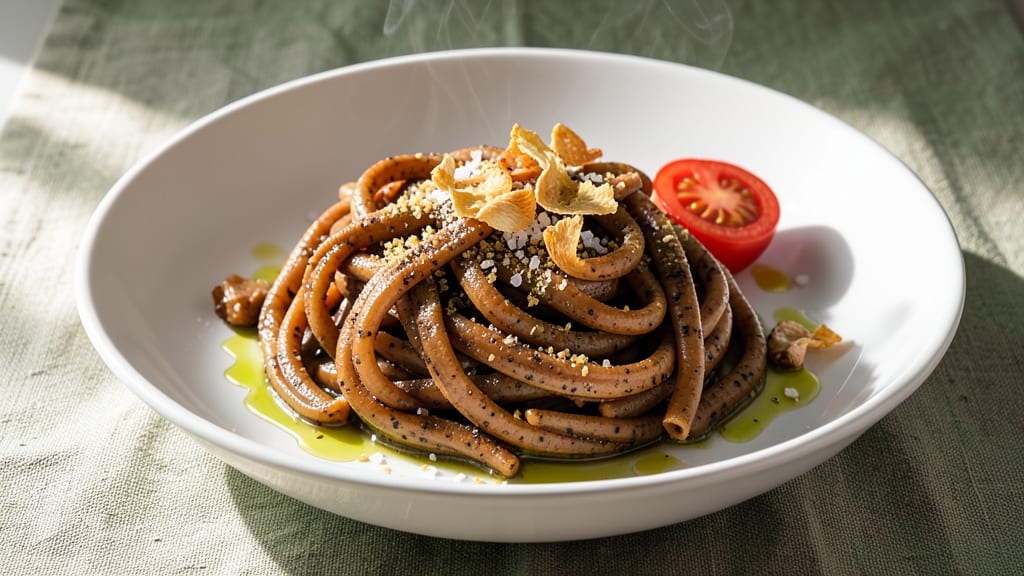
This black bean flour pasta recipe transforms classic comfort into a nutrient-packed, plant-based masterpiece that delivers both satisfaction and substance. 💛 The secret lies in black bean flour—a protein-rich, gluten-free alternative that creates pasta with a satisfying chew and earthy flavor profile, perfect for those seeking a wholesome twist on traditional noodles.
What makes this recipe stand out is its versatility; it works as a hearty main dish or a vibrant side, all while packing a nutritional punch that rivals refined wheat pasta.
The process is surprisingly straightforward, requiring just a handful of simple ingredients and minimal equipment. You'll mix the black bean flour with water and a touch of olive oil to create a pliable dough, then roll it thin and cut into your preferred pasta shape—no fancy tools required.
The beauty of this recipe is its adaptability; whether you're gluten-free, vegan, or simply looking to boost your protein intake, this pasta delivers without compromising on taste or texture.
What you'll end up with is a batch of golden, al dente pasta that holds its shape beautifully while absorbing sauces like a dream.
The nutty, slightly sweet flavor of the black bean flour pairs perfectly with classic Italian sauces, creamy cashew-based dressings, or even a simple garlic and olive oil finish. Each bite is not only delicious but also packed with fiber, plant-based protein, and essential nutrients that traditional pasta simply can't match.
This recipe is perfect for anyone looking to elevate their meals with a healthier twist while keeping the comfort and familiarity of classic pasta. Whether you're serving it as a standout main course or a colorful side dish, the rich flavor and satisfying texture will leave everyone asking for seconds.
Let's get started on this nutrient-dense, plant-powered pasta adventure!
Ingredients for black bean flour pasta
Simple, plant-powered ingredients that transform into golden, protein-rich pasta everyone will love.
| Ingredient | Amount | Notes |
|---|---|---|
| Black Bean Flour 🌾 | 1 ½ cups | Protein-rich, gluten-free base |
| Extra-Virgin Olive Oil 🫒 | ¼ cup | For pliable dough texture |
| Water 💧 | ¾ cup | Room temperature preferred |
| Salt 🧂 | 1 tsp | Fine sea salt preferred |
| Nutritional Yeast 🍄 | 2 tbsp | For cheesy flavor boost |
| Garlic Powder 🧄 | 1 tsp | Fresh garlic for stronger flavor |
| Ground Black Pepper 🌶️ | ½ tsp | Freshly ground preferred |
| Lemon Juice 🍋 | 1 tbsp | Brightens flavor profile |
| Semolina Flour 🌾 | ¼ cup | Optional for dusting |
| Cashews 🥜 | ½ cup | Soaked for creamy sauce |
| Fresh Basil 🌿 | ¼ cup | Chopped for garnish |
| Vegetable Broth 💧 | 1 cup | For finishing sauce |
Black bean flour is the star here—Bob's Red Mill or Anthony's Goods are my go-tos for quality. The gluten-free, protein-packed base gives this pasta its satisfying chew and earthy flavor. If you can't find black bean flour, chickpea flour works in a pinch, though texture will differ slightly. The olive oil is non-negotiable—it's what makes the dough pliable. Extra-virgin adds richness, but regular olive oil works too. For the dough, I always use room-temperature water—cold water makes the dough tough.
No nutritional yeast? White miso paste at half the amount adds umami depth. Fresh garlic is ideal, but garlic powder works fine if you're short on time. The cashews for sauce can be swapped for silken tofu for a lighter texture. For the pasta shape, I like using a pasta machine, but a rolling pin and sharp knife work too. If your dough feels too dry, add 1 tsp more water at a time—this is a delicate balance. The lemon juice brightens everything up, so don't skip it unless you're sensitive to acidity.
Fresh pasta keeps in the fridge for 3-4 days, wrapped tightly in plastic. Freeze for up to 3 months by laying sheets on a tray first, then bagging. The sauce components (cashews, broth) can be prepped ahead and stored separately. Reheat pasta in boiling water for 2-3 minutes—it cooks faster than regular pasta. Garnish with fresh basil right before serving, as it wilts quickly. Leftovers reheat beautifully with a splash of water or broth.
Why You'll Love This Recipe
- No-Fuss Dough Magic: I swear by this recipe—just mix the black bean flour with water, a splash of olive oil, and salt. No kneading, no waiting for dough to rise, just stir and roll. Honestly, it’s the kind of recipe that makes me feel like a capable cook even on days when I’d rather be scrolling TikTok.
- Umami Bomb: That nutritional yeast? It’s the secret weapon here—adds this deep, cheesy, savory punch without dairy. The black bean flour itself brings a subtle earthiness, and when it’s cooked just right, the pasta has a satisfying bite. Between us, it’s the kind of flavor that makes you forget it’s not traditional wheat pasta.
- Leftover Hero: This pasta holds up like a champ in the fridge. Toss it with roasted veggies for lunch the next day or reheat it with a fried egg on top for breakfast. I’ll be real: I’ve had it cold in salads for three days straight, and it’s still delicious. No sad, gummy textures here.
- Budget Meal Powerhouse: Black bean flour is a game-changer for my wallet—it’s way cheaper than regular pasta and packed with protein. A single bag lasts me weeks, and I’m always feeding my family or guests without breaking the bank. Plus, the olive oil and nutritional yeast are staples I already had, so the cost per serving is criminally low.
Step-by-step instructions for black bean flour pasta
Here's how to craft your own protein-packed, gluten-free pasta from scratch.
👨🍳 Step 1: Mix the Dough for Perfect Texture
In a large mixing bowl, combine the 1.5 cups Black Bean Flour, 0.75 cup Water, and 1 tsp Salt. Stir vigorously with a fork or whisk until a thick, sticky paste forms—this is your base. You'll notice it's denser than traditional wheat flour dough, so don't worry if it looks thick.
Next, add the 0.25 cup Extra-Virgin Olive Oil, 2 tbsp Nutritional Yeast, 1 tsp Garlic Powder, and 0.5 tsp Ground Black Pepper. Mix until fully incorporated, about 2-3 minutes. The nutritional yeast will give your pasta that cheesy, umami depth, while the olive oil keeps it tender. If the mixture feels too sticky, add 1 tbsp Water at a time until it's workable but still holds together.
🍳 Step 2: Knead and Rest for Gluten-Free Elasticity
Turn the dough onto a lightly floured surface (use the 0.25 cup Semolina Flour if needed) and knead for 5-7 minutes until smooth and elastic. Black bean flour dough behaves differently than wheat flour—it's more fragile, so handle it gently to avoid tearing. You're aiming for a uniform, slightly tacky consistency that doesn't stick to your hands.
Wrap the dough tightly in plastic wrap and let it rest at room temperature for 30 minutes. This resting period relaxes the proteins and makes rolling easier. I like to place it in a bowl to maintain shape, but don't skip this step—it's what transforms your dough from dense to light and pliable.
🔪 Step 3: Roll and Cut for Perfect Noodles
After resting, divide the dough into 4 equal portions (about 6 oz each). Working with one portion at a time, use a pasta machine set to the widest setting and roll through 2-3 times, folding the dough in half each time. This builds structure in the gluten-free dough. Gradually decrease the machine settings by 1 notch at a time until you reach your desired thickness—typically 1/8 inch for al dente pasta.
Cut the rolled sheets into ¼-inch wide strips using the pasta machine's cutter attachment. If you don't have a machine, roll the dough as thin as possible with a rolling pin and cut with a sharp knife. The key here is consistency—uniform thickness ensures even cooking. Dust your work surface with semolina flour as needed to prevent sticking.
🍲 Step 4: Cook the Pasta to Al Dente Perfection
Bring a large pot of salted water to a rolling boil (about 6 quarts for 4 servings). Add the pasta in batches to avoid overcrowding, stirring immediately to prevent sticking. Cook for 2-3 minutes—black bean flour pasta cooks faster than wheat pasta, so start checking at 2 minutes. You want al dente texture: tender but still with a slight bite.
Drain immediately and toss with 1 tbsp Lemon Juice to prevent sticking and brighten the flavor. The lemon juice also helps balance the earthy black bean flavor. Reserve ½ cup pasta water—this starchy liquid is essential for creating a silky sauce later. Don't rinse the pasta, as the surface starch helps the sauce cling beautifully.
🥘 Step 5: Make the Creamy Cashew Sauce
While the pasta cooks, prepare the sauce by blending the soaked cashews, 1 cup Vegetable Broth, and 0.25 cup Fresh Basil in a food processor until smooth. With the motor running, slowly drizzle in the 0.25 cup Extra-Virgin Olive Oil from Step 1. This creates a luxurious, creamy base that complements the pasta perfectly.
Toss the drained pasta with the sauce, adding reserved pasta water 1 tablespoon at a time until you reach your desired consistency. Garnish with additional chopped fresh basil and a pinch of black pepper. The sauce should coat each strand beautifully, with a velvety texture that contrasts the pasta's slight chew.
Pro Tips For Making Black Bean Flour Pasta
- Whisk Like You Mean It: Black bean flour clumps like your ex’s excuses—aggressively whisk it into the water before adding oil, or you’ll end up with a lumpy mess. Use a fork first to break up dry lumps, then switch to a whisk for 2-3 minutes until the batter is smoother than your patience on a Monday.
- Salt the Water First: The dough needs salt from the start, not just the finished pasta. Mix 1-2 teaspoons of salt into the water before adding the flour—this ensures even distribution, and your pasta won’t taste like a sad afterthought. (Yes, even if you’re impatient like me.)
- Rest the Dough (Yes, Really): I learned this the hard way—skipping the 20-minute rest makes the dough tough as my gym resolutions. Cover it with a damp towel and let it relax; the gluten (yes, black bean flour has it) will thank you with a chewier, more cohesive texture.
- Roll Thin, Cook Fast: Black bean pasta dries out faster than my willpower in a bakery. Roll it to 1/16-inch thickness—thinner than a credit card—and cook it in boiling water for no more than 2 minutes. Overcooking turns it into a sad, gummy pancake. (Your future self will scream at you if you ignore this.)
Essential equipment for great black bean flour pasta
Pasta Machine Essentials
For perfect black bean flour pasta, a pasta machine is my top recommendation—it ensures even thickness and professional results. I use the Marcato Atlas 150 for its durable rollers and adjustable settings.
If you don’t have one, a rolling pin and sharp chef’s knife work well, though they require more effort. The key is to roll the dough as thin as possible without tearing, aiming for 1/8-inch thickness for al dente perfection. 🔪
Dough Tools Must-Haves
A dough scraper (like the OXO Good Grips) is a game-changer for handling black bean flour dough—it’s sticky and fragile, so a scraper helps prevent sticking to surfaces. A lightly floured work surface (I prefer semolina flour for its neutral taste) keeps things manageable.
For kneading, I use my hands—no stand mixer needed, as black bean flour dough doesn’t require heavy mixing. A flexible silicone spatula helps scrape every last bit of dough from the bowl. 💪
Sauce Prep Gear
For the creamy cashew sauce, a high-powered food processor (like the Ninja SP101) is essential for blending smooth, lump-free results. If you’re short on time, a blender works, but you’ll need to strain the mixture for ultra-silky texture.
A fine-mesh strainer helps remove any remaining cashew fibers. For garnishing, a small sharp knife for chopping basil and a microplane for zesting lemon add professional touches. 🥜
Budget-Friendly Alternatives
No fancy equipment? No problem! A wooden rolling pin and serrated knife can replace a pasta machine—just roll the dough as thinly as possible. For sauce prep, a handheld immersion blender works in a pinch.
A pastry brush helps distribute olive oil evenly on the dough. The most critical tool is a large pot (at least 6 quarts) for boiling pasta—it needs space to prevent sticking. 💰
Storage Solutions
To store fresh pasta, I use airtight glass containers (like Pyrex) with parchment paper between layers to prevent sticking. For freezing, quart-sized freezer bags with labels work best—lay the pasta flat on a tray first to avoid clumping.
A laser thermometer (like the Thermoworks One) helps monitor water temperature for perfect al dente pasta every time. 🧊
Nutrition facts
Frequently asked questions
Can I make this pasta without a pasta machine?
While a pasta machine makes rolling easier, you can achieve great results with a rolling pin and sharp knife. Roll the dough as thinly as possible on a lightly floured surface, then cut into strips with a serrated knife. Aim for 1/8-inch thickness for perfect al dente texture. The key is patience—roll gently to avoid tearing the delicate black bean flour dough.
Why does my black bean flour pasta taste bitter?
Bitterness often comes from overcooking or using old black bean flour. Cook your pasta for only 2-3 minutes—it cooks faster than wheat pasta. For flavor balance, add 1 tbsp lemon juice when tossing with sauce. If your flour is old, replace it with fresh black bean flour or chickpea flour for a milder taste.
How do I store leftover black bean flour pasta?
Fresh pasta keeps in an airtight container in the fridge for 3-4 days. For longer storage, freeze by laying sheets flat on a tray first, then transferring to a freezer bag. Thaw overnight in the fridge before reheating in boiling water for 2-3 minutes. Never microwave—it makes the pasta mushy.
What's the best sauce pairing for this pasta?
The creamy cashew sauce in the recipe works beautifully, but you can also try a garlic olive oil sauce, tomato-based marinara, or even a peanut sauce for Asian-inspired dishes. The earthy black bean flavor pairs well with bold, acidic, or nutty sauces. For maximum flavor, toss with reserved pasta water to help the sauce cling.
Can I make this gluten-free and nut-free?
Yes! Replace the cashews with soaked sunflower seeds (for nut-free) and ensure your black bean flour is certified gluten-free. For extra protein, add 1 tbsp ground flaxseed to the dough. The texture remains satisfying while keeping it allergy-friendly. Always check labels on all ingredients to avoid cross-contamination.