
Soups & Stews
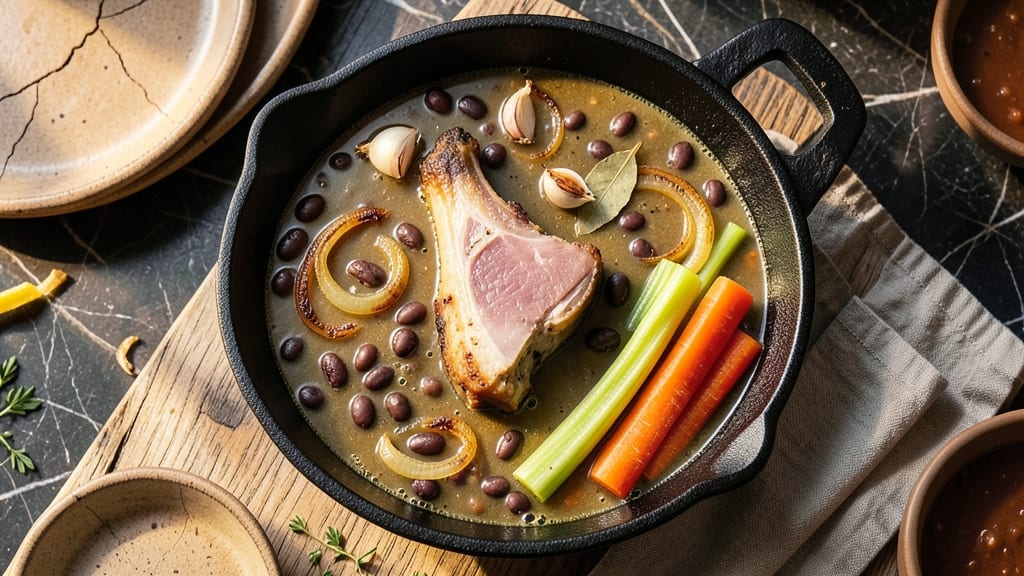
This black bean soup with ham bone transforms humble ingredients into a deeply flavorful, restaurant-quality meal that simmers with smoky richness and hearty texture.
The secret lies in extracting every ounce of flavor from the ham bone—slow-cooked until the broth becomes velvety and packed with umami depth that transforms simple black beans into something extraordinary.
I developed this recipe after years of perfecting bone broth techniques, and it never fails to impress even the most skeptical eaters.
The beauty of this soup is in its balance: tender black beans, smoky ham, and vegetables that soften just enough to soak up the flavorful broth.
What makes it special is the two-stage cooking process—first rendering the ham bone for hours to create a concentrated base, then combining it with beans, aromatics, and spices for a hearty, one-pot meal that requires minimal effort.
The result is a soup that's both comforting and sophisticated, perfect for chilly evenings or meal prep.
By the time you're done, you'll have a deeply aromatic soup with a rich, savory broth that clings to every spoonful. The ham bone contributes a smoky, meaty depth that elevates the beans, while the vegetables add freshness and texture.
It's the kind of dish that tastes even better the next day, making it ideal for leftovers or batch cooking. This is soul food at its finest—simple, nourishing, and impossible to resist.
Serve it with crusty bread to soak up every last drop of that flavorful broth, or pair it with a simple green salad for balance. The recipe scales easily, so you can make enough for a crowd or freeze portions for later.
Here's how to create this foolproof, deeply satisfying black bean soup that will become a staple in your kitchen.
Ingredients for black bean soup with ham bone
Six ingredients transform into a deeply aromatic soup packed with smoky richness and hearty texture.
| Ingredient | Amount | Notes |
|---|---|---|
| Ham Bone 🍖 | 1 lb | Raw, uncooked, with meat attached |
| Dried Black Beans 🌱 | 1 ½ cups | Rinsed before cooking |
| Yellow Onion 🧅 | 1 whole | Medium size, chopped |
| Carrots 🥕 | 3 medium | Peeled and chopped into chunks |
| Garlic Cloves 🧄 | 4 cloves | Peeled and minced |
| Celery Stalks 🥬 | 3 whole | Chopped into 1-inch pieces |
| Tomato Paste 🍅 | ½ cup | Smooth, not chunky |
| Bay Leaves 🌿 | 2 whole | Dried, standard size |
| Ground Cumin 🌶️ | 1 tbsp | Freshly toasted preferred |
| Smoked Paprika 🌶️ | 1 tsp | For smoky depth |
| Salt 🧂 | 1 ½ tsp | Diamond Crystal preferred |
| Black Pepper 🌶️ | ½ tsp | Freshly ground |
| Fresh Cilantro 🌿 | ¼ cup | Chopped, for garnish |
| Lime 🍋 | 1 whole | Juiced for brightness |
The ham bone is non-negotiable here—it's the soul of this soup. Butcher shops often have them on hand, or ask your local grocer to save one for you when they process hams. Look for a bone with good meat still attached—Costco or Whole Foods usually carry them pre-packaged. The dried black beans should be light in color and free of debris. If they're discolored or smell off, toss them. For the aromatics, fresh celery and carrots are ideal, but frozen works in a pinch—just thaw and chop. The tomato paste? Rao's or Muir Glen are my go-tos—they're consistent and affordable.
No ham bone? Substitute with 1 cup of high-quality ham broth (like Imagine or Pacific Foods) plus 1/2 cup of leftover ham, chopped. Swapping smoked paprika? Liquid smoke at 1/4 tsp gets you close, but it's not the same. Fresh cilantro? Dried cilantro at 1/4 tsp works if you're in a bind. The lime juice can be bottled, but fresh is brighter. For the beans, if you've got canned, drain and rinse them well—no salt added is best. The celery and carrots can be baby versions if that's what's in your fridge, but the flavor's better with fresh-cut.
This soup tastes even better the next day—3-4 days in the fridge, no problem. Freeze for up to 3 months by portioning into containers. I like to make a big batch and freeze half—perfect for lazy weeknights. The ham bone? Save the meat for sandwiches or shred it for the soup. If you've got leftovers, reheat gently on the stove with a splash of water to restore richness. Store in airtight containers to keep flavors locked in.
Why You'll Love This Recipe
- One-Pot Magic: I swear by this recipe because it’s literally dump-and-simmer. Toss the dried beans, chopped onions, and carrots into the pot with the ham bone—no fancy prep, no stress. The ham bone does all the work, infusing flavor while you sip coffee and scroll.
- Deep, Savory Richness: That ham bone? It’s the secret weapon. After hours of simmering, the broth turns into a velvety, umami-packed base that makes store-bought cans look sad. Add a splash of vinegar at the end, and suddenly it’s ridiculously good—smoky, sweet, and just salty enough.
- Meal Prep Gold: This soup tastes better the next day (yes, really). I make a big batch on Sundays, and by Wednesday, it’s even more flavorful. Pack it for lunches, freeze portions, or just reheat for a lazy night—it’s my go-to for busy weeks.
- Budget-Friendly Feast: Dried beans and a ham bone stretch into six hearty servings for pennies. No fancy ingredients, no waste—just pure, satisfying comfort. Honestly, it’s the kind of recipe that makes grocery bills feel less terrifying.
Step-by-step instructions for black bean soup with ham bone
Here's how to transform simple ingredients into a deeply flavorful soup where the ham bone infuses every spoonful.
Prepare the Ham Bone and Vegetables
Begin by rinsing the 1 lb ham bone under cold water to remove any surface impurities, then pat it completely dry with paper towels. Place the bone in a large Dutch oven or heavy pot—its size is important for even cooking and maximum flavor extraction. Meanwhile, chop the 1 whole yellow onion into medium dice, peel and cut the 3 medium carrots into 1-inch chunks, and slice the 3 whole celery stalks into similar pieces. These vegetables form the aromatic base of your soup, so don't skip chopping them uniformly.
In a separate small bowl, toast the 1 tbsp ground cumin and 1 tsp smoked paprika over a low flame for 1-2 minutes until fragrant—this activates their flavors. Set aside to cool slightly before adding to the pot. The toasted spices will add depth that raw spices can't match. Peel and mince the 4 cloves garlic cloves finely; you'll add these later when the vegetables begin to soften.
Sauté and Build the Flavor Base
Heat the Dutch oven over medium heat (no oil needed—the ham bone will render fat). Add the chopped onion, carrots, and celery, stirring occasionally for 8-10 minutes until the vegetables soften and release their juices. You're looking for a deep golden color and the aroma of caramelizing vegetables—this is where the soup's complexity begins. If the vegetables stick, add 1-2 tablespoons of water to deglaze, scraping up any browned bits from the bottom of the pot.
After the vegetables soften, stir in the 0.5 cup tomato paste and cook for another 2-3 minutes until it darkens slightly. This step deepens the soup's richness and balances the earthy flavors. Add the toasted spices, 1.5 tsp salt, and 0.5 tsp black pepper, stirring to coat the vegetables evenly. The spices should meld with the caramelized base, creating a fragrant foundation for the broth.
Simmer the Broth with Ham Bone
Pour in 8 cups of cold water (enough to cover the ham bone and vegetables by about 1 inch). Bring the mixture to a gentle boil over medium-high heat, then reduce the heat to low to maintain a barely simmering state. The ham bone should be fully submerged—if not, add a little more water. Cover the pot and let it simmer for 1.5 hours, skimming off any foam or impurities that rise to the surface. This slow simmer extracts collagen and gelatin from the bone, creating a velvety broth.
After 1.5 hours, remove the ham bone and set it aside to cool slightly. You can reserve it for another use, like making ham bone broth or serving the remaining meat as a garnish. Strain the broth through a fine-mesh sieve into a clean pot, pressing gently on the vegetables to release their flavors. Discard the solids, but don't rinse the sieve—those bits hold precious flavor. The broth should now be rich, amber-colored, and deeply aromatic.
Cook the Black Beans and Finish
Return the strained broth to the pot and bring it back to a gentle simmer. Add the 1.5 cups rinsed dried black beans, the 2 whole bay leaves, and the minced garlic. Simmer uncovered for 45-60 minutes, stirring occasionally, until the beans are tender but not mushy. You'll know they're ready when they easily crush between your fingers but still hold their shape. If the soup reduces too much, add hot water as needed to maintain the desired consistency.
Once the beans are tender, discard the bay leaves and stir in the juice of the 1 whole lime. This brightens the soup, cutting through the richness of the ham bone and beans. Taste and adjust the seasoning with additional salt or black pepper if needed. The soup should be bold, balanced, and deeply flavorful—not overly salty or bland. Remove from heat and let it sit for 5 minutes to allow the flavors to meld.
Serve with Freshness and Garnish
Ladle the soup into bowls and garnish each serving with 0.25 cup chopped fresh cilantro. The cilantro adds a vibrant contrast to the deep, smoky flavors of the soup. Serve immediately while the broth is still steaming hot, as the flavors are at their peak. Pair with crusty bread or warm tortillas to soak up every last drop of that rich, ham-infused broth. The contrast of textures—creamy broth, tender beans, and crispy bread—makes this soup a hearty, satisfying meal.
Pro Tips For Making Black Bean Soup With Ham Bone
- CRACK THE BEANS FIRST: Soak your dried black beans overnight in cold water with a splash of vinegar or lemon juice—this cuts cooking time by half and keeps them from splitting into mush. I learned this the hard way after slurping up a pot of gluey beans that looked more like porridge than soup.
- BROWN THE HAM BONE: Sear the ham bone in a dry pot over medium-high heat for 5–7 minutes until the fat renders and the bone turns deep golden. That caramelized crust adds depth to the soup—skip it, and you’re missing the soul of the dish. (Yes, even if you’re impatient like me.)
- SLOW AND LOW WINS: After adding the beans, water, and aromatics, simmer the soup at a gentle bubble—no rolling boil—so the beans soften evenly and the ham bone infuses flavor without turning the broth cloudy. I used to rush it, and the beans always tasted undercooked or bitter.
- RESERVE THAT BROTH: Strain the finished soup through a fine-mesh sieve, pressing the solids to extract every last drop of flavor, then return the broth to the pot. Thin it with water if needed—this guarantees a rich, unctuous base instead of a watery afterthought. (Your future self will thank you.)
Common mistakes when making your black bean soup with ham bone
Skipping the Skim
One of the biggest mistakes is neglecting to skim the broth as it simmers. Those foamy impurities rising to the surface contain bits of fat and proteins that can make your soup taste bitter if left in. I recommend skimming every 15-20 minutes during the 1.5-hour bone simmer.
Use a fine-mesh skimmer or a ladle to remove them gently—don’t stir the broth while doing this, as it can reincorporate the foam. This step makes a noticeable difference in the final clarity and flavor of your soup. 🌟
Overcrowding the Pot
Packing too many vegetables or beans into the pot at once can lead to uneven cooking and a watery soup. The ham bone and vegetables should have enough space to release their flavors properly.
For this recipe, stick to the 1-inch chopped vegetables and 1.5 cups of beans—don’t double the amount unless you’re using a much larger pot. Overcrowding also traps steam, which can make the broth cloudy instead of velvety.
If your pot feels too full, reduce the vegetable quantity slightly or cook in batches. ⚡
Rushing the Bone Simmer
The ham bone needs time to render its collagen and gelatin for that rich, velvety texture. Cutting the 1.5-hour simmer short will leave your broth thin and flavorless. I’ve seen people try to speed this up by boiling the bone, but that actually makes the broth bitter.
Keep the heat at a gentle simmer—you should see small bubbles breaking the surface occasionally, but not a rolling boil. Patience here is key to unlocking the bone’s full potential. 💪
Ignoring the Lime
Many recipes skip the lime juice entirely, but it’s what brightens the soup and cuts through the richness of the ham and beans. Adding the 1 lime’s juice at the end balances the flavors and adds a refreshing finish.
If you’re sensitive to acidity, start with just ½ lime and adjust to taste. The lime also helps preserve the soup’s freshness if you’re storing leftovers. Don’t forget this final touch—it’s what elevates this soup from good to unforgettable. 🍋
Using Pre-Cooked Ham
Some cooks use pre-cooked ham instead of a raw ham bone, thinking it will save time. But pre-cooked ham lacks the deep, smoky flavor that comes from slow-roasting the bone. The raw bone infuses the broth with layers of umami and richness that store-bought ham simply can’t match.
If you’re set on using pre-cooked ham, at least simmer it for at least 1 hour to extract some of its flavor. But for the best results, stick with the raw ham bone—it’s worth the extra effort. 🍖
Over-Salting the Broth
It’s easy to over-salt the broth, especially when you’re tasting as you go. The ham bone and beans already contribute a lot of natural saltiness, so start with the 1.5 tsp salt and taste before adding more.
I recommend tasting the broth after the beans are cooked and before adding the lime juice—this gives you the most accurate flavor profile. If you’ve oversalted, you can’t fix it by adding water; instead, add a potato or carrot to absorb some of the salt, then remove it later.
Trust your palate and adjust gradually. ✨
Nutrition facts
Frequently asked questions
Can I use canned black beans instead of dried?
Yes, but adjust the cooking time! Use 2 (15-oz) cans of no-salt-added black beans (drained and rinsed) and skip the 45-60 minute simmering step for the beans. Just add them to the broth during the final 10 minutes of cooking to warm through. Canned beans save time but lack the earthy depth of dried beans simmered in the broth.
What if I can't find a ham bone?
No problem! Substitute with 1 cup ham broth (like Pacific Foods) plus ½ cup chopped leftover ham. For extra depth, toast the ham pieces in a dry pan for 2-3 minutes before adding to the soup. The flavor won't be identical, but it'll still be delicious—just more subtle.
How do I make this soup in a slow cooker? Follow the same prep steps, then combine everything (including the ham bone) in your slow cooker. Cook on low for 6-7 hours or high for 3-4 hours. The beans will soften in the extended cooking time, so no need to adjust. Just
Can I make this soup vegetarian?
Replace the ham bone with 1 lb mushrooms (cremini or portobello) plus 1 tbsp soy sauce or 1 tsp liquid smoke for depth. Use vegetable broth instead of water, and add 1 tsp smoked paprika to mimic the ham's smokiness. The texture will be different but still rich and satisfying.
How long will leftovers keep?
Store in an airtight container in the fridge for 4-5 days—it actually tastes better the next day! For freezing, portion into containers and freeze for up to 3 months. Thaw overnight in the fridge before reheating. The flavors intensify when reheated gently with a splash of water.