
Main Courses
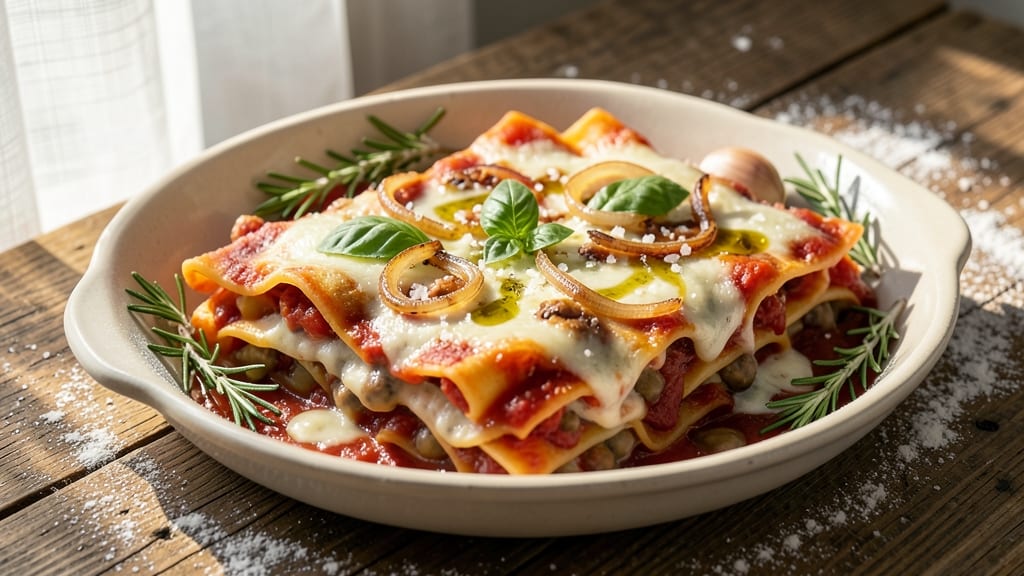
This bean lasagne recipe transforms humble ingredients into a hearty, vegetarian masterpiece that rivals traditional meat-based versions. The secret lies in perfectly seasoned white beans blended with herbs and tomatoes, creating a filling so rich it holds its own against layers of pasta and melty cheese.
Italian techniques—like slow-cooked tomato sauce and a delicate béchamel—ensure every forkful delivers that signature lasagne texture: tender pasta, creamy sauce, and crispy cheese edges.
The assembly process is where the magic happens, with each layer contributing to the final harmony: lasagne sheets absorb the flavors, the bean filling adds heartiness, and the cheese creates that irresistible golden crust.
What makes this recipe stand out is how it balances simplicity with restaurant-quality results—no shortcuts, just precise layering and baking times that guarantee a dish worthy of any table.
By the time it emerges from the oven, you’ll have a lasagne that’s both comforting and impressive, with flavors that develop beautifully over time. The white beans provide protein and earthiness, while the tomato and cheese layers bring depth and richness.
This isn’t just a vegetarian lasagne—it’s a dish that proves plant-based cooking can be just as satisfying, if not more so.
Perfect for family dinners, potlucks, or meal prep, this recipe scales effortlessly and reheats beautifully. Whether you’re a seasoned home cook or new to lasagne-making, the step-by-step instructions ensure success without the stress. Let’s build this layered masterpiece together.
Ingredients for bean lasagne
Sixteen ingredients transform into a vegetarian lasagne with restaurant-quality depth and texture.
| Ingredient | Amount | Notes |
|---|---|---|
| Cannellini Beans 🍲 | 2 cups | Cooked, drained, and slightly mashed |
| Lasagne Noodles 🍝 | 12 pieces | No-boil or pre-cooked preferred |
| San Marzano Tomatoes 🍅 | 2 cups | Crushed, fresh or high-quality canned |
| Extra-Virgin Olive Oil 🫒 | ½ cup | For richness and depth |
| Fresh Basil Leaves 🌿 | ¼ cup | Chopped, stems removed |
| Fresh Rosemary 🌿 | 2 tbsp | Finely chopped, organic preferred |
| Garlic Cloves 🧄 | 6 cloves | Minced, fresh preferred |
| Onion 🧅 | 1 whole | Yellow, finely diced |
| Vegetable Broth 💧 | 2 cups | Low-sodium, homemade or quality store-bought |
| All-Purpose Flour 🌾 | ½ cup | For béchamel roux |
| Unsalted Butter 🧈 | ½ cup | Cold, cut into small cubes |
| Whole Milk 🥛 | 2 cups | Full-fat for creaminess |
| Nutritional Yeast 🧀 | ¼ cup | For cheesy flavor, finely grated |
| Parmesan Cheese 🧀 | 1 cup | Freshly grated, aged variety |
| Mozzarella Cheese 🧀 | 2 cups | Fresh or low-moisture, shredded |
| Sea Salt 🧂 | 1 ½ tsp | Diamond Crystal preferred |
| Black Pepper 🌶️ | ½ tsp | Freshly ground, coarse |
| Red Pepper Flakes 🌶️ | ½ tsp | Optional, for heat |
The San Marzano tomatoes and cannellini beans form the heart of this lasagne, delivering both protein and umami richness. For tomatoes, Whole Foods or specialty Italian markets carry the best canned varieties—look for the official San Marzano label. The beans should be tender but not mushy; if using canned, rinse thoroughly to remove excess sodium. Fresh rosemary and basil elevate the dish, so organic produce sections or local farmers' markets are ideal. If you're short on time, dried herbs work at half the amount, though fresh is always superior for this Italian classic. The no-boil lasagne noodles are non-negotiable—they absorb flavors perfectly without turning to mush during baking.
No fresh rosemary? Dried rosemary at half the amount works in a pinch, though the flavor will be more muted. Substituting the San Marzano tomatoes with regular crushed tomatoes? Add an extra pinch of sugar to balance acidity. For the béchamel, you can use vegetable oil instead of butter if preferred, though butter creates a richer mouthfeel. The nutritional yeast is essential for that authentic cheesy depth—Bob's Red Mill brand is widely available and highly effective. If you're avoiding gluten, substitute lasagne noodles with gluten-free pasta sheets or a layer of ricotta mixed with chopped spinach. For extra richness, fold a splash of white wine into the tomato sauce before simmering.
Prep the bean filling and béchamel ahead of time—they keep beautifully in the fridge for 2 days. Assemble the lasagne just before baking to prevent soggy noodles. Leftovers reheat best at 350°F for 20 minutes, covered with foil, to maintain moisture. This lasagne freezes exceptionally well—wrap tightly in foil and store for up to 3 months. For meal prep, assemble the dish in a freezer-safe container, then bake straight from frozen at 375°F for 50-60 minutes. The cheese layer should be sprinkled with breadcrumbs for added crispiness if desired.
Why You'll Love This Recipe
- No-Cook Shortcuts: I swear by canned San Marzano tomatoes here—just chop the basil and drain the beans, and you’re already halfway done. The noodles? Boil them while you prep the sauce, then layer like a lazy lasagna artist. (Between us, my first attempt was a mess, but now I do it in 25 minutes.)
- Creamy-Tomato Magic: That blend of cannellini beans and San Marzano tomatoes? It’s the secret—silky smooth with just enough acidity to cut through the richness. Toss in fresh basil at the end, and suddenly you’ve got a sauce that tastes like a sun-drenched Italian summer. (Yes, even on a Tuesday night.)
- Leftover Hero: This lasagna actually improves the next day. The flavors meld, the noodles soften just right, and you’ve got a ready-to-reheat meal for lunch or dinner. Honestly, I make it on Sundays just so I can avoid cooking for three days.
- Budget-Friendly Feast: Cannellini beans and San Marzano tomatoes stretch this dish into a full meal without breaking the bank. One pan, one sheet, and you’ve fed four people for under $10. My daughter picks out the best basil leaves—because even kids know good flavor when they taste it.
Step-by-step instructions for layered bean lasagne
Here's how to assemble a hearty bean lasagne with rich tomato sauce and velvety béchamel.
Prepare the Tomato Sauce Base
Heat the 0.5 cup extra-virgin olive oil in a large saucepan over medium heat. Add the 1 whole finely diced onion and cook for 5 minutes until softened. Stir in the 6 minced garlic cloves and cook for 30 seconds until fragrant.
Add the 2 cups crushed San Marzano tomatoes, 2 tbsp finely chopped fresh rosemary, and 1.5 tsp sea salt. Bring to a gentle simmer, then reduce heat to low and cook uncovered for 20 minutes until thickened. Stir in the 2 cups cooked, drained, and slightly mashed cannellini beans and 0.25 cup chopped fresh basil leaves, then season with 0.5 tsp black pepper and 0.5 tsp red pepper flakes if using. Remove from heat and set aside.
Make the Creamy Béchamel Sauce
In a separate saucepan, melt the 0.5 cup unsalted butter over medium heat. Whisk in the 0.5 cup all-purpose flour and cook for 1-2 minutes until golden brown, stirring constantly. Gradually whisk in the 2 cups whole milk over 2-3 minutes until smooth.
Continue cooking until the sauce thickens enough to coat the back of a spoon, about 5-7 minutes. Remove from heat and stir in the 0.25 cup nutritional yeast and 1 cup freshly grated Parmesan cheese until fully combined. The sauce should be velvety and rich—this is your lasagne's creamy layer.
Assemble the Lasagne Layers
Preheat your oven to 375°F. In a 9x13-inch baking dish, spread a thin layer of tomato sauce on the bottom. Add a layer of 4 lasagne noodles (no-boil or pre-cooked), ensuring they overlap slightly at the edges. Spread half of the remaining tomato sauce evenly over the noodles.
Sprinkle half of the 2 cups shredded mozzarella cheese over the sauce. Repeat with another layer of 4 lasagne noodles, remaining tomato sauce, and remaining mozzarella. Finally, spread the béchamel sauce evenly over the top layer, pressing down gently to help it adhere. Sprinkle any remaining Parmesan cheese on top.
Bake to Golden Perfection
Cover the baking dish tightly with aluminum foil and bake for 30 minutes. Remove the foil and bake uncovered for an additional 15-20 minutes until the top is golden brown and bubbly. Let the lasagne rest for 10 minutes before slicing—this allows the layers to set and makes serving easier.
Each slice should reveal layers of tender noodles, creamy béchamel, and hearty bean-tomato sauce. The exterior should be golden and slightly crisp, while the interior remains rich and comforting. Serve with a side salad or crusty bread to complete the meal.
Pro Tips For Making Bean Lasagne
- SOAK THE BEANS: I learned this the hard way—cannellini beans straight from the can are fine, but if you’re using dried, soak them overnight in cold water with a splash of vinegar. The beans will break down less when simmered, keeping your lasagne’s texture intact instead of turning it into a mushy mess.
- COOK NOODLES AL DENTE: Lasagne noodles need to hold their shape, so boil them just shy of perfect—about 1 minute less than the package says. Then, rinse them in cold water to stop cooking. This prevents them from turning to mush when baked, which is especially important when layering with soft beans.
- SALT THE TOMATO SAUCE: San Marzano tomatoes are sweet but need seasoning. Simmer your crushed tomatoes with a generous pinch of salt (about 1 teaspoon per can) early on—before adding basil or garlic. This lets the flavors meld, and you can always adjust later. Skipping this step leaves the sauce tasting flat.
- LAYER LIKE A PRO: Start and end with sauce, not noodles. A thin base of tomato sauce on the baking dish prevents sticking, and a final layer of sauce on top keeps everything moist. If using fresh basil, sprinkle it between layers—it wilts fast, so don’t add it all at once. (Yes, even if you’re impatient like me.)
Pro cooking tips for great bean lasagne
Layering Like a Pro
Start with a thin layer of tomato sauce on the bottom of your baking dish—this prevents sticking and ensures even cooking. I use a 9x13-inch dish for perfect portion sizes, but adjust if needed.
For no-boil noodles, overlap them slightly at the edges to create a seamless barrier that holds all the delicious fillings. Press each layer gently with a spatula to eliminate air pockets—this keeps your lasagne from collapsing during baking. 🍝
Bean Filling Secrets
For the bean-tomato mixture, I recommend slightly mashing the cannellini beans with a fork—this creates a thicker, more cohesive filling that clings beautifully to the noodles. Add the fresh basil and rosemary at the end to preserve their bright flavors.
If your sauce seems too watery after simmering, stir in 1 tbsp cornstarch mixed with water to thicken it properly. The beans should be tender but still hold their shape slightly.
Béchamel Mastery
Whisk your béchamel constantly while cooking to prevent lumps—this is where many home cooks go wrong. For extra richness, I sometimes add 1 tbsp heavy cream at the end, but keep it smooth and velvety.
The sauce should coat the back of a spoon when done; if it's too thick, whisk in 1-2 tbsp milk to reach the perfect consistency. Let it cool slightly before spreading to avoid melting the cheese layers below.
Cheese Layer Strategy
Divide your mozzarella evenly between layers—this prevents a soggy bottom while ensuring melty goodness in every bite. For that perfect golden crust, I sprinkle Parmesan cheese on the top layer and sometimes add breadcrumbs mixed with a little olive oil.
This creates a crispy, caramelized finish that takes your lasagne from good to spectacular. Don't skip the resting time—those 10 minutes let the layers set properly.
Baking Time Tips
Use aluminum foil tightly covering the dish for the first 30 minutes to trap steam and help the layers cook evenly. After removing the foil, watch closely for browning—15-20 minutes is typical, but ovens vary.
If the top browns too quickly, tent it loosely with foil. The internal temperature should reach 165°F at the thickest part. A meat thermometer inserted through the side helps gauge doneness perfectly. 🔥
Make-Ahead Pro Tips
Assemble your lasagne up to 24 hours ahead and refrigerate uncovered to let the flavors meld. When ready to bake, add 10-15 minutes to your baking time. For freezing, bake completely first, then cool before wrapping tightly in foil.
Reheat covered with foil at 350°F for 20 minutes—this keeps everything creamy and delicious. The flavors actually improve after resting overnight, making this a perfect make-ahead meal for busy weeks.
Nutrition facts
Frequently asked questions
Can I make this bean lasagne without béchamel?
Replace the béchamel with a layer of ricotta mixed with garlic, basil, and Parmesan for a lighter texture. Or use a thick tomato sauce with added cream—just ensure each layer stays cohesive. The key is maintaining balance between creamy and tomato-based elements.
How do I prevent soggy noodles in my bean lasagne?
Use no-boil lasagne noodles and avoid over-saucing between layers. Press each layer gently with a spatula to eliminate air pockets, and bake covered with foil for the first 30 minutes to trap steam. The resting time (10 minutes) also helps set the layers properly.
What's the best way to reheat leftovers?
Cover with foil and reheat at 350°F for 20 minutes to maintain moisture. For extra crispiness, broil for 2-3 minutes at the end. Never microwave—it creates a rubbery texture. The flavors actually improve after resting overnight!
Can I substitute other beans for cannellini?
Great options include white beans, butter beans, or lentils for similar texture. For a creamier filling, blend half the beans into a purée. Avoid kidney beans—they're too dense and change the flavor profile. Always drain and rinse canned beans thoroughly.
Why did my lasagne come out dry?
This usually happens from over-baking or insufficient sauce. Check your oven temperature—375°F is ideal. Add a thin layer of sauce between noodles, and consider using whole milk instead of skim in the béchamel. Cover tightly with foil during baking to retain moisture.