
Main Courses
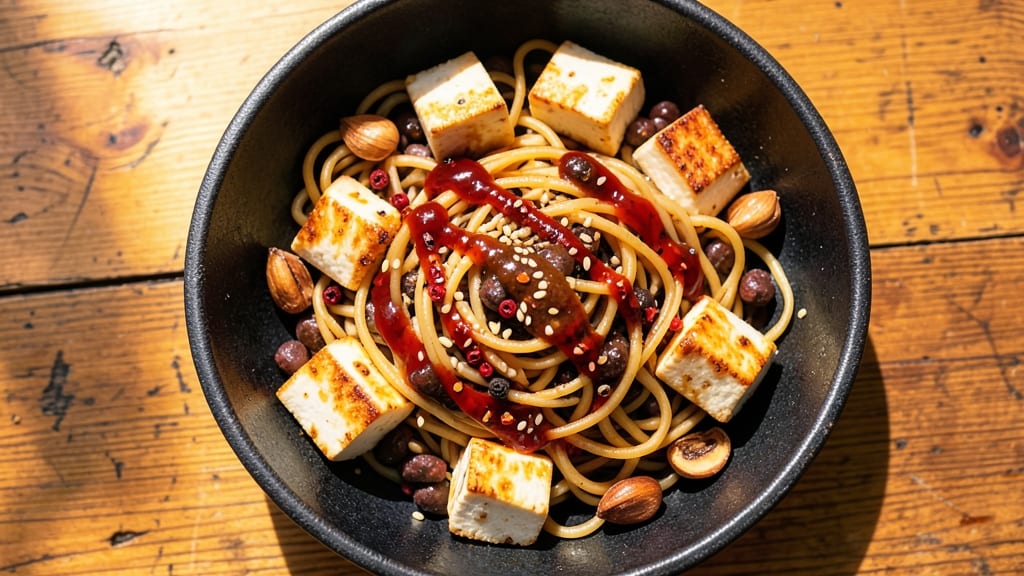
This black bean fire noodles recipe delivers the perfect balance of smoky, spicy, and umami-packed flavors in every bite. The secret lies in fermented black bean paste, which adds deep, savory notes while chili oil and Sichuan peppercorns bring that signature "fire" sensation.
I’ve refined this dish to be vegan-friendly without sacrificing authenticity—think crispy noodles tossed in a rich, slightly sweet-savory sauce with a kick.
The dish starts with silky, chewy noodles stir-fried to perfection, then coated in a sauce made from mashed black beans, garlic, and chili paste. Tofu or mushrooms add protein and texture, while scallions and sesame seeds provide freshness and crunch.
The result? A restaurant-quality bowl that’s bold, balanced, and impossible to resist.
What makes this recipe stand out is the smoky-chili crust—achieved by tossing the noodles in a mix of chili oil and toasted spices. It’s the kind of dish that feels indulgent but stays light, with layers of flavor that build with every bite.
Plus, it’s ready in under 30 minutes, making it ideal for weeknight dinners or meal prep.
Serve with extra chili oil on the side for heat lovers and a sprinkle of sesame seeds for garnish. This dish is as versatile as it is delicious—perfect for a quick lunch, a vegan dinner, or even a showstopping appetizer. Let’s get cooking!
Ingredients for black bean fire noodles
Silky noodles meet bold flavors—fermented black beans and toasted spices transform simple ingredients into restaurant-quality fire noodles.
| Ingredient | Amount | Notes |
|---|---|---|
| Fermented Black Bean Paste 🫘 | 2 tbsp | Asian market brand preferred |
| Dried Wheat Noodles 🍜 | 8 oz | Thin or medium width, chewy type |
| Extra-Firm Tofu 🧇 | 1 lb | Pressed, cubed for texture |
| Garlic Cloves 🧄 | 6 cloves | Minced for aromatic base |
| Chili Oil 🌶️ | 2 tbsp | High-quality, spicy variety |
| Sichuan Peppercorns 🌶️ | 1 tsp | Toasted for numbing heat |
| Sesame Oil 🫒 | 1 tbsp | Toasted, for aroma |
| Vegetable Oil 🫒 | 3 tbsp | High smoke point for stir-fry |
| Scallions 🧅 | ¼ cup | Thinly sliced, for garnish |
| Toasted Sesame Seeds 🌾 | 1 tbsp | For crunchy finish |
| Red Chili Flakes 🌶️ | 1 tsp | Adjust for heat preference |
| Soy Sauce 🍶 | 1 tbsp | Light or tamari for gluten-free |
| Maple Syrup 🍁 | 1 tbsp | For subtle sweetness |
| Black Vinegar 🍶 | 1 tbsp | For tangy depth |
| Salt 🧂 | ½ tsp | Kosher or sea salt |
The fermented black bean paste is non-negotiable for that signature umami depth. Asian markets carry the best brands like Lee Kum Kee, but Amazon also stocks it if you're short on time. Look for a paste with visible fermented chunks—it means it's aged properly. Sichuan peppercorns should be whole and toasted until fragrant; Penzeys sells them pre-toasted if you want to skip the step. For the noodles, King Noodle or Ramen Nagi brands deliver that perfect chewy texture—avoid the thin, delicate types that turn mushy.
No chili oil? Mix 1 tbsp gochujang with 1 tbsp sesame oil for a quick substitute, though it won't have the same smoky depth. Swapping tofu for mushrooms? Shiitake or oyster mushrooms hold up best to stir-frying, but slice them thin to mimic tofu's texture. The sesame seeds can be skipped if you're pressed for time, but the toasted variety from Trader Joe's adds that essential crunch. For extra heat, add a pinch of doubanjiang (spicy fermented chili bean paste) if you have it—it's a game-changer for authenticity.
Store the fermented black bean paste in the fridge once opened—it keeps for 6 months this way. Tofu stays fresh 5 days wrapped in paper towels, while dried noodles last 1 year in a cool, dark pantry. The chili oil and sesame oil? Both are shelf-stable for 1 year unopened. For meal prep, toss the cooked noodles with a light coat of oil to prevent sticking, then refrigerate in airtight containers for 3 days—reheat with a splash of water to revive the crispiness.
Why You'll Love This Recipe
- Pantry Magic Ready: I swear by this recipe when I forget to meal prep—just grab dried noodles, a jar of fermented black bean paste, and tofu from the fridge. No fresh herbs? No problem. The paste carries all the umami punch, and the chili oil adds that smoky kick without extra effort.
- Umami Bomb Combo: That fermented black bean paste? It’s the secret weapon—deep, salty, funky in the best way. Toss it with garlic and chili oil, and suddenly your tofu gets this irresistible crispy edge while staying tender inside. Honestly, I’ll take this over takeout any day.
- Leftover Hero: This dish actually tastes better the next day. The noodles soften just enough, the flavors meld, and you can reheat it with a splash of water or oil. I’ve fed a crowd with one batch, packed it for lunch, and even served it cold in summer—it’s that adaptable.
- Budget-Friendly Fire: Dried noodles and tofu are cheap staples, and a little paste goes a long way. Between us, this is my go-to when I’m broke but craving something bold. Plus, the chili oil adds heat without breaking the bank—just drizzle it on like confetti.
Step-by-step instructions for black bean fire noodles
Master this Sichuan-inspired dish with precise technique for smoky, crunchy texture over silky noodles.
Prepare the Tofu and Fermented Black Bean Paste
Press the 1 lb extra-firm tofu for 20 minutes between two paper towels, then cut into ½-inch cubes. This ensures proper texture without excessive moisture. In a small bowl, mix the 2 tbsp fermented black bean paste with 1 tbsp sesame oil and 0.5 tsp salt until smooth. This paste forms the aromatic foundation of the dish.
Heat 1 tbsp vegetable oil in a large skillet over medium-high heat. Add the tofu cubes and cook until golden brown on all sides (4-5 minutes). Remove and set aside. In the same pan, add the black bean paste mixture and cook for 1 minute until fragrant. This step develops the deep umami flavor that defines the dish.
Build the Chili-Crusted Base
Add 1 tbsp vegetable oil to the skillet and increase heat to high. Toast the 1 tsp Sichuan peppercorns for 30 seconds until aromatic—this releases their signature numbing heat. Immediately add the 6 cloves minced garlic and cook for 30 seconds until fragrant but not browned.
Pour in 1 tbsp soy sauce, 1 tbsp maple syrup, and 1 tbsp black vinegar, stirring constantly. The mixture should bubble vigorously and reduce slightly (1 minute). This balance of sweet, sour, and salty creates the complex flavor profile. Remove from heat and set aside.
Cook the Noodles and Assemble
Bring a large pot of water to a rolling boil and add 8 oz dried wheat noodles. Cook according to package instructions until al dente (3-4 minutes), then drain and rinse briefly with cold water. This prevents overcooking while maintaining chewiness. Toss the noodles with 1 tbsp chili oil to distribute heat evenly.
Return the noodles to the pot and add the tofu and chili-crusted mixture. Toss gently to combine, then divide among 4 bowls. Garnish with 0.25 cup sliced scallions, 1 tbsp toasted sesame seeds, and 1 tsp red chili flakes. The contrast of textures—crispy tofu, silky noodles, and crunchy toppings—makes this dish exceptional.
Finish with Perfect Timing
Serve immediately while the noodles are hot. The black bean paste should coat the noodles with a glossy sheen, and the Sichuan peppercorns will provide a subtle tingling sensation. Adjust heat with additional chili flakes if needed, but the balance of sweet, sour, and umami should shine through.
This dish relies on precise timing—each component must be hot when assembled. The tofu should be crispy, the noodles al dente, and the chili-crusted base vibrant. The result is a harmonious blend of textures and flavors that captures Sichuan street food at its best.
Pro Tips For Making Black Bean Fire Noodles
- Fry the Tofu Twice: I learned this the hard way—crispy tofu is the star here, and one round of frying just won’t cut it. Pan-fry the extra-firm tofu until golden, then drain on a wire rack (not paper towels—steam ruins crispiness), and hit it with a second fry in the same oil. The extra effort makes all the difference when those cubes hit the noodles.
- Bloom the Black Bean Paste: Skip the crowding—this paste is potent, and you want it to sing. Heat your wok or pan until it’s smoking, then add the fermented black bean paste in a thin layer. Let it sizzle for 30 seconds before stirring, or you’ll end up with a gloppy mess instead of a rich, caramelized base. (Yes, even if you’re impatient like me.)
- Soak Noodles in Ice Water: Dried wheat noodles are stubborn—they’ll turn mushy if you overcook them. Boil until they’re just al dente, then immediately plunge them into ice water for 30 seconds. This stops the cooking and keeps them from falling apart when you toss them in the wok. (Your future self will thank you.)
- Garlic Timing Matters: Add the garlic cloves after the black bean paste has darkened and fragrant oils have built up. If you throw them in too early, they’ll burn before the paste gets a chance to develop its deep, umami flavor. Smash them slightly with the flat of your knife first—this releases more flavor without turning them to ash.
Storing and reheating your black bean fire noodles
Refrigerator Storage
Let your black bean fire noodles cool completely before storing in airtight containers with a tight-fitting lid. I use glass Pyrex containers because they distribute heat evenly during reheating. Store for up to 3 days in the fridge—this dish actually tastes better the next day as flavors meld together.
The noodles may lose some crispiness, but a quick stir-fry with a splash of water revives them beautifully. 💫
Freezer Prep Tips
For longer storage, freeze portions in single-serving portions using silicone molds or freezer bags. Lay flat to save space and label with the date—this dish keeps for 2 months without significant texture loss.
When ready to eat, thaw overnight in the fridge, then reheat gently to preserve the tofu's crispiness. Avoid microwaving directly from frozen; it makes the noodles mushy. ❄️
Reheating for Crispy Noodles
My go-to method is a stovetop revival: Heat 1 tbsp vegetable oil in a wok or skillet over medium-high heat, then add your noodles with 1 tbsp water to steam. Toss for 2-3 minutes until heated through.
Finish by drizzling with 1 tsp chili oil and ½ tsp toasted sesame oil to restore that smoky, spicy crust. The key is high heat and quick tossing—this prevents sogginess. 🔥
Microwave Shortcut
When time is tight, microwave individual portions covered with a damp paper towel on 50% power for 90 seconds, then stir. Add 1 tsp water if dry, then cover and microwave another 30 seconds.
Finish with a sprinkle of sesame seeds and scallions for freshness. While not as crispy as stovetop, this method keeps the flavors intact. Perfect for busy weeknights! ⏱️
Reviving Day-Old Noodles
If your noodles have lost their crunch after refrigeration, don’t toss them! Toss them in a hot, dry skillet for 1-2 minutes until they regain crispiness. Add a pinch of salt and a drizzle of sesame oil to refresh the flavors.
This works especially well for the tofu, which often softens overnight. A little extra chili oil never hurts either—it’s the secret to bringing back that "fire" sensation. 🌶️
Nutrition facts
Frequently asked questions
Can I make this recipe without fermented black bean paste?
Yes, but the flavor will be less authentic. Substitute with 2 tbsp soy sauce + 1 tbsp miso paste + 1 tsp smoked paprika for depth, though you'll miss the fermented umami punch. For a closer match, use 1 tbsp black bean sauce (like Gochujang) mixed with 1 tsp soy sauce—it's not identical but works in a pinch.
How do I adjust the heat level for sensitive stomachs?
Start by reducing the red chili flakes to ½ tsp and skip the Sichuan peppercorns—they add a numbing heat. For extra safety, replace 1 tbsp chili oil with 1 tbsp neutral oil and add just ½ tsp chili flakes at the end. The black vinegar and maple syrup already provide enough tangy contrast to balance mild flavors.
What's the best noodle type for maximum crispiness?
Use dried wheat noodles labeled "chewy" or "alkaline" (like King Noodle or Ramen Nagi). These hold up better to stir-frying than delicate egg noodles. For extra crunch, cook them 1 minute less than package instructions, then rinse briefly in cold water before tossing with chili oil—this prevents overcooking while keeping them firm.
Can I make this dish gluten-free?
Swap the wheat noodles for rice noodles (like banh pho noodles) or buckwheat noodles. Use tamari instead of soy sauce and check your fermented black bean paste for gluten—some brands contain wheat. The tofu and vegetable base make this naturally gluten-free with these adjustments.
Why did my tofu turn out soggy instead of crispy?
Soggy tofu usually means it wasn’t pressed long enough or cooked at too low heat. Press it for 30 minutes (not just 20) and pat dry with paper towels before cooking. Use medium-high heat and cook until golden brown on all sides—this creates a crispy exterior. If your pan isn’t hot enough, the tofu will steam instead of sear.