
Sauces & Condiments
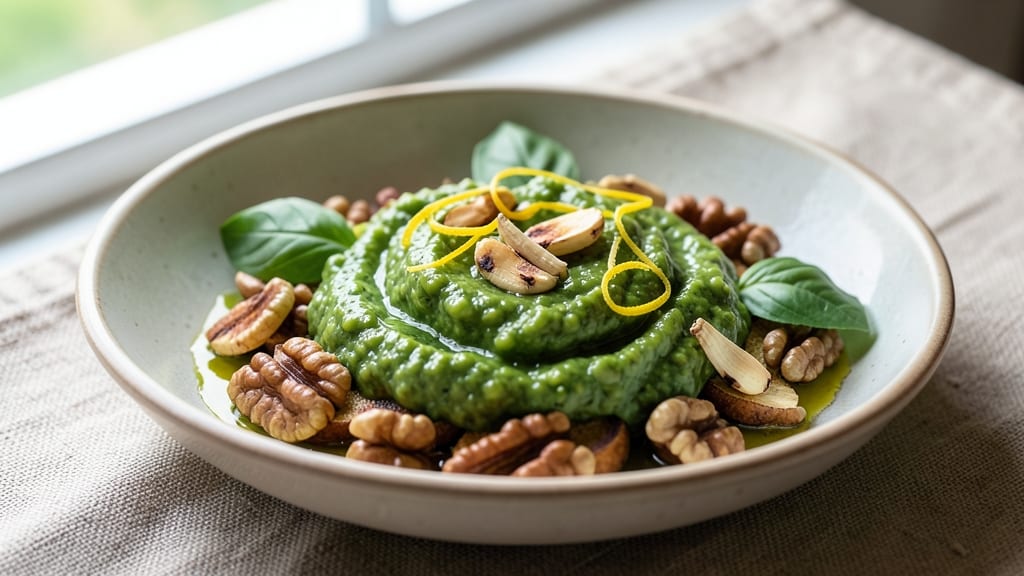
This broad bean pesto recipe transforms humble broad beans into a vibrant, nutty sauce that rivals traditional basil versions. The secret lies in blending fresh broad beans with toasted nuts, garlic, and olive oil until smooth—creating a rich, herby condiment with natural vegan depth.
Perfect for those who want a flavorful alternative to classic pesto, this recipe delivers a bright, aromatic sauce that's equally at home on pasta or as a dip.
The beauty of broad bean pesto is its versatility—it works equally well with fresh or dried beans, and the nutty base (pine nuts or walnuts) adds satisfying texture. I've perfected this recipe to avoid bitterness while maximizing flavor, using just a handful of simple ingredients.
The result? A creamy, herbaceous sauce that's packed with protein and earthy notes, making it a standout for any plant-based meal.
What sets this recipe apart is its ability to elevate simple dishes—think toasted bread, grain bowls, or even as a marinade for grilled vegetables. The broad beans provide a unique, slightly sweet flavor that pairs beautifully with garlic and herbs, while the olive oil ensures a silky, cohesive texture.
With just 10 minutes of prep and 5 ingredients, you'll have a sauce that's restaurant-quality without the fuss.
Store it in the fridge for up to 5 days or freeze for longer shelf life, making it ideal for meal prep.
Whether you're serving it as a dip, pasta sauce, or sandwich spread, this broad bean pesto is a game-changer for anyone looking to add a fresh, nutty twist to their meals. Let's get blending!
Ingredients for broad bean pesto
Five simple ingredients create this vibrant, nutty pesto that rivals classic basil versions.
| Ingredient | Amount | Notes |
|---|---|---|
| Fresh Broad Beans 🌱 | 1 ½ cups | Shell removed, blanched for 2 minutes |
| Walnuts 🥜 | ¾ cup | Toasted for enhanced flavor |
| Garlic Cloves 🧄 | 4 cloves | Peeled, roughly chopped |
| Extra-Virgin Olive Oil 🫒 | ¾ cup | High quality, fruity variety |
| Lemon Juice 🍋 | 2 tbsp | Freshly squeezed, strained |
| Sea Salt 🧂 | ½ tsp | Fine grain preferred |
| Fresh Flat-Leaf Parsley 🌿 | ⅓ cup | Stems removed, loosely packed |
| Nutritional Yeast 🧀 | 2 tbsp | For cheesy depth (optional) |
The broad beans are the star—fresh is ideal, but dried beans work too (soaked overnight). Look for plump, firm beans at Trader Joe's or Whole Foods—they should snap when bent. Toasting the walnuts in a dry pan for 3-4 minutes enhances their flavor dramatically. Costco or bulk bins offer the best prices for nuts. Fresh parsley adds brightness, but skip it if you're using dried parsley at one-third the amount. Nutritional yeast gives that cheesy note without dairy—Bob's Red Mill is my go-to brand.
No walnuts? Pine nuts or cashews work beautifully—pine nuts are pricier but add a delicate crunch. Short on parsley? Fresh basil or cilantro can substitute (adjust to taste). The lemon juice can be swapped for apple cider vinegar if needed, though it'll have a slightly different tang. For a smoother texture, blend the broad beans first before adding nuts. The olive oil matters—avoid cheap brands; you'll taste the difference. Fresh garlic is non-negotiable here—jarred lacks the punch.
This pesto keeps beautifully—cover the surface with a thin layer of olive oil before sealing to prevent browning. It stays fresh for 5 days in the fridge, or 3 months frozen in ice cube trays. I portion mine into small jars for easy use—perfect for pasta, sandwiches, or as a dip. The flavor actually improves after a day as everything melds together. Freeze extras in 1-tablespoon portions for quick use later.
Why You'll Love This Recipe
- No Shelling Hassle: I swear by this recipe because broad beans are so much easier to work with than chickpeas or lentils. Just trim the ends, blanch for 2 minutes, and peel—no soaking, no stubborn skins. The walnuts? Toss them raw into the food processor with the beans, garlic, and olive oil, and let them crush together. It’s the kind of prep that feels like a victory.
- Umami Bomb: That first bite? The broad beans bring a buttery, almost nutty depth, while the walnuts add crunch and richness. Here’s what sold me—the lemon juice cuts through the earthiness just enough to make it bright, but the garlic? Oh, it lingers in the best way, like a warm hug for your taste buds. (Yes, even on a Tuesday night.)
- Pasta’s New BFF: This pesto isn’t just for pasta—it’s my go-to for roasted veggies, grilled chicken, or even as a sandwich spread. I’ll be real: I make a big batch and freeze half. Spread it on toast with a fried egg, or toss it with warm polenta. It’s the kind of versatile sauce that turns simple meals into something special without trying too hard.
- Budget Magic: Fresh broad beans might sound fancy, but they’re cheaper than spinach or basil pesto, and they keep for days in the fridge. A single batch stretches across three meals: one night on linguine, another as a dip with crusty bread, and the last as a marinade. Plus, walnuts are a pantry staple—no need to buy specialty ingredients. It’s my secret weapon for making expensive meals feel affordable.
Step-by-step instructions for broad bean pesto
Here's how to craft this vibrant, nutty pesto with perfect balance every time.
Blanch and Prepare the Broad Beans
Bring a small pot of salted water to a boil. Add the 1.5 cups fresh broad beans (shells removed) and blanch for exactly 2 minutes. Immediately drain and transfer to an ice bath to stop the cooking process—this preserves their bright green color and tender texture.
Once cooled, drain again and pat completely dry with paper towels. I like to work with them in batches if needed, but keep them covered to prevent oxidation. The beans should be cool enough to handle when you're ready to process them—they'll be slightly firm but not mushy.
Toast the Walnuts and Garlic
Heat a dry skillet over medium heat and add the 0.75 cup walnuts. Toast for 3-4 minutes, stirring constantly, until they release their nutty aroma and turn a rich golden brown. Watch them carefully—they'll darken quickly once they start to brown.
Remove from heat and immediately add the 4 cloves garlic cloves (peeled and roughly chopped) to the same skillet. Toast for another 30 seconds until fragrant but not browned. Let both cool for 2 minutes before transferring to your food processor—this prevents burning the oil when you add it later.
Process the Base Ingredients
In a food processor fitted with the blade attachment, combine the cooled broad beans, toasted walnuts, and garlic. Pulse 3-4 times until you achieve a coarse, chunky texture with some whole bean pieces remaining. This texture gives the pesto its signature rustic quality.
Add the 0.33 cup fresh flat-leaf parsley (stems removed) and pulse 2 more times to incorporate. The mixture should look vibrant green with visible bean pieces and nut fragments. If your processor struggles, stop and use a wooden spoon to break up any clumps before continuing.
Blend with Oil and Seasonings
With the processor running, slowly drizzle in the 0.75 cup extra-virgin olive oil through the feed tube. This gradual addition prevents the oil from splattering and allows for better emulsification. Process for 30-45 seconds until the mixture becomes smooth but still retains some texture.
Add the 2 tablespoons lemon juice, 0.5 teaspoon sea salt, and 2 tablespoons nutritional yeast (if using). Pulse 2-3 more times until everything is evenly distributed. Taste and adjust seasoning—you may need a touch more salt or lemon depending on your beans' natural saltiness.
Adjust Consistency and Store
For a smoother pesto, pulse 1-2 more times until you reach your desired texture. If it's too thick, add 1-2 teaspoons water at a time until it reaches a spreadable consistency. Transfer to a clean jar and press a piece of plastic wrap directly onto the surface to prevent oxidation.
This pesto keeps well in the refrigerator for up to 5 days. For longer storage, divide among small containers and freeze for up to 3 months. The flavors actually deepen slightly after a day or two, making it even more delicious when you're ready to use it.
Pro Tips For Making Broad Bean Pesto
- Blanch Beans First: Fresh broad beans need a quick blanch—drop them in boiling water for 2 minutes, then ice bath. This softens their tough skins and stops them from turning to mush in the pesto. Skip this, and you’ll end up with a gritty, unappetizing texture. (Yes, even if you’re impatient like me.)
- Toast Walnuts Low: Dry-toast the walnuts in a pan over low heat until they smell nutty and just turn golden—about 5 minutes. High heat burns them fast, and you’ll taste the bitter edge. Stir often, or they’ll stick like glue.
- Pulse, Don’t Grind: Use a food processor but pulse the broad beans, walnuts, and garlic in short bursts—3-4 seconds at a time. You want texture, not a paste. Over-blending turns pesto into a sad, homogeneous mush. (I learned this after making a green sludge once.)
- Salt the Oil: Mix a pinch of salt into the olive oil before adding it to the pesto—it balances the flavors better than tossing it in at the end. Fresh broad beans are mild, and this small step keeps the dish from tasting flat. (My grandmother swore by this, and she was right.)
Wine and beer pairings for this dish
Crisp White Wine
Broad bean pesto's bright, herbal notes pair beautifully with Italian Pinot Grigio or French Sancerre—both offer crisp acidity that cuts through the richness of the nuts and olive oil.
I reach for a chilled glass of Vermentino from Sardinia when I want extra citrus brightness to complement the lemon in the pesto. These wines enhance the dish's freshness without overpowering its natural flavors. 🍷
Light Red Options
For a red wine pairing, try a light-bodied Chianti or Beaujolais—their subtle earthiness and red fruit notes harmonize with the broad beans' nutty depth. A Gamay from Beaujolais works wonderfully, especially if you've added a touch of heat with red pepper flakes.
These wines bridge the gap between the pesto's herbal brightness and any accompanying grilled vegetables. 🍇
Sparkling Wine
A glass of Prosecco or Cava adds effervescence that cleanses the palate between bites, making it perfect for pesto-heavy dishes. The bubbles help balance the richness of the walnuts while highlighting the lemon's zesty kick.
I often serve this pairing at summer gatherings when the pesto is used as a dip for fresh vegetables or crusty bread. 🥂
Beer Pairings
For beer lovers, a crisp lager like Peroni or Heineken works beautifully—their clean, light profiles let the pesto shine. If you prefer something with a bit more character, try a Belgian witbier like Hoegaarden, whose coriander and citrus notes echo the lemon in the pesto.
A pilsner also pairs well, especially when the pesto is served with grilled meats or roasted vegetables. 🍺
Non-Alcoholic Options
Don’t overlook sparkling water with a splash of lemon juice or ginger beer—both enhance the pesto’s herbal and citrus notes without alcohol. For something richer, try sparkling apple cider—its slight sweetness complements the walnuts while keeping the dish light.
These options are perfect for brunch or when you want to keep things refreshing. 🥤
Nutrition facts
Frequently asked questions
Can I use dried broad beans instead of fresh?
Yes! Soak 1 cup dried broad beans overnight in plenty of water, then drain and simmer for 1 hour until tender. Drain well and pat dry before using in the recipe. The texture will be slightly denser than fresh, but the flavor remains rich and nutty.
Why does my pesto turn bitter?
Overcooking the beans or using old nuts can cause bitterness. Always blanch fresh beans for exactly 2 minutes and use freshly toasted nuts. If the flavor is off, add 1 extra tablespoon lemon juice or a pinch of sugar to balance. Fresh garlic and herbs also prevent bitterness.
How can I make this pesto extra creamy?
Blend the broad beans first until smooth before adding nuts, then pulse everything together. For added creaminess, stir in 1 tablespoon tahini or 2 tablespoons unsweetened almond milk after blending. Silken tofu also works well—mix in 2 tablespoons blended tofu for a velvety texture.
What are the best ways to use this pesto?
Try it as a pasta sauce, sandwich spread, or dip for veggies. Mix into hummus or mashed potatoes for extra flavor. It also works as a marinade for grilled chicken or tofu, or drizzle over roasted vegetables. The possibilities are endless—think of it as a versatile, protein-rich sauce!
Can I freeze this pesto long-term?
Portion into 1-tablespoon ice cube trays or small containers. Freeze for up to 3 months. Thaw in the fridge overnight—no need to defrost at room temperature. The texture may thicken slightly after freezing, so add a splash of water when reheating.